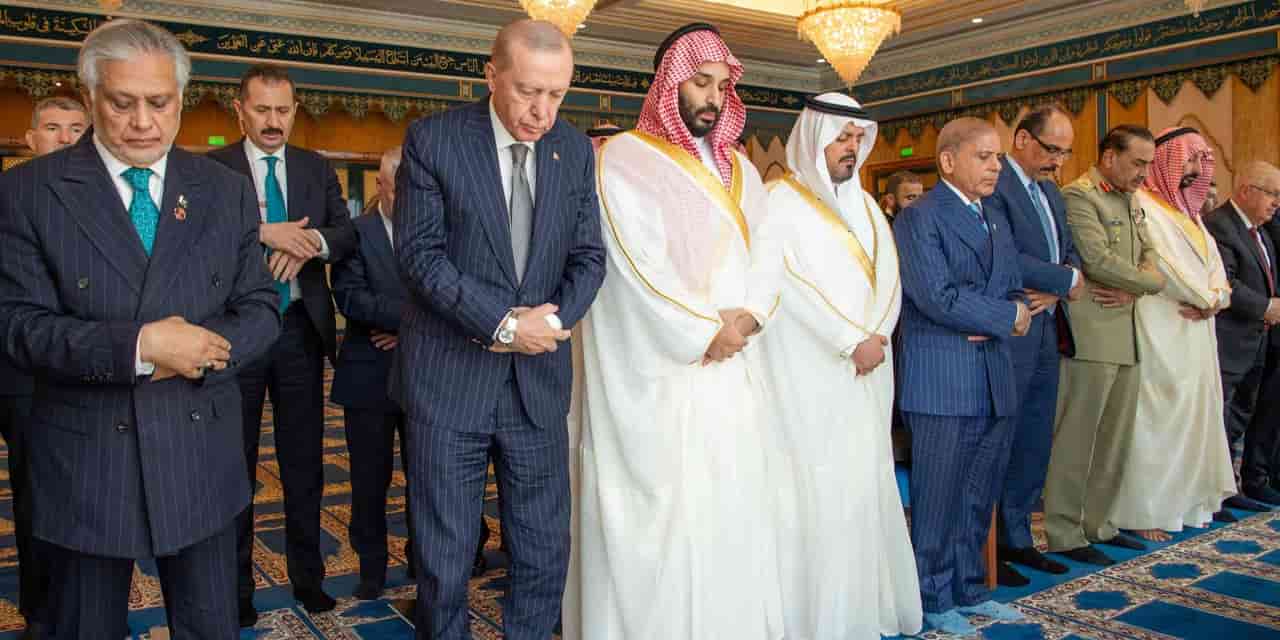
Key facts
- Saudi Arabia, Turkey, and Pakistan signed the Mecca Joint Defence Agreement on August 7.
- The agreement commits the three nations to treating an armed attack against one as an attack against all.
- The pact has drawn criticism from some Emirati commentators, including former aide Abdulkhaleq Abdulla.
- Saudi Prince Abdulrahman bin Musaid defended the agreement as a matter of national sovereignty.
- The agreement has reopened tensions between Saudi Arabia and the UAE.
A new defense agreement between Saudi Arabia, Turkey, and Pakistan, known as the "Mecca Joint Defence Agreement," signed on August 7, has reignited tensions between Riyadh and Abu Dhabi. Prominent Emirati and Saudi voices have publicly clashed over Saudi Arabia's decision to pursue a regional security partnership beyond the Gulf Cooperation Council (GCC).
The agreement commits the three signatory nations to treating an armed attack against one as an attack against all. However, its purpose and implications have become a point of contention.
Abdulkhaleq Abdulla, a political analyst and former aide to UAE President Mohammed bin Zayed, has been a leading critic, questioning the logic of the new agreement and whether Riyadh is moving towards a regional security framework beyond the GCC. He argued that strengthening Gulf cooperation is more important than investing in regional partnerships with countries whose credibility against the Iranian-Israeli threat is not taken seriously, and questioned the identification of a common enemy for the alliance.
Saudi Prince Abdulrahman bin Musaid rebutted these criticisms, asserting that the agreement is a matter of national sovereignty and questioning why the UAE's academic circle seemed particularly bothered by Riyadh's strategic choices. Fahad al-Arabi al-Harthi, chairman of the Asbar Centre for Studies and Research, supported this view, stating the agreement was not aimed at anyone but focused on building collective deterrence and defense capacity.
Other Saudi social media users drew parallels to the UAE's own security partnerships, including the 2020 Abraham Accords with Israel, questioning the UAE's stance on the Saudi-led agreement. Abdulaziz al-Tuwaijri, former head of the Islamic World Educational, Scientific and Cultural Organisation (Isesco), suggested that those betraying and collaborating with Zionists would not find security, and pointed to the UAE's defense treaty with India and cooperation with Israel as examples of acceptable partnerships, contrasting them with the Saudi agreement.