Key facts
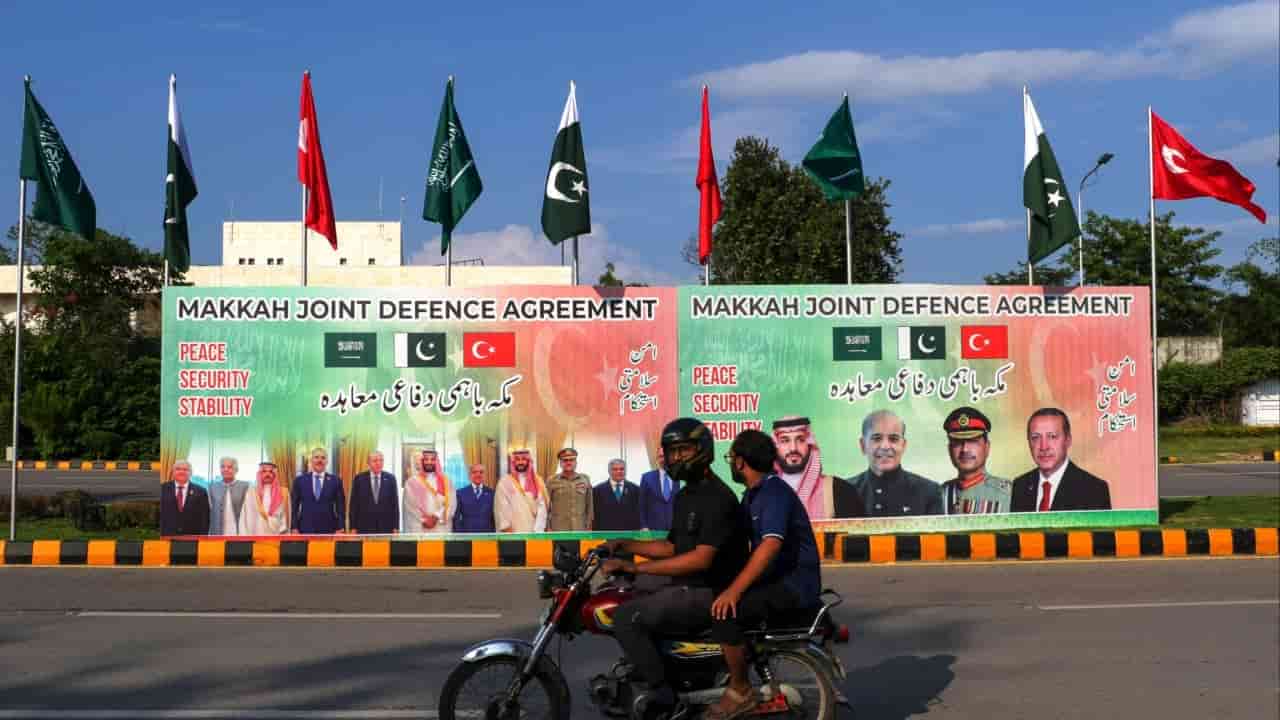
- Pakistan, Saudi Arabia, and Turkey signed the Mecca Joint Defence Agreement.
- The pact is viewed as a response to perceived US unreliability and Israeli actions.
- Egypt declined to join the defense pact, citing its relationship with Israel and regional political dynamics.
- The agreement includes a collective-defense provision similar to NATO's Article 5.
- Turkish officials kept the signing secret to prevent disruption.
- Turkish Foreign Minister Hakan Fidan expressed optimism that Egypt will join the alliance later.
Pakistan, Saudi Arabia, and Turkey have signed a mutual defense pact, dubbed the Mecca Joint Defence Agreement, signaling a potential shift in regional security dynamics away from the United States. The agreement, which includes a collective-defense provision similar to NATO's Article 5, was signed abruptly and kept secret by Turkish officials to prevent disruption.
Sources indicate the pact is a response to perceived unreliability from the U.S. and actions by Israel. Pakistan seeks financial benefits and a counterweight to India, while Turkey desires a nuclear deterrent and new military markets. Saudi Arabia aims to gain leverage over Iran and Houthi rebels. The pact follows a period of perceived Israeli military successes and U.S. inaction.
Egypt, initially considered a candidate for inclusion in the security architecture, ultimately declined to join. Turkish officials had made considerable efforts to include Cairo, but Egypt's sensitive relationship with Israel and its desire to avoid choosing sides between emerging blocs, such as one comprising Turkey, Saudi Arabia, and Pakistan versus another with Israel, the UAE, and India, led to its decision. Egypt also seeks to deepen commercial ties with India and relies on financial assistance from Abu Dhabi.
Despite Egypt's current absence, Turkish Foreign Minister Hakan Fidan expressed optimism that Cairo will join the alliance in a future stage, suggesting that technical issues are the primary reason for the delay. The pact's secrecy and Egypt's hesitation highlight the complex geopolitical landscape and the evolving security alliances in the Middle East.