Key facts
- Saudi Arabia, Turkey, and Pakistan signed a joint defense agreement in Mecca.
- The agreement treats an attack on any one of the three states as an attack against all three.
- The pact aims to strengthen collective deterrence and enhance defense cooperation.
- Iran criticized the deal, stating it would not bring security to Saudi Arabia.
- Saudi Arabia stated the agreement is not a military axis or religious bloc.
- The agreement is described as purely defensive and not aimed at Iran or any other country.
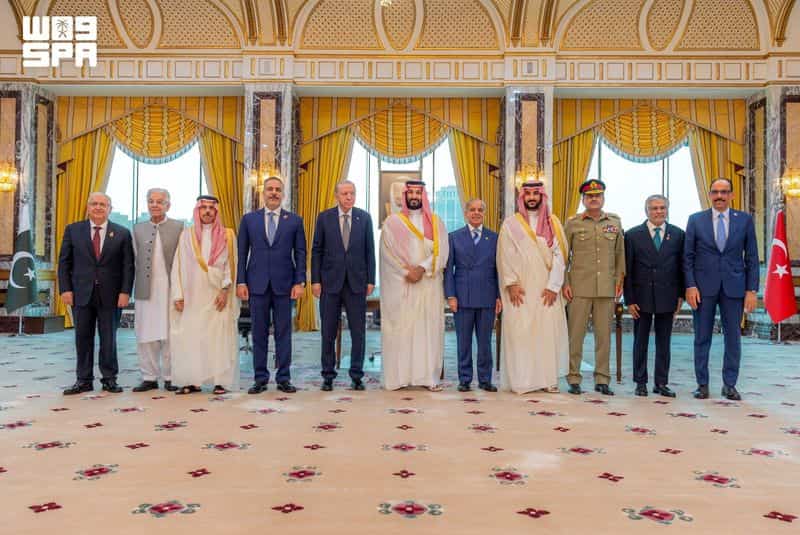
Saudi Arabia, Turkey, and Pakistan have signed a joint defense cooperation agreement, treating an attack on one member as an attack on all three. The pact, signed in Mecca by Saudi Crown Prince Mohammed bin Salman, Turkish President Recep Tayyip Erdogan, and Pakistan’s Prime Minister Shehbaz Sharif, aims to bolster cooperation and collective deterrence amid growing regional security concerns.
The agreement, dubbed the “Mecca Joint Defense Agreement,” brings together the oil-rich Saudi Arabia, nuclear-armed Pakistan, and Turkey, which possesses NATO’s second-largest army. The deal is intended to strengthen collective deterrence against aggression and enhance all aspects of defense cooperation among the three states.
Iran criticized the pact, with Ebrahim Rezaei of the Iranian Parliament’s National Security and Foreign Policy Commission stating on X that a paper agreement would not bring security to Saudi Arabia. Saudi Arabia, however, issued a statement insisting the agreement does not constitute a military axis or religious bloc and would not affect its existing partnerships. The kingdom emphasized that the deal focuses on building sustainable, self-reliant capabilities.
Turkish President Erdogan described the agreement as based on “collective deterrence,” aimed at deepening defense cooperation, supporting joint defense industry projects, and combating terrorism. He noted it reaffirms the right of defense as defined in Article 51 of the UN Charter and is open to participation from other countries seeking regional peace and stability. A Turkish government official characterized the deal as purely defensive and not directed against any specific actor.
Prime Minister Sharif called the pact a “historic pact” and a “shield of peace” for the three countries and the wider Muslim community. In Islamabad, defense analyst Abdullah Khan viewed the agreement as a natural evolution of decades-long strategic ties, driven by a changing regional security environment and the evolving nature of warfare. Khan stated the pact is defensive and not aimed at any country, with collective deterrence intended to raise the cost of aggression.