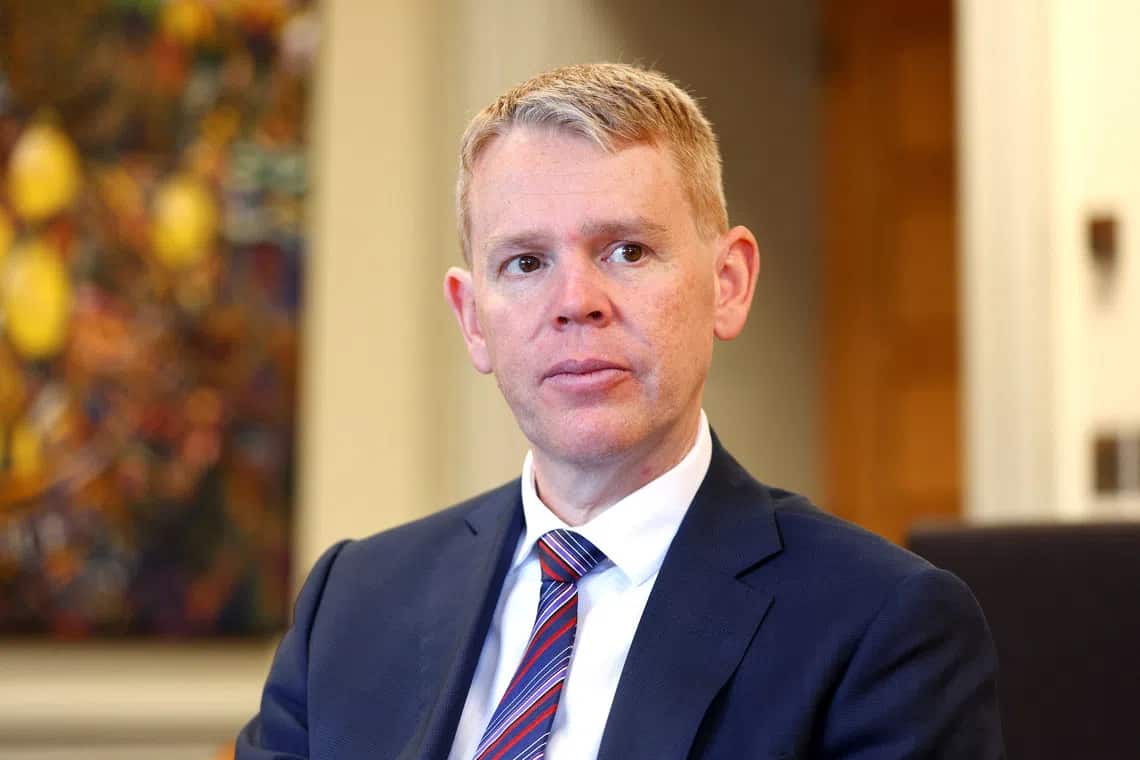
New Zealand's opposition leader, Chris Hipkins, has stated that his Labour party was too slow to recognize and address the cost-of-living pressures faced by households in the aftermath of the COVID-19 pandemic. As the party seeks to regain support from urban and middle-income voters ahead of the November 7 election, Hipkins is emphasizing a focus on economic growth through innovation, technology, and renewable energy.
Hipkins, who became Labour leader and prime minister following Jacinda Ardern's resignation, acknowledged that the pandemic had been all-consuming and that the party was slow to shift its focus back to broader governance and economic concerns. Labour has proposed several measures to ease household costs, including weekly public transport caps of NZ$20 in major cities and NZ$10 in smaller centers, three free doctor visits annually, and initiatives to promote solar power adoption.
Beyond immediate relief, Hipkins articulated Labour's strategy to rebuild the urban economy by leveraging the tech revolution and renewable energy for competitive advantage and skilled job creation. The party's platform includes a New Zealand Future Fund to support high-growth businesses, innovation, and infrastructure, along with aid for apprentices and small businesses. Labour's fiscal plan aims for an operating surplus by 2029/2030, maintaining spending and revenue at approximately 33% of GDP once a capital gains tax is implemented.
Hipkins rejected criticism from the current government regarding Labour's past spending, arguing that strategic investments, such as in preventative healthcare, can lead to long-term savings. With polls indicating a close election where neither Labour nor the National Party may secure a majority, coalition negotiations are expected to be crucial. Hipkins asserted that his position as prime minister and Barbara Edmonds as finance minister would be non-negotiable in any Labour-led government, and that smaller coalition partners should not be able to force unpopular policies.