All NewsEducationTVBrokers
Equities & FundsCrypto & Digital AssetsAI & TechnologyBusiness & CorporateUS Politics & PolicyGeopolitics & Global RiskMacro, Rates & FXCommodities & EnergyEuropean Politics & MarketsAsia-PacificReal Estate & Property
All NewsHome
← Back to US Politics & Policy

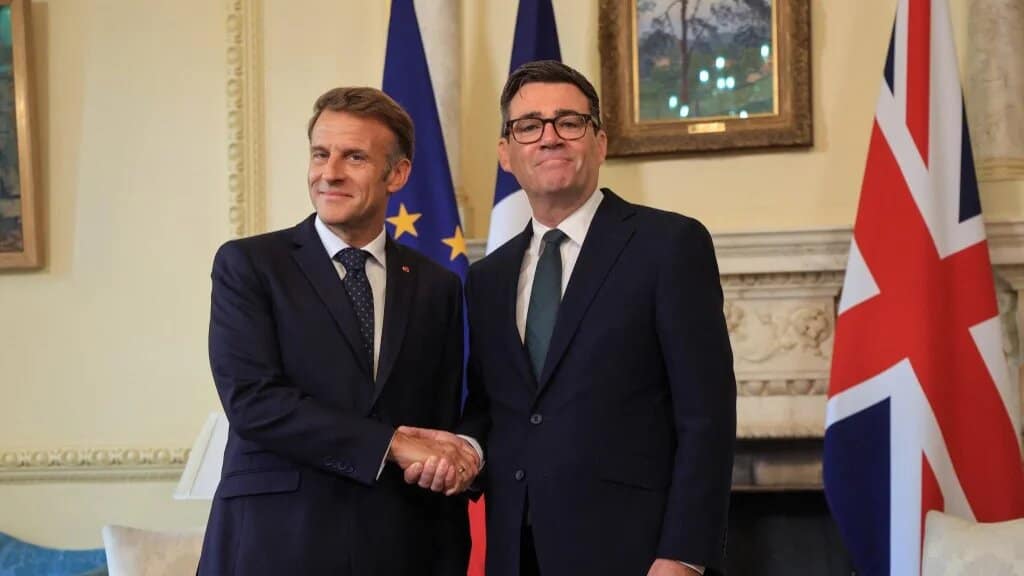
UK PM Burnham seeks to outflank Starmer on West Bank sanctions

Created at 9 Sep · 12:11 AM1 source↑ Market-relevant
IN SHORT

UK Prime Minister Burnham is implementing sanctions on Israeli settlements in the West Bank, a move seen as a significant policy shift and an attempt to distinguish his approach from that of predecessor Sir Keir Starmer. The policy aims to support a two-state solution and is coordinated with 11 other countries.

Key Numbers

12 monthsago UK made similar decision
11other countries sharing approach
140Labour MPs publicly demanded action

Who's Involved

Chris Mason
Political editor for PA Media
Burnham
UK Prime Minister
Sir Keir Starmer
Predecessor to UK Prime Minister
Miliband
Foreign secretary
Kemi Badenoch
Conservative leader
Sir Ephraim Mirvis
Chief Rabbi
Donald Trump
President
Marco Rubio
US Secretary of State
Jeremy Corbyn
Former Labour Party leader

↳ Why This Matters

This policy shift signals a more assertive UK stance on the Israeli-Palestinian conflict, potentially impacting international relations and domestic political dynamics within the UK, particularly concerning relations with Jewish communities.

Key facts

  • The UK has banned imports from Israeli settlements in the occupied West Bank.
  • This policy shift is seen as an attempt by Prime Minister Burnham to differentiate his stance from that of former leader Sir Keir Starmer.
  • The UK coordinated this action with 11 other countries, including France and Canada.
  • Israel has responded by closing the British consulate in Jerusalem.
  • Conservative leader Kemi Badenoch and Chief Rabbi Sir Ephraim Mirvis have criticized the move, citing concerns about antisemitism.

UK Prime Minister Burnham has announced a ban on imports from Israeli settlements in the occupied West Bank, a move described as a significant shift in Britain's Middle East policy. Senior figures argue this is a logical extension of a previous decision and an expression of Burnham's desire to take a stronger stance than his predecessor, Sir Keir Starmer.

The policy is framed as a re-assertion of the logic for a two-state solution, with the UK playing a coordinating role in international action alongside 11 other countries, including France and Canada. One source noted that other nations were already moving towards this view, and the UK helped to synchronize the announcements.

The hope is that this coordinated approach will increase the impact of the measures and minimize backlash from Israel or the United States. As anticipated by UK officials, Israel has responded by closing the British consulate in Jerusalem. While reactions from figures like President Donald Trump are uncertain, the initial response from US Secretary of State Marco Rubio was reportedly understated.

Domestically, the move aligns with calls from many within the Labour movement and the broader British left. Burnham had previously criticized Labour's initial response to the situation in Gaza. This diplomatic intervention is seen as a strategic move to appeal to left-leaning voters, particularly within communities with significant Muslim populations where Labour has lost support.

However, the policy faces domestic political challenges. Conservative leader Kemi Badenoch warned that the government's 'demonisation' of Israel risks fueling antisemitism at home. Chief Rabbi Sir Ephraim Mirvis described the day as 'truly a dark day for Britain's Jews.' Miliband has attempted to address these concerns by stating that holding British Jews responsible for the actions of the Israeli government constitutes antisemitism.

Frequently asked questions

The UK has banned imports from Israeli settlements in the occupied West Bank.

It represents a significant shift in Britain's posture in the Middle East and is seen as an attempt by Prime Minister Burnham to distinguish his approach from his predecessor's.

Eleven other countries, including France and Canada, are sharing the same approach.

Israel has enforced the closure of the British consulate in Jerusalem.

Concerns have been raised by Conservative leader Kemi Badenoch and Chief Rabbi Sir Ephraim Mirvis that the policy risks fanning antisemitism.

What Happens Next

01Burnham will meet international counterparts for the first time.
02The impact of coordinated international sanctions on Israeli settlements will be assessed.

How It Developed

The UK has banned imports from Israeli settlements in the occupied West Bank.
This decision is viewed as a logical extension of a previous policy and an effort by Burnham to go further than Starmer.
The move is framed as a re-assertion of the logic for a two-state solution.
The UK played a coordinating role in international action, with 11 other countries adopting a similar approach.
The British consulate in Jerusalem has been closed by Israel.
Labour MPs had previously called for such measures, with Burnham criticizing the party's prior response to the Gaza situation.
Conservative leader Kemi Badenoch warned that the policy risks fanning antisemitism.
Chief Rabbi Sir Ephraim Mirvis called it a 'dark day for Britain's Jews'.

Sources

T1
Chris Mason: UK PM Burnham looks to show he will go further than Starmer with West Bank sanctionsBBC News

Related Stories

UK, France, Canada Sanction Israeli Settlements; US Threatens Retaliation
8 Sep · 9:26 AM
Burnham risks Trump anger with new sanctions on Israel
8 Sep · 7:31 AM
Netanyahu seeks to unify Israeli right wing ahead of election deadline
8 Sep · 12:56 PM
US Bans Canadian Dairy, Alcohol, Motorcycles Amid Escalating Trade War
9 Sep · 12:06 AM
Alberta bets on diplomacy in Canada's trade dispute with Trump
8 Sep · 5:31 AM