Key facts
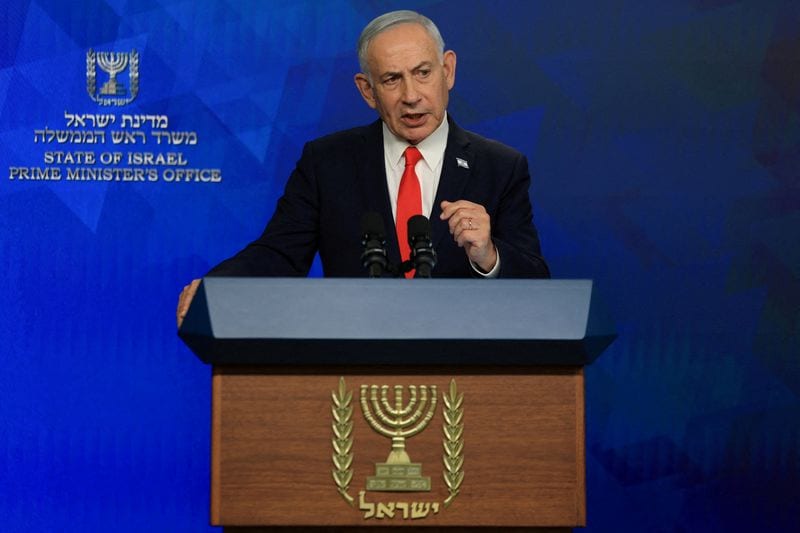
- Prime Minister Benjamin Netanyahu is attempting to unify Israel's right-wing parties before a Tuesday deadline to avoid an election loss.
- Opinion polls indicate a potential defeat for Netanyahu's nationalist-religious coalition in the upcoming October 27 election.
- Netanyahu has encouraged allied parties to merge their candidate lists to improve their chances of securing parliamentary seats.
- The Religious Zionism party, led by Finance Minister Bezalel Smotrich, has merged with the Zehut party.
- National Security Minister Itamar Ben-Gvir's Jewish Power party and newcomer Ofer Winter have opted to run separately.
- Netanyahu's political standing has been affected by the security failures surrounding the October 7 Hamas attack and ongoing conflicts.
Prime Minister Benjamin Netanyahu is racing to unify Israel's fragmented right-wing parties before a Tuesday deadline, aiming to avert a projected election defeat. Opinion polls have consistently shown his nationalist-religious coalition facing a loss in the October 27 election, a situation exacerbated by pressure over the 2023 Hamas-led attack and subsequent conflicts in Gaza, Iran, and Lebanon.
Netanyahu has been actively encouraging allied parties to merge their candidate lists to improve their chances of crossing the 3.25% vote threshold required to gain seats in the 120-seat Knesset. While his Likud party is still projected to be the largest, polls suggest it could lose a third of its current parliamentary power. The Religious Zionism party, led by Finance Minister Bezalel Smotrich, has merged with the smaller Zehut party, headed by Moshe Feiglin. However, National Security Minister Itamar Ben-Gvir has resisted Netanyahu's calls for his Jewish Power party to run jointly with Religious Zionism, arguing they would be stronger separately.
Another challenge for Netanyahu is political newcomer Ofer Winter, a former brigadier general whose views align with the right-wing bloc. Winter has refused to merge his party, stating he will not run with anyone he deems responsible for the security failures of the October 7 attack. Netanyahu has voiced concern that Winter's independent run could lead to "wasting" crucial right-wing votes.
Netanyahu's political standing has been weakened by the security lapses of the October 7 attack and the prolonged wars, which have yielded military successes but no lasting victories. His concessions to ultra-Orthodox allies regarding military conscription have also alienated some traditional supporters. Political analyst Amotz Asa-El noted that Netanyahu faces an unprecedented crisis, with his name associated with the current historical challenges. Gadi Eisenkot, a former military chief whose son was killed in Gaza, is emerging as Netanyahu's strongest rival, with his Yashar party gaining traction in the polls.