Key facts
- Electoral Commission preliminary results put National and Labour each just under 30% of the popular vote, a few hundred votes apart.
- An Electoral Commission projection gave the National-led three-party coalition a two-seat majority.
- The final count, including special votes that have historically favored left-leaning parties, is due on November 27.
- Luxon has repeatedly ruled out working with the centrist Opportunity Party, which looks likely to enter parliament for the first time.
- Political scientist Mona Krewel said National and Opportunity could still make it work, calling Opportunity very centrist and pragmatic.
- Commentator Ben Thomas said the result looked on track for the least proportional parliament New Zealand has had.
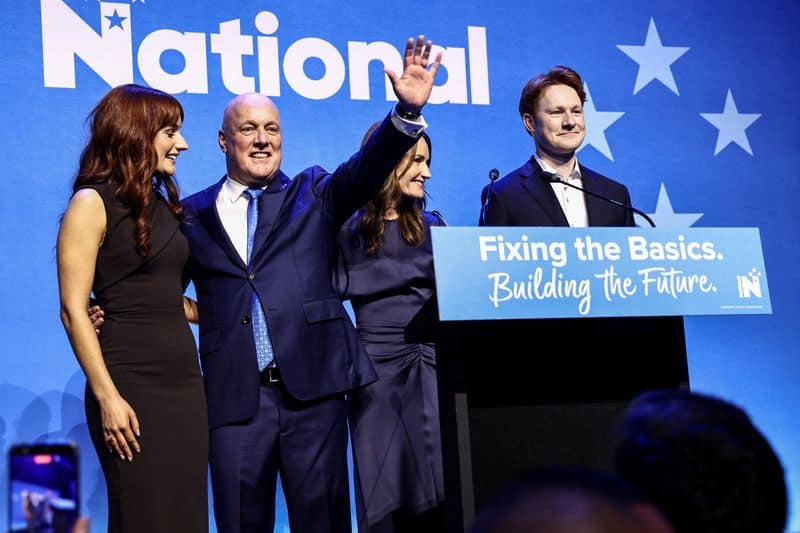
New Zealanders were unlikely to have much clarity on Sunday over who will govern the country for the next three years, after overnight results showed the ruling center-right National Party and main opposition Labour Party nearly deadlocked in the popular vote.
Electoral Commission preliminary results showed both parties polling at just under 30% of the popular vote, with only a few hundred votes separating them. An Electoral Commission projection showed the current three-party ruling coalition, led by National, would secure a two-seat majority after an election dominated by a struggling economy and voter disillusionment with the two largest parties.
The final vote count, which will include special votes that have historically favored left-leaning parties, will not be released until November 27. Until then the incumbent coalition, led by Prime Minister Christopher Luxon, will continue to operate as a caretaker government.
If the National-led coalition loses its majority at the official count, either it or a left-leaning coalition would require the support of the centrist Opportunity Party, which looks likely to enter parliament for the first time. Luxon has repeatedly ruled out working with Opportunity, but Mona Krewel, a senior political science lecturer at Victoria University of Wellington, said it was possible the two parties could still work together. "I actually would take them for very centrist, very pragmatic, and so I do think they could make it work with National," she said.
The country switched to a mixed member proportional system in 1996, meaning people vote for both a party and a local constituency candidate. There are 71 constituency, or "electorate", seats and at least 49 party list seats.
However, National and a minor party, Te Pati Maori, each won a disproportionately high share of constituency seats relative to their popular-vote support due to tactical voting, reshaping the balance of seats in parliament and sparking debate about the electoral system. "It certainly looks as if we're on track for the least proportional parliament that we've had, as a result of the vagaries of the rules around how electorate seats interact with the parliament as a whole," political commentator Ben Thomas said.