Key facts
- Rescuers in Nepal are focusing on three hydropower project tunnels where dozens of workers are believed to be trapped.
- A glacier collapse on August 26 engulfed 11 hydropower projects, burying tunnel entrances under debris.
- Authorities are prioritizing the Chilime hydroelectric project due to its facilities.
- Oxygen has been supplied to tunnels of the Upper Trishuli 3A and 3B projects.
- About 121 of 900 missing people from hydroelectric projects may be trapped in tunnels.
- At least 1,399 people have been killed and over 5,400 are missing in Nepal and Tibet.
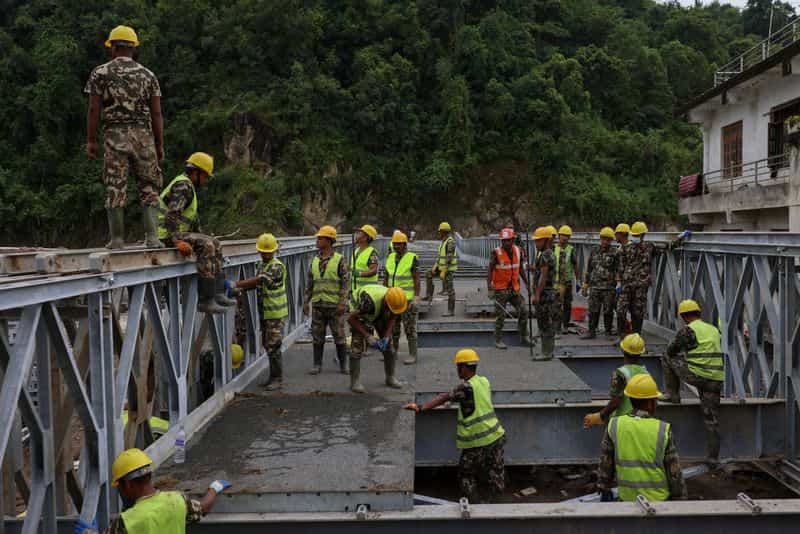
Rescuers in Nepal are concentrating their efforts on three hydropower project tunnels where dozens of workers are believed to be trapped, authorities said. This comes two weeks after a devastating glacier collapse on August 26 triggered floods that killed hundreds and left thousands missing in Nepal and China's Tibet region.
At least 11 hydropower projects were affected when the glacier collapsed into a river on the Nepal-China border, burying tunnel entrances under debris and mud. Dharma Raj Upreti, chief of Nepal's disaster authority, stated that search operations are focused on finding survivors, particularly in the Chilime hydroelectric project due to its facilities. Teams are also concentrating on tunnels of the Upper Trishuli 3A and 3B projects, which are interconnected. Oxygen has been supplied to these tunnels, and new equipment has been sent to aid in opening a passage.
Prime Minister Balendra Shah has pledged to continue the rescue operations with sensitivity. Army rescuers indicated that approximately 121 of the 900 people missing from the hydroelectric projects might be trapped within the tunnels. In recent days, four individuals, including a Chinese national, have been rescued. The overall death toll from the mudslide and flooding stands at least 1,399, with over 5,400 people missing across Nepal and Tibet. Both China and Nepal have attributed the glacier collapse to climate change.