Key facts
- The McGetchin crater on the Moon measures 222 meters wide and 43 meters deep.
- The crater was discovered by NASA scientist Robert Wagner using data from the Lunar Reconnaissance Orbiter.
A NASA scientist has discovered the largest newly formed crater on the Moon, measuring 222 meters wide and 43 meters deep. The impact event, believed to have been caused by an asteroid or comet the size of a three- to six-story building, is estimated to occur only once every 132 years.
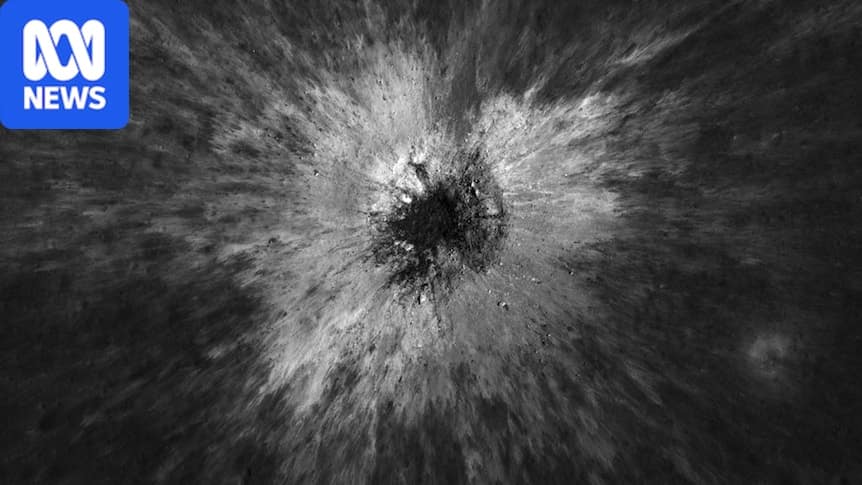
The discovery of the largest newly formed lunar crater provides scientists with a rare opportunity to study a recent, significant impact event, offering critical data for understanding lunar geology and preparing for future crewed missions to the Moon.
NASA scientist Robert Wagner has discovered the largest newly formed crater on the Moon, an event considered a rare occurrence that happens about once every 132 years. The crater, named McGetchin, measures 222 meters wide and 43 meters deep, making it wider and about as deep as the Roman Colosseum. Researchers believe it was formed by the impact of a comet or asteroid the size of a three- to six-story building between April 11 and May 22, 2024.
Wagner, a researcher with NASA's Lunar Reconnaissance Orbiter (LRO), noticed an unusually large bright spot circled by a dark halo in routine data quality reports and maps generated by the LRO. The LRO has been mapping the Moon's surface since 2009, allowing scientists to identify changes by comparing "before and after" photographs. The discovery of the McGetchin crater is significant because studying such a recent and large impact in real-time can help build understanding of lunar geology, which could better prepare future crewed missions to the Moon.
In addition to photographic data, the LRO also detected a "cold spot" surrounding the crater, a 6.5km patch that was marginally cooler at night. Scientists believe this is due to unsettled lunar dust and soil (regolith) being less dense and less able to retain heat after the impact. This suggests that impacts can modify the Moon's surface far beyond the immediate crater itself, potentially affecting how rovers interact with the surface.