Key facts
- China is creating a 600-kilometer-wide "Special Restricted Area" centered on Beijing, effective September 20.
- The zone will prohibit all flights except for commercial, approved business, military, customs, police, and fire-rescue flights.
- The restricted area covers over 280,000 square kilometers, encompassing Beijing, Tianjin, and parts of several other provinces and the Bohai Sea.
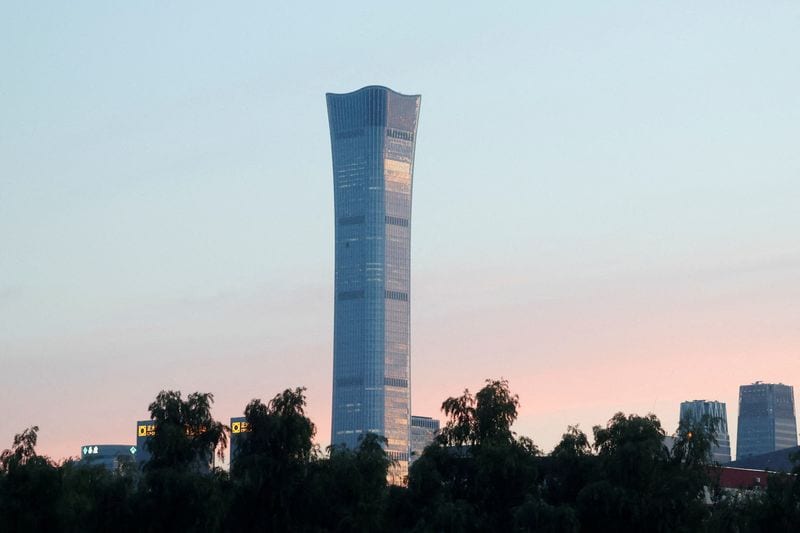
- The measure follows a rare incident where a light sport aircraft crashed into the CITIC Tower on June 26.
- Exempt flights must adhere to pre-approved plans, obtain approval for deviations, and maintain continuous radio communication.
- Aircraft within the zone must be equipped with surveillance and identification equipment.
China is establishing a vast airspace security zone, approximately the size of Italy, around Beijing, which will take effect on September 20. The "Special Restricted Area," spanning 600 kilometers in diameter, will prohibit all flights except for commercial, approved business, military, customs, police, and fire-rescue operations. This measure follows a rare incident on June 26 where a light sport aircraft crashed into the 108-storey CITIC Tower in Beijing's central business district, killing the sole pilot and injuring 13 others.
The restricted zone, covering over 280,000 square kilometers, encompasses Beijing, Tianjin, and extends into parts of Inner Mongolia, Shanxi, Shandong, Liaoning, and the Bohai Sea. It is described as one of the largest permanent airspace restrictions imposed over a capital city and aims to strengthen security management and protect important ground targets.
All flights operating within the new zone must adhere strictly to pre-approved flight plans, obtain approval for any deviations, and maintain continuous two-way radio communication. Aircraft will also be required to have surveillance and identification equipment that allows for continuous electronic tracking by air traffic controllers. Pilots must report their "security status" before entering the restricted area.