Key facts
- Over 1,300 earthquakes have been detected near North Korea's Punggye-ri nuclear test site since its 2017 nuclear test.
- A joint research team from Pusan National University and Chengdu University of Technology analyzed seismic wave data from 2008 to 2025.
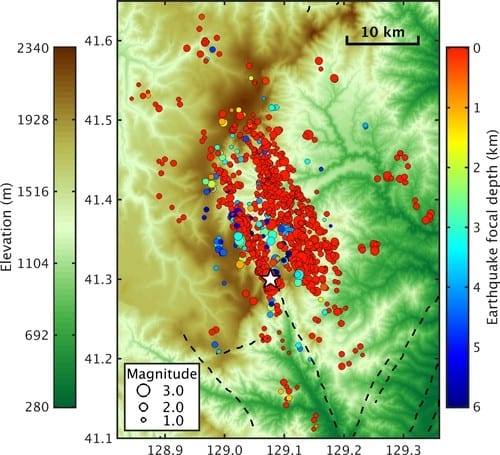
- The number of earthquakes increased significantly after North Korea's 2017 nuclear test, concentrating on a 24-kilometer fault zone.
- Tremors following the 2017 test intensified in frequency and magnitude throughout 2025.
- Professor Kim Kwang-hee warned that the fault zone could experience an earthquake as strong as magnitude 6.4.
Unexpected and prolonged seismic activity has been detected around North Korea's Punggye-ri nuclear test site, particularly following the regime's most powerful nuclear test in 2017, according to a joint study by South Korean and Chinese scientific experts. Researchers from South Korea's Pusan National University and China's Chengdu University of Technology analyzed seismic wave data from 2008 to 2025. They found a significant increase in earthquakes near Mantap Mountain, where North Korea detonated six nuclear devices between 2006 and 2017. While about 60 earthquakes were detected in the 11 years following the first test in 2006, and activity increased around 2013, the tremors intensified dramatically after the 2017 test. A total of 1,330 earthquakes have followed since then, concentrated on a fault zone spanning approximately 24 kilometers. The study, published in the academic journal Science, noted that earthquakes after previous tests were mostly short-lived, but those erupting after the 2017 test increased in both frequency and magnitude throughout 2025. Professor Kim Kwang-hee, who led the South Korean research team, warned that the fault zone could potentially experience an earthquake as strong as magnitude 6.4.