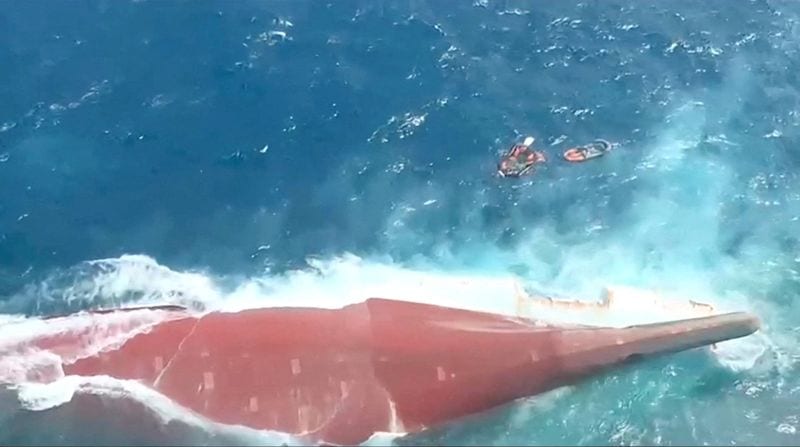
Key facts
- Divers are facing high-risk challenges including fast currents, water pressure, and the hull design of the capsized Virgo Transport 8.
- 129 people remain missing after the ship sank early Sunday.
- Six people have been confirmed dead and 108 have been rescued.
- The 4,277-ton roll-on/roll-off vessel was on a 20-hour voyage from Surabaya to Banjarmasin.
- The ship has sunk to the seabed in the Java Sea, which is 40-50 meters deep.
- An operation to right the ship has begun, while rescue efforts continue.
Indonesian divers are facing perilous conditions as they attempt to reach 129 people missing since the Virgo Transport 8 ferry capsized and sank in the Java Sea. The rescue operation, which began five days after the incident, is being hampered by strong currents, high waves, and the enclosed design of the roll-on/roll-off vessel. Currents at the site were initially measured at nearly 7 knots, significantly above the 1.5-knot safety limit for diving, though they have since eased. The ship, weighing 4,277 tons, was on a 20-hour voyage from Surabaya to Banjarmasin when it went down in bad weather. Six people have been confirmed dead and 108 were rescued on the day of the accident, with no change to these figures since. The vessel has now sunk to the seabed in waters 40-50 meters deep. A legally mandated salvage operation, initiated by the ship's owner PT Virgo Karya Shipping, to right the vessel is proceeding concurrently with the rescue efforts. Maritime experts warn that navigating the flooded, unfamiliar compartments of the ship in near-zero visibility poses significant risks to divers and any potential survivors. Despite the dwindling hope for some families, authorities are committed to continuing the search for at least a week, citing the possibility of survivors trapped in watertight compartments.