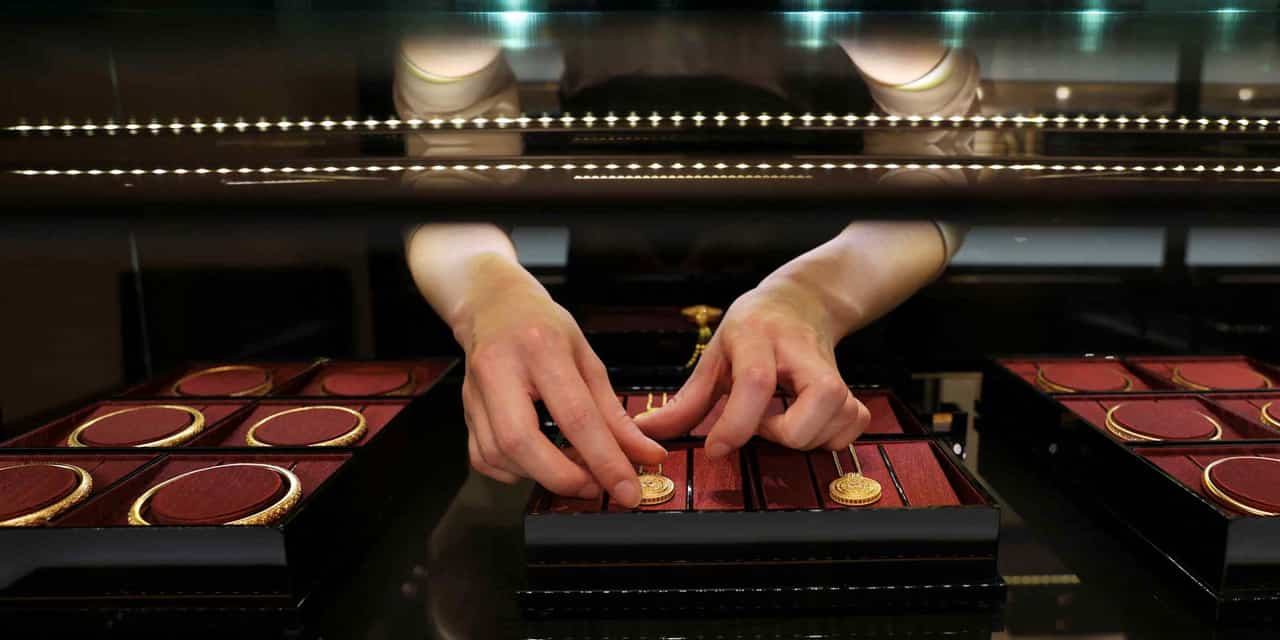
Chinese jewelry brand Laopu Gold reported first-half earnings that missed forecasts, attributing the slowdown to falling gold prices and broader industry headwinds. Despite the deceleration, the company stressed its continued growth and global expansion plans.

Laopu Gold's performance highlights the challenges facing luxury consumer brands when underlying asset prices decline, impacting consumer sentiment and investment-based purchasing decisions. The company's ability to sustain growth despite these market shifts will be a key indicator for investors watching similar consumer trends.
Chinese jewelry brand Laopu Gold has reported first-half earnings that fell short of expectations, a slowdown attributed to falling gold prices and broader industry challenges. The company, which previously saw significant growth, is now experiencing a deceleration as consumers view jewelry less as an investment when bullion prices decline.
Despite the headwinds, Laopu Gold projects maximum revenue of approximately 20.5 billion yuan (US$3.03 billion) for the six months ending June 2026, with adjusted net profit expected to climb between 83% and 85%, reaching up to 4.36 billion yuan. This represents a significant slowdown from previous periods, with revenue growth at 60% in the first half of 2026, compared to 251% a year earlier.
The company's strategy of focusing on craftsmanship and fixed-price jewelry premiums, which proved successful during a period of rising gold prices, is now being tested. Falling gold prices have weakened the 'store of value' argument for jewelry purchases, leading consumers to wait for prices to stabilize. This pattern is also observed in other Chinese consumer brands that previously benefited from social media hype and speculative demand.
Laopu Gold operates nearly 50 boutiques across China and claims to have achieved the highest per-store sales and floor efficiency among luxury brands in mainland China for 2025 and the first half of 2026. However, its stock has seen a substantial decline of over 60%, reflecting investor concerns about the growth slowdown, even as the company maintains that its brand influence is expanding and high-value customers continue to spend.