Key facts
- A U.S. marine, Devin Ballard, was arrested on suspicion of murdering Anna Yagi in Okinawa.
- Yagi was found dead at a hotel in Naha early Saturday, with an autopsy indicating suffocation as the cause of death.
- The U.S. military imposed a monthlong curfew and a 48-hour pause on operations in Okinawa following the arrest.
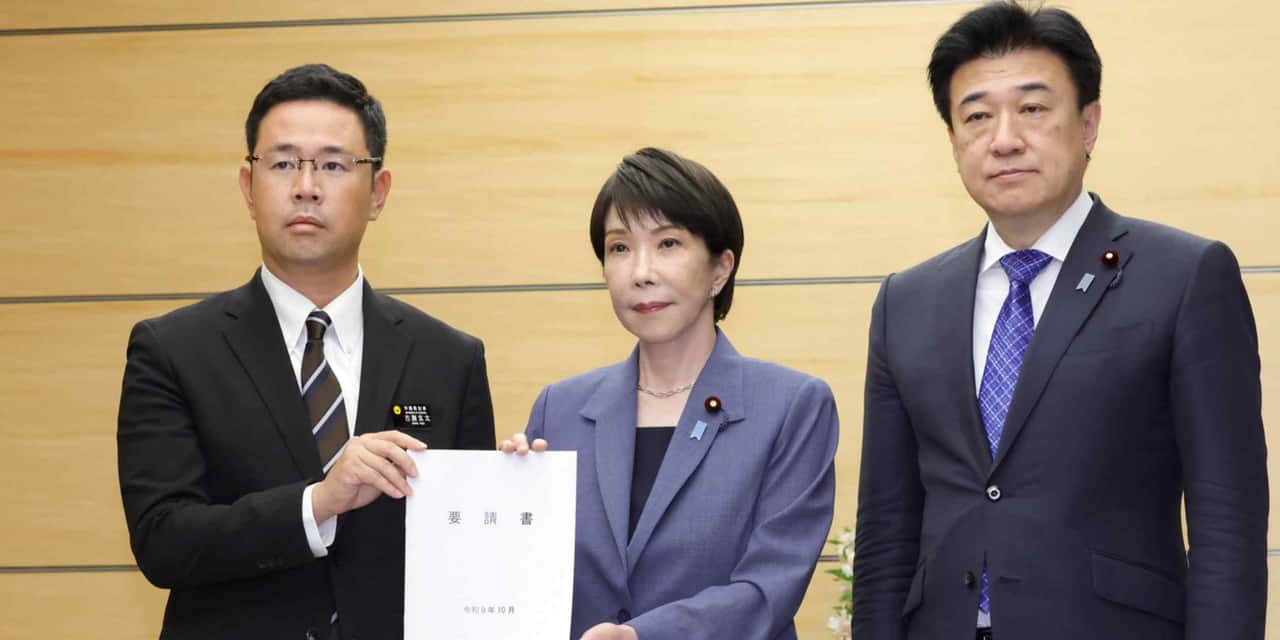
- Japanese Prime Minister Sanae Takaichi vowed to implement "effective measures" to prevent future crimes by U.S. military personnel.
- Okinawa Governor Genta Koja protested the incident and called for a review of the U.S.-Japan Status of Forces Agreement.
Japanese Prime Minister Sanae Takaichi stated on Wednesday that she will pursue "effective measures" to prevent crimes committed by U.S. military personnel stationed in Japan, following a formal protest lodged by Okinawa Governor Genta Koja. The protest came after the arrest of a U.S. marine on suspicion of murdering a Japanese woman in the prefecture.
The U.S. military has responded by imposing a monthlong curfew on its personnel in Okinawa, from midnight to 5 a.m., starting Friday. This follows a 48-hour pause on operations and a prohibition of alcohol consumption off-base, which began Wednesday.
Devin Ballard, a 20-year-old U.S. marine, was arrested on Sunday on suspicion of robbing and murdering Anna Yagi, a 39-year-old Okinawan woman. Yagi was discovered deceased in a Naha hotel early Saturday, with an autopsy indicating suffocation as the cause of death. Police apprehended Ballard after reviewing surveillance footage showing him entering the hotel with Yagi and leaving alone with what appeared to be her bag. Ballard has reportedly denied any knowledge of the incident.
Governor Koja expressed intense anger and regret over the "extremely brutal and vicious incident," which he said has caused great anxiety among residents. He and the mayor of Naha filed protests with Japanese officials and called for a review of the U.S.-Japan Status of Forces Agreement, which governs legal jurisdiction over U.S. military personnel in Japan. Critics argue the agreement hinders Japan's ability to prosecute off-duty offenses by U.S. personnel against Japanese civilians.
The murder has reignited calls among some Okinawans to reduce the U.S. military presence in the prefecture, where a significant portion of U.S. military installations in Japan are located. Sorane Sakihama, a 24-year-old Okinawan native, stated that the case should be the last of its kind and urged both governments to take the situation seriously.