Key facts
- Japan's centenarian population reached a record 107,677 in September.
- This marks the 56th consecutive year of growth in the centenarian population.
- Women comprise 87.6% of centenarians, totaling 94,298 individuals.
- Fuyo Kishimoto, 114, is the oldest woman, and Hikaru Kato, 112, is the oldest man.
- The number of centenarians has grown from 153 in 1963 to over 100,000.
The number of people aged 100 or older in Japan reached a record high of 107,677 in September, climbing for the 56th consecutive year, according to data from the Health, Labor and Welfare Ministry. This marks the first time the total number of centenarians has surpassed 100,000, with an increase of 7,914 from the previous year.
Women account for a significant majority of this demographic, making up 87.6% with 94,298 individuals. The figures, compiled based on the basic resident register as of September 1, showed growth in both male and female centenarians, with 1,400 more men and 6,514 more women reaching the milestone.
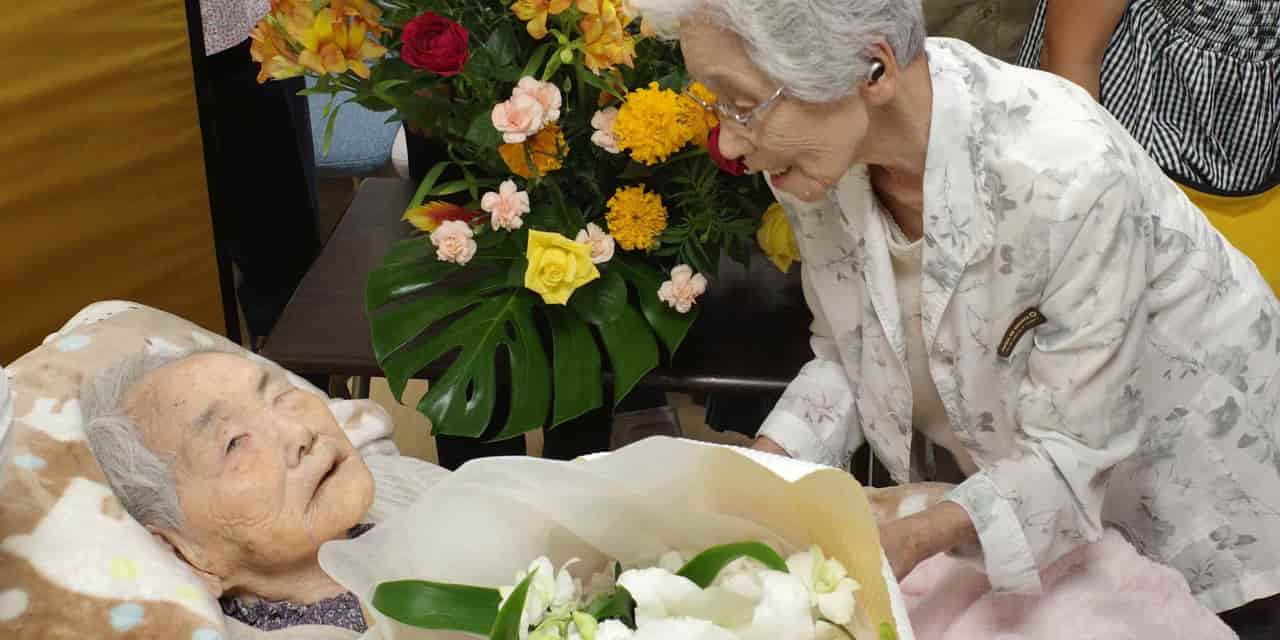
Fuyo Kishimoto, a 114-year-old resident of Kyoto, is identified as the oldest woman, while Hikaru Kato, a 112-year-old man from Kumamoto, is the oldest man. Health Minister Kenichiro Ueno expressed delight at the long lives but warned of challenges to the social security system.
Experts attribute the longevity to factors including a healthy diet rich in fish, vegetables, and rice, and active lifestyles. Companies have also developed products for the aging population, such as powered exoskeletons and adaptive eyewear.
However, Japan faces a demographic crisis with a record low fertility rate of 1.14 children per woman. The total population is projected to fall by 30% to 87 million by 2070. Residents aged 65 and older already constitute about 30% of the population and are expected to reach nearly 40% by 2070. Prime Minister Sanae Takichi has called this trend a "quiet emergency."
When Japan began its centenarian survey in 1963, there were only 153 centenarians. The number surpassed 1,000 in 1981, 10,000 in 1998, and 50,000 in 2012. The recent figures were released ahead of Japan's "Respect for the Aged" public holiday.