Key facts
- Hungary will release tens of thousands of Communist-era police files into an online public database.
- The database will include lists of informers and collaborators used by former state security services.
Hungary will begin releasing tens of thousands of Communist-era police files into an online public database on November 4, marking a significant step in confronting its totalitarian past. The move, timed for the 70th anniversary of the 1956 anti-Soviet uprising, will allow public access to lists of informers and collaborators, a process previously restricted to researchers or close family.
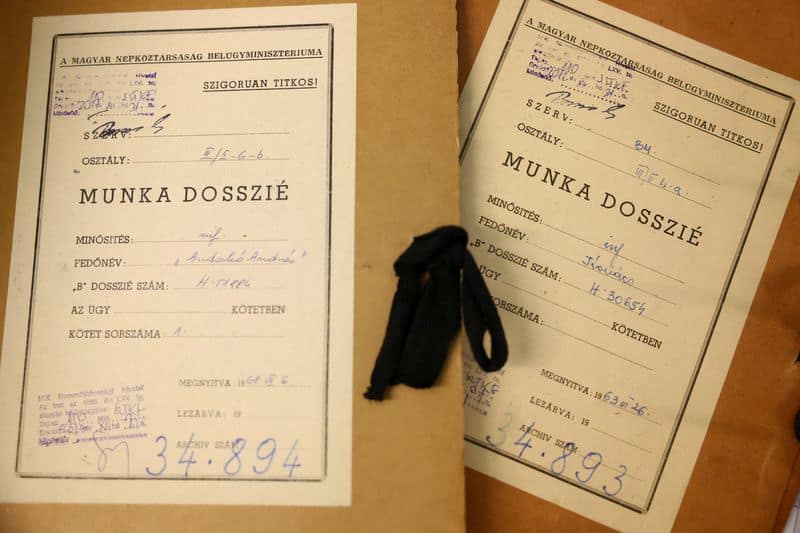
The release of these historical files offers a rare opportunity for citizens to directly engage with the legacy of Communist-era surveillance and collaboration, potentially impacting societal reconciliation and historical understanding in Hungary.
Hungary is set to begin releasing tens of thousands of Communist-era police files into an online public database on November 4, a move aimed at allowing citizens to confront the country's totalitarian past. The initiative, timed to coincide with the 70th anniversary of the 1956 anti-Soviet uprising, will provide public access to lists of informers and collaborators who worked with the former state security services.
While Communist rule ended in 1989, successive governments delayed the full opening of these sensitive records. Previously, only researchers or close family members could access personal files. The new online database will allow anyone to conduct searches, a step described as historic by Bendeguz Gergo Cseh, director of the Historical Archives of the Hungarian State Security (ABTL), which manages the records.
During the Cold War, secret police agencies across Eastern Europe, including Hungary's, relied on a network of civilian collaborators, often recruited through coercion or reward. These informers monitored friends, neighbors, and colleagues for signs of dissent, with their reports frequently leading to arrests. The ABTL manages files containing the names of an estimated 50,000 to 60,000 collaborators.
Musician Peter Muller "Sziami," who was active in the 1980s underground rock scene, recalled his band Kontroll Csoport performing a song titled "Informers and Provocateurs" in 1983. He noted that informants were present at concerts, and authorities often targeted musicians like himself. Despite these memories, Muller expressed mixed feelings about the public release, questioning the need for such a "cleansing" after so many years, especially for those who have died or moved on.
Hungary's approach to opening archives is considered more comprehensive than in other former Eastern Bloc countries. Poland opened its archives earlier but restricts unrestricted searches, while Germany and the Czech Republic have adopted more limited access policies. The Hungarian law emphasizes that understanding the past and transparency are essential for a functioning democracy. Some sensitive personal details within the files, such as health records or sexual orientation, will be redacted.
Pick the topics you care about. Get only what matters, on your cadence.