Key facts
- Travellers must register with immigration on both sides of the border for joint clearance at Huanggang Port.
- Around 100,000 travellers are expected daily at the revamped crossing.
- Hong Kong's Immigration Department will provide registration assistance.
- The new system aims to cut clearance time from 30 minutes to 5 minutes.
- Automated channels will offer both document reading and face scan clearance.
Travellers using the revamped Huanggang Port crossing between Hong Kong and mainland China will be required to register with immigration authorities on both sides of the border to utilize the new automated "joint clearance" channels. This new system is expected to significantly reduce processing times.
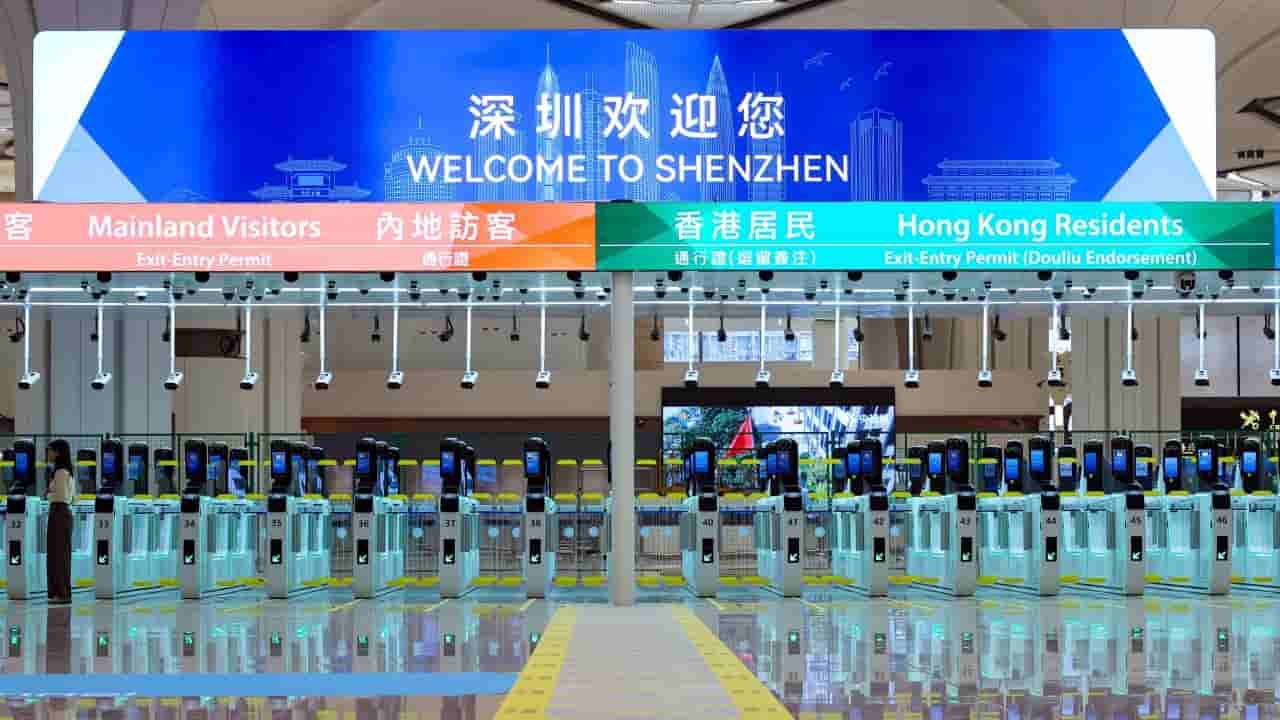
Hong Kong's Immigration Department has stated that sufficient manpower will be deployed to assist passengers with the registration process at the checkpoint. The "collaborative inspection and joint clearance" mode, a novel approach to border control, is designed to enhance passenger experience and efficiency. Under this arrangement, automated channels from both governments will be positioned side-by-side within their respective jurisdictions at the boundary line inside the port. This setup allows passengers to undergo document inspection and identity verification for both immigration procedures with a single queue.
The implementation of this mode is projected to cut down clearance time at the Huanggang Port from the current approximately 30 minutes at the Lok Ma Chau/Huanggang Control Point to around 5 minutes. The automated channels will support both "document reading" clearance, similar to Hong Kong's e-Channels, and a new "face scan" clearance mode. Eligibility for the "document reading" clearance includes individuals aged 7 or above who are Hong Kong residents or mainland visitors meeting specific criteria, such as holding a Hong Kong identity card and a Mainland Travel Permit, or an Exit-Entry Permit for Travelling to and from Hong Kong and Macao with a valid endorsement.