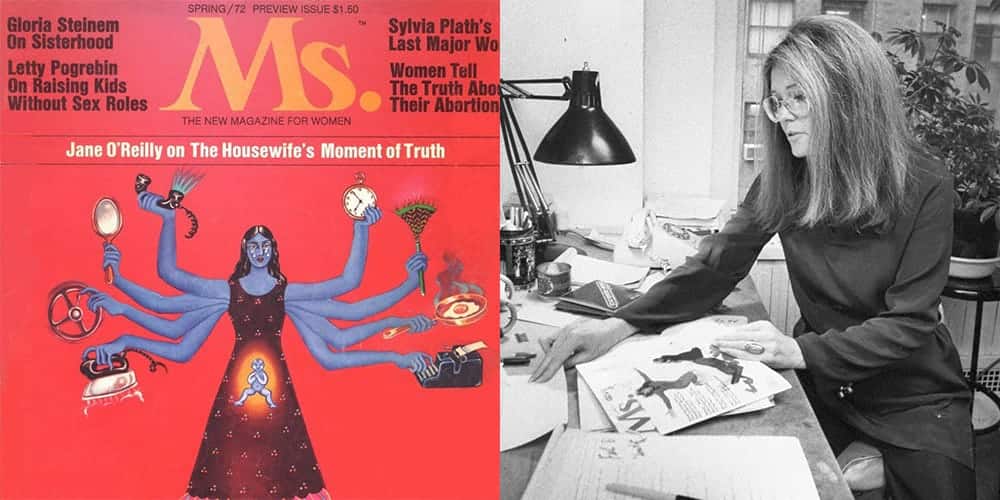
Key facts
- Gloria Steinem co-founded Ms. Magazine, launching a publication owned and operated by women.
- The magazine aimed to reach a mass audience, challenging the idea that women were a niche market.
- Ms. Magazine covered significant feminist issues such as abortion rights, workplace discrimination, domestic violence, and sexual harassment.
- The publication proved that feminist editorial content could sustain a national magazine.
- The first issue, a supplement to New York magazine, sold out rapidly and generated substantial subscription requests.
Gloria Steinem, a prominent feminist figure, co-founded Ms. Magazine in 1971, challenging the prevailing notion that women constituted a niche audience in the publishing industry. The magazine's inception was initially conceived by Steinem as a newsletter, but Brenda Feigen-Fasteau, then national vice president of the National Organization of Women (NOW), persuaded her to pursue a more ambitious, glossy magazine format.
Ms. Magazine launched as a preview issue within New York magazine on December 20, 1971, and its first official issue hit newsstands in 1972. This inaugural edition proved to be a significant success, selling out 300,000 copies within eight days and generating over 26,000 subscription requests, demonstrating a substantial unmet demand for feminist-focused content.
The publication distinguished itself by treating women as political subjects rather than solely domestic consumers. It covered critical feminist issues such as abortion rights, workplace discrimination, domestic violence (helping to introduce terms like "wife-battering" into public discourse), and sexual harassment, years before these became widely recognized legal or social issues. By addressing these topics, Ms. Magazine helped to create a public vocabulary for experiences previously unnamed or ignored.
Ms. Magazine's success also proved the viability of feminist media on a national scale. Prior to Ms., feminist publications were typically small-circulation and collectively produced. The magazine's ability to attract advertisers, despite initial feminist criticism of its capitalist model, and its substantial readership, demonstrated that a mass-market approach could sustain a publication dedicated to feminist ideology.