Key facts
- Japan's government will provide 213.1 billion yen ($1.4 billion) in subsidies to three shipbuilders.
- The subsidies will be distributed over a decade, from fiscal 2026 to fiscal 2034.
- Imabari Shipbuilding, Japan Marine United (JMU), and Namura Shipbuilding are the recipients.
- The funds are intended for capital investments in hull manufacturing, automation, and R&D.
- The government aims to double Japan's shipbuilding capacity to 18 million tons by 2035.
- The initiative is part of a larger 1 trillion yen public-private investment plan.
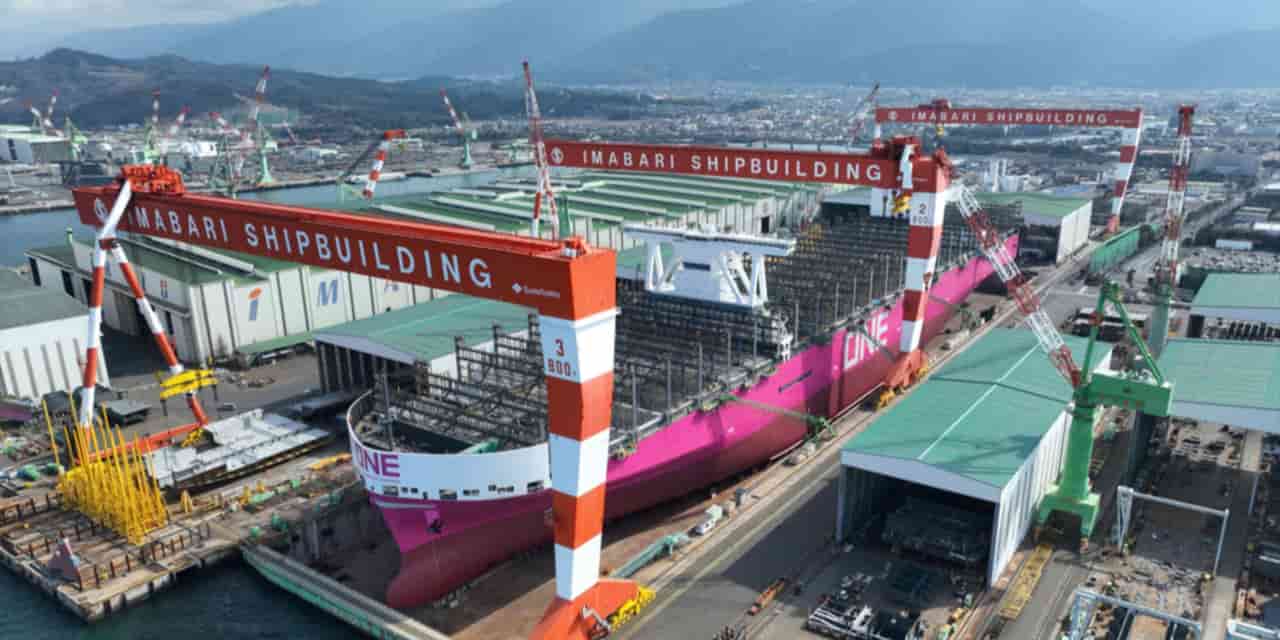
The Japanese government has announced a significant financial aid package, totaling 213.1 billion yen (approximately $1.4 billion), to bolster its domestic shipbuilding industry. This marks the first round of support under a decade-long plan aimed at reviving the sector and doubling its capacity by 2035. The subsidies will be distributed to three major shipbuilders: Imabari Shipbuilding, Japan Marine United (JMU), and Namura Shipbuilding.
Imabari Shipbuilding and its subsidiaries are set to receive up to 113.8 billion yen, while JMU will receive a maximum of 49.4 billion yen, and Namura Shipbuilding and its unit Hakodate Dock will get up to 49.9 billion yen. These funds are earmarked for capital investments in crucial areas such as hull manufacturing facilities, including new block and painting plants, large-scale cranes, and the introduction of advanced technologies like welding robots. The government's objective is to enhance the industry's competitiveness against strong rivals in China and South Korea.
This initiative is part of a broader strategy to achieve approximately 1 trillion yen in combined public-private investment over the next decade, with the goal of increasing Japan's shipbuilding capacity from the current 9 million gross tons to 18 million gross tons by 2035. Transport Minister Yasushi Kaneko expressed his commitment to the revival, stating, "Our efforts to revive the shipbuilding industry will finally start." The government plans to continue evaluating and certifying investment plans from other operators, signaling further support for the sector.