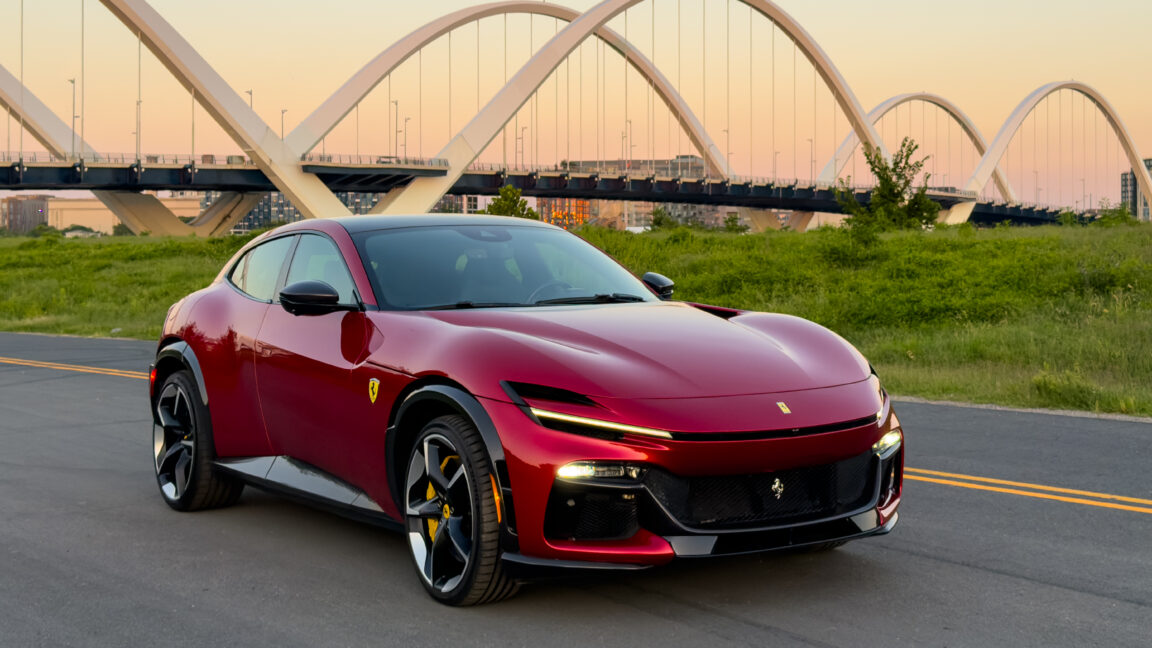
Key facts
- The Ferrari Purosangue is described as a four-seat, five-door vehicle, not an SUV.
- It features rear-hinged doors for improved access to the rear bucket seats.
- The Purosangue has an immovable firewall separating the cargo area from the passenger cabin.
- It is powered by a 6.5 L naturally aspirated V12 engine producing 715 hp and 528 lb-ft of torque.
- The vehicle has a front-mid engine layout with a 49:51 front-to-rear weight ratio.
- It utilizes an eight-speed, dual-clutch transaxle gearbox and an all-wheel-drive system.
Ferrari's new Purosangue is a departure from its traditional two-seat sports car identity, offering a four-seat, five-door configuration that the automaker prefers to call a Ferrari Utility Vehicle (FUV) rather than an SUV. This model builds upon Ferrari's history of accommodating more than one passenger, following vehicles like the 612, FF, and GTC4, but offers enhanced usability for rear occupants with the addition of rear-hinged doors providing direct access to two individual rear bucket seats.
Despite its five-door hatchback design, the Purosangue features an immovable firewall between the cargo area and the passenger cabin, and the rear seats do not fold flat, limiting its practicality for bulky cargo compared to traditional SUVs. The vehicle is powered by a 6.5-liter naturally aspirated V12 engine, mounted in a front-mid configuration, which produces 715 horsepower and 528 lb-ft of torque. This setup, combined with an eight-speed dual-clutch transaxle gearbox and an all-wheel-drive system, results in a front-to-rear weight distribution of 49:51.
Measuring 195.8 inches long, 79.8 inches wide, and 62.6 inches tall, with a 118.1-inch wheelbase and a curb weight of 4,784 lbs, the Purosangue is a substantial vehicle. However, reviews suggest it handles well, shrinking around the driver even on narrow city streets, and is easy to drive slowly in traffic. The car offers multiple drive modes, including Sport and Ice, with paddle shifters for manual gear selection. The steering is described as direct with good feedback, and the chassis control systems work to tighten the car's line under power. The interior features supportive seats, and the user interface, while complex, uses physical buttons for many controls, including Apple CarPlay integration into the main instrument display.