Key facts
- US automakers are reviving V8 engines as federal climate rules relax.
- GM invested $830 million in US propulsion plants for new V8s.
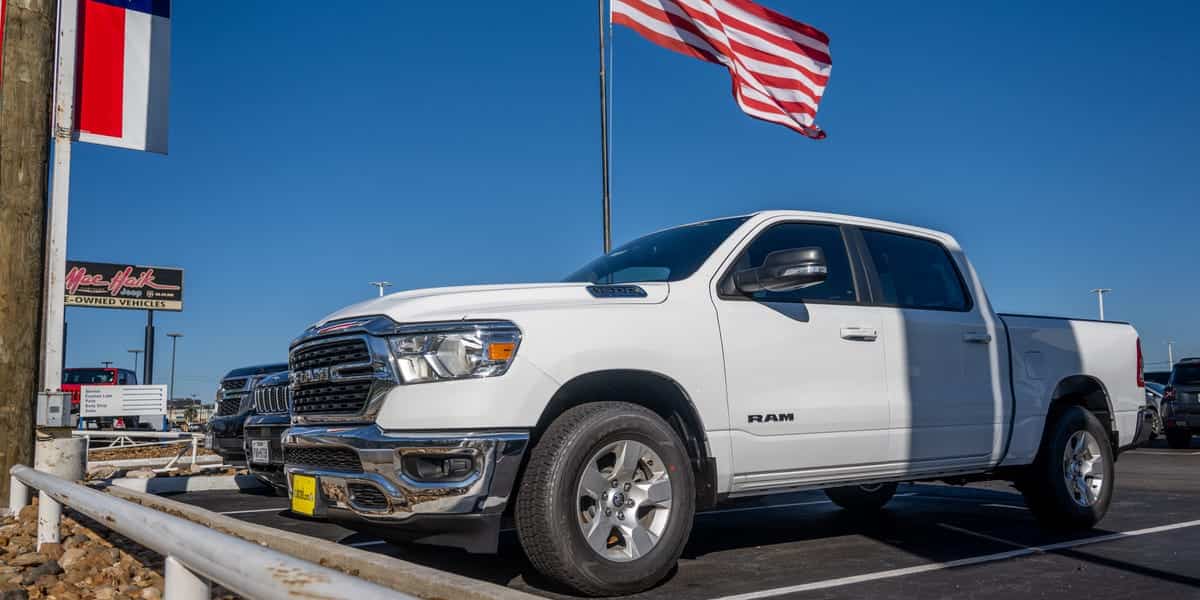
- Ram brought back its Hemi V8 engine in August.
- Ford's 2027 F-150 offers a 5.0-liter V8.
- Demand for large, gas-powered vehicles, especially trucks, remains strong.
- Consumers spent about $15 billion on full-size pickup trucks in December.
US automakers are responding to relaxed emissions rules and the elimination of federal fuel-efficiency fines by reintroducing and continuing production of V8 engines. This strategic shift reflects a bet on sustained consumer demand for powerful, gas-guzzling vehicles, particularly trucks, despite rising gas prices.
General Motors announced new V8 engines for the 2027 Chevrolet Silverado and GMC Sierra, backed by an $830 million investment in US propulsion plants. Ram Trucks has brought back its Hemi V8 engine and relaunched the TRX pickup, marketed as an "automotive apex predator." Previously, GM had stopped producing electric-vehicle batteries at a New York plant to restart V8 engine production, requiring an $888 million investment.
Ford is also maintaining its V8 offerings, including a 5.0-liter option in the updated 2027 F-150, while making a turbocharged V6 its base engine. The company also plans a faster trim for its V8-powered Mustang Dark Horse lineup.
The V8 engine, a symbol of American automotive culture since its early development in the 1900s, became synonymous with postwar expansion and affordable gasoline. While consumer preferences shifted towards smaller, more efficient vehicles in the 1970s and 1980s due to fuel prices and emissions regulations, V8s remained popular for full-size trucks and performance cars. Data from Cox Automotive indicates strong demand, with consumers spending approximately $15 billion on full-size pickup trucks in December alone.