Key facts
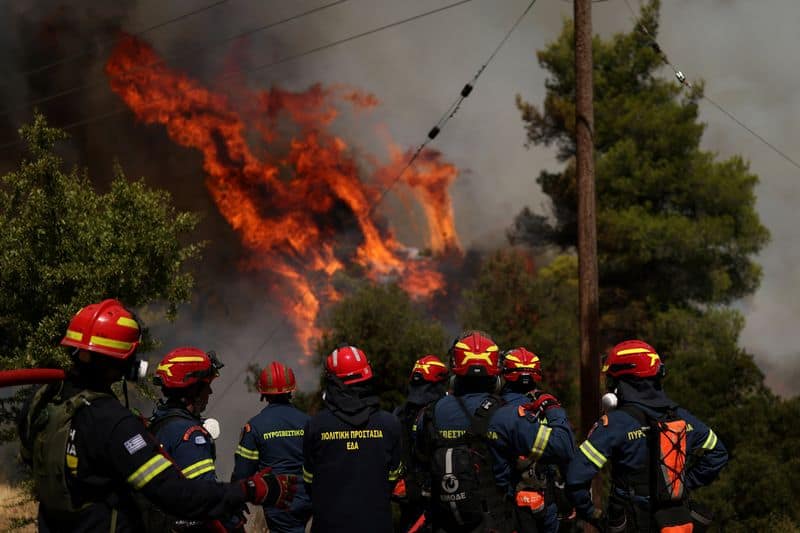
- Greece is battling significant wildfires, particularly near Athens, with high winds hampering firefighting aircraft.
- France's largest wildfire in the Gironde region, which scorched 420 sq km, is contained but still burning in parts.
- Hungary has shut its sole nuclear power plant due to critically low water levels in the Danube River.
- Fires in France and Spain have forced approximately 330,000 people from their homes.
- Scientists link human-caused climate change to the extreme fire conditions in Europe.
Europe is grappling with a fractured wildfire crisis, with Greece facing severe blazes near Athens driven by gale-force winds, while France deals with a contained but still active megafire and Spain sees improving conditions. The fires have forced hundreds of thousands of people from their homes across the continent.
In Greece, strong winds are exacerbating a wildfire in western Attica, threatening villages and an industrial district outside Megara. Firefighting aircraft are hampered by the conditions, preventing them from collecting water. Authorities have ordered evacuations for several communities, with particular concern for the seaside community of Porto Germeno. The fire, which began Friday, has already affected a significant area of forest and agricultural land. The situation carries grim resonance for Greece, recalling the deadly 2018 wildfire in Mati.
France's largest wildfire, in the Gironde region, remains contained after scorching 420 sq km and forcing 224,000 people to flee. However, active pockets continue to burn, and the region remains on high alert due to dry conditions and rising temperatures. Reinforcements from Ukraine, Lithuania, and French Polynesia are expected. A separate fire in the south-eastern Var department, which threatened villages and led to the evacuation of about 2,500 people, has been stabilised but not yet declared contained.
Scientists attribute the extreme fire conditions to Europe's rapid warming and prolonged drought, with human-caused climate change doubling the likelihood of such events. Meanwhile, Hungary has shut its only nuclear power plant due to critically low water levels in the Danube River, impacting shipping and hydropower generation in the region.