Key facts
- Eritrea is seeking to re-engage with the international community and attract investors for its gold, copper, and potash resources.
- The country's strategic location along the Red Sea shipping route has gained geopolitical significance due to the Iran war and attacks on Red Sea vessels.
- Eritrea's government maintains a policy of national service, requiring teenagers to undergo army training and then be assigned mandatory roles in the military or civilian jobs.
- Ethiopia has demanded commercial and naval access to the Red Sea, particularly the port of Assab, citing national security and economic necessity.
- Eritrea denies allegations of funding insurgencies within Ethiopia.
- The US removed sanctions on Eritrea last week, citing US regional interests.
Eritrea, a nation long characterized by its political and economic seclusion, is signaling a desire for greater international engagement and trade. The country, with a population of fewer than 4 million, has recently seen its geopolitical significance rise due to its 1,000 km coastline along the Red Sea, a critical shipping route that has become more important amid conflicts in the Middle East.
The Eritrean government, led by President Isaias Afwerki, has historically maintained a policy of isolation, with no elections held since independence in the 1990s and independent media shut down in 2001. Hundreds of thousands of Eritreans have left the country to escape strict travel restrictions and mandatory national service.
However, recent developments suggest a potential shift. The US removed sanctions on Eritrea last week, which were imposed due to the country's military involvement in the 2020-22 Tigray conflict in Ethiopia. The State Department cited advancing US regional interests for the decision.
Eritrean officials have expressed readiness to engage with investors interested in the nation's mineral resources, including gold, copper, and potash, and are considering reforms to its education system to offer young people more agency. This comes as the Red Sea route, facing threats from Iran-backed Houthi militants in Yemen, is being viewed as a more secure transit corridor than the Strait of Hormuz.
Despite these overtures, Eritrea remains deeply influenced by its leaders' conviction that national security depends on stringent internal controls and military vigilance against Ethiopia. Tensions persist over Ethiopia's demands for commercial and naval access to the Red Sea, particularly the port of Assab. Ethiopia's premier's adviser, Getachew Reda, stated that Addis Ababa has never threatened force and is open to peaceful arrangements like a long-term lease, while also alleging Eritrea funds insurgencies within Ethiopia, a claim Asmara denies. The two countries recently cut diplomatic ties.
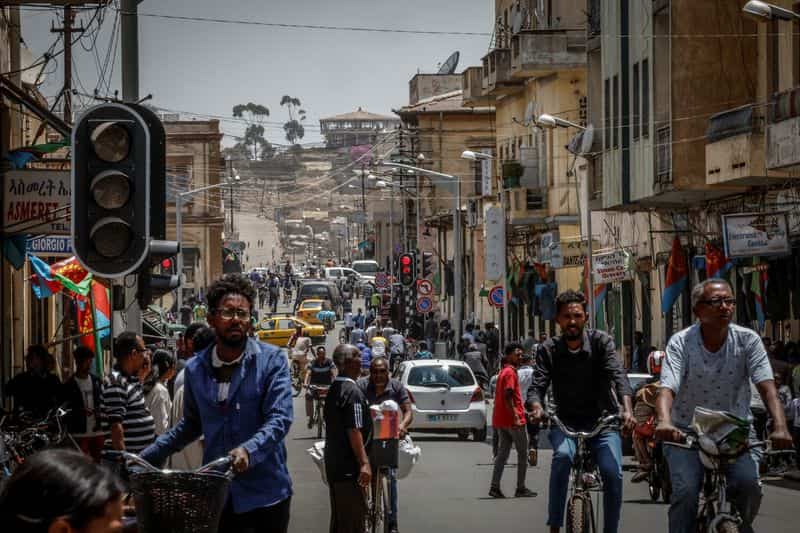
The capital, Asmara, reflects the country's suspended state, with remnants of Italian colonial architecture and limited access to modern amenities due to economic sanctions and fuel rationing. Many ordinary Eritreans are reluctant to discuss politics or national service due to fear of reprisal. The remote military camp of Sawa, where teenagers complete their final year of secondary school and undergo military training, epitomizes the state's control over its youth.