Key facts
- Ukraine faces a $56 billion budget shortfall this year.
- Russian attacks have damaged factories, ports, and railways, slowing economic growth.
- Ukraine needs $27 billion for military spending this year.
- Delays in passing reforms have put $29.5 billion in foreign aid at risk.
- Ukraine's agricultural sector has seen a 36.6% fall in grain exports in September.
- Ukraine's economy is expected to grow between 0.5% and 1.5% this year.
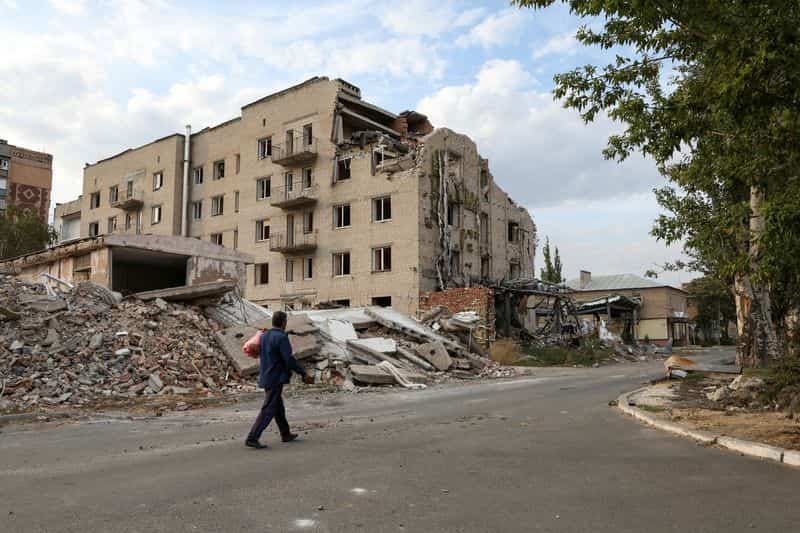
Kryvyi Rih, the hometown of Ukrainian President Volodymyr Zelenskiy, is facing severe economic hardship as Russian airstrikes have halted its major steel plant and mines. Mayor Oleksandr Vilkul stated the city is prioritizing essential services like hospitals and utilities amidst a broader financial squeeze affecting Ukraine.
The situation in Kryvyi Rih highlights the significant challenges Ukraine faces due to its largest budget crisis since Russia's full-scale invasion in 2022. The country's once-mighty steel industry, which contributed a tenth of its economic output before the war, has been largely silenced by escalating Russian drone and missile attacks that have destroyed factories, damaged infrastructure, and disrupted businesses, leading to a slowdown in economic growth and tax revenue.
Ukraine is struggling to fund its war effort, with billions of euros in foreign loans delayed due to the failure to pass legislation, including tax reforms and anti-corruption measures demanded by Western allies. The government needs $56 billion to cover this year's shortfall, with $27 billion allocated to military spending. Officials are seeking to accelerate disbursements from a €90-billion EU loan, but this could strain next year's budget, especially with upcoming elections in allied European nations potentially impacting support for Kyiv.
Prime Minister Sergii Koretskyi acknowledged the difficult circumstances, stating that non-essential spending, including reconstruction, has been frozen to prioritize military expenses, public sector wages, and pensions. The daily cost of fighting has risen to $190 million, partly due to the need for advanced weaponry and an expanded army. In the first nine months of this year, Ukraine spent over $44 billion on defense, while tax revenues only reached about $42 billion as the economy slowed. Russian attacks have already caused an estimated $1.1 billion loss in tax revenue, with cumulative losses projected to reach $1.9 billion by year-end.
Businesses are scaling back operations and delaying capital expenditures due to increasing risks. The agricultural sector, a key source of export revenue, has been particularly affected, with grain exports falling by 36.6% in September due to Russian attacks on Black Sea ports, putting about $40 billion in export revenue at risk. Economists forecast Ukraine's economy to grow only between 0.5% and 1.5% this year.
Ukraine has relied on nearly $200 billion in fiscal support from Western partners since the invasion. However, $29.5 billion in foreign aid is currently at risk due to legislative delays. The government aims to pass all necessary legislation by October 15 to secure these funds. For next year, a record defense budget of $110 billion has been proposed, with an estimated unfunded gap of over $32 billion. Finance Minister Sergii Marchenko suggested using frozen Russian assets in Europe to help fund Ukraine's budget.