Key facts
- The EU, Panama and small island states rejected a draft that made no reference to fossil fuels, the EU said.
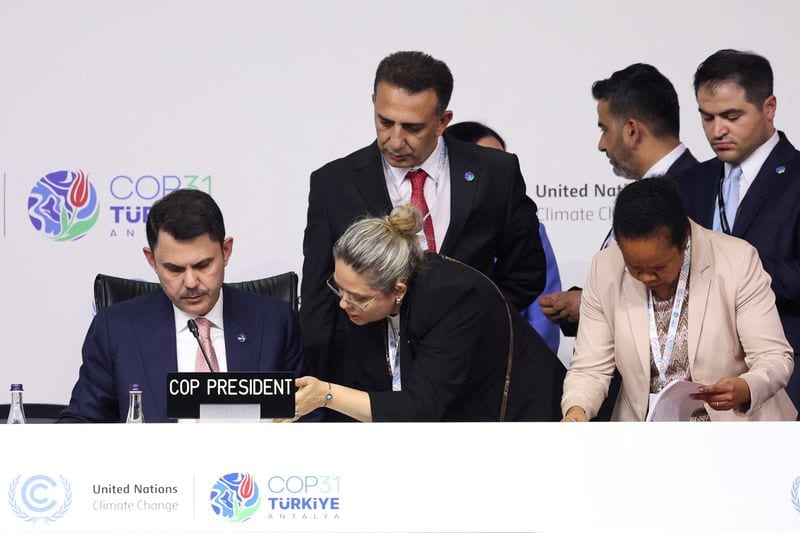
- COP31 President Murat Kurum said parties objected to the text and the decisions were not adopted.
- The draft had called for 35% of global energy use to be electrified by 2035, up from 23%.
- The International Energy Agency said the global economy is projected to reach 30% electrification in 2035.
- Russia said it could not agree to any phasing out of fossil fuels; Saudi Arabia blamed developed nations on finance.
- It is the first time in 17 years that COP talks have failed to reach agreement, the report said.
Countries at the U.N. climate talks in Antalya, Turkey, failed to reach a final deal on November 22, 2026, after a fortnight of negotiations ended with leaders rejecting a draft decision that omitted any mention of fossil fuels and gave a weak response to rising temperatures.
The European Union, Panama and several other countries, including small island states, said they rejected the deal pushed by the COP31 presidency. Others raised concerns over finance for countries on the frontline of the climate crisis and over text emphasizing carbon capture and storage. "It seems that there are parties that object to this text," Turkish COP31 President Murat Kurum said. "I understand there is no agreement on this text. For that reason, these decisions have not been adopted."
Nearly 200 nations were locked in debate over energy transitions and how to respond to the reality that the world will miss its most urgent climate target, limiting long-term global warming to 1.5°C above pre-industrial levels. It is the first time in 17 years that COP talks have failed to reach agreement, the report said.
Irish Climate Minister Darragh O'Brien, speaking for the EU, said it was "unconscionable" that a cover decision would make no reference to fossil fuel or to transitioning away from it. Panama called the deal a "setback." The Marshall Islands said accepting it would be a betrayal. "We will not accept an outcome that undermines our security and threatens our future," negotiator Kathy Jetn̄il-Kijiner said. U.K. Energy Secretary Miatta Fahnbulleh, who led her country's COP delegation, said the moment required bold ambition and it was immensely disappointing that consensus could not be built.