Key facts
- China's exoskeleton robot market reached RMB 1.6 billion (US$222 million) in 2025, with approximately 26,000 units shipped.
- Medical rehabilitation exoskeletons accounted for 88.3% of revenue (RMB 1.42 billion) but only 12% of unit shipments (3,200 units).
- Consumer-assist exoskeletons generated 6.8% of revenue (RMB 110 million) and 73% of unit shipments (19,000 units).
- Industrial applications shipped 3,800 units for RMB 78 million.
- RoboCT, Fourier Intelligence, and MileBot lead in the medical rehabilitation segment.
- RoboCT, Kenqing Technology, and Jike lead in the consumer-assist segment.
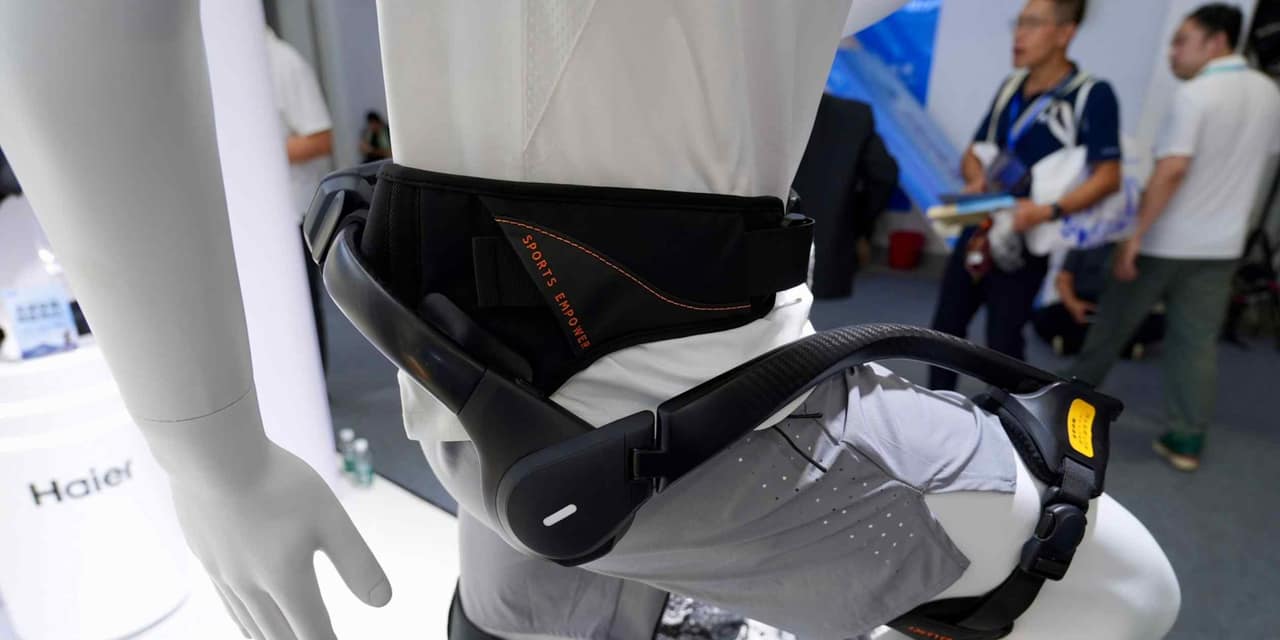
Exoskeletons, wearable devices designed to augment physical capabilities, are increasingly finding their way into everyday consumer use in China, moving beyond their traditional applications in medical rehabilitation and industrial settings. This expansion is fueled by a confluence of factors including an aging population, supportive government policies for the 'silver economy,' and a sustained decrease in manufacturing costs, which is making these devices more affordable for individual consumers and rental services.
According to International Data Corporation's (IDC) first unified market report, the total China exoskeleton robot market reached RMB 1.6 billion (US$222 million) in 2025, with approximately 26,000 units shipped. However, the market exhibits a significant structural paradox. The medical rehabilitation segment, while dominating revenue at RMB 1.42 billion (88.3% of the total), accounted for only 3,200 unit shipments (12% of the total). In contrast, consumer-assist exoskeletons generated RMB 110 million (6.8% of revenue) but drove the majority of unit shipments at 19,000 units (73% of the total). Industrial applications contributed RMB 78 million (US$10.8 million) on 3,800 units.
Leading companies in the medical rehabilitation sector include Fourier Intelligence, RoboCT, and MileBot. These firms leverage established hospital procurement channels and clinical validation to maintain high average selling prices. Fourier Intelligence, an early domestic entrant, sees a sequential commercialization path from clinical institutions to elder-care facilities and eventually mass home deployment. Clinicians in Shanghai confirm the increasing standardization of upper-limb and lower-limb exoskeletons for post-stroke recovery and gait correction in hospitals during 2026, with AI-assisted features extending specialist care to underserved regions.
The consumer-assist segment's high unit volume is driven by China's accelerating population aging and the 'silver economy' policy framework. Declining component costs are making exoskeleton-assisted walking aids more accessible. RoboCT, Kenqing Technology, and Jike are key players in this segment. Startups like Hypershell are developing lighter, AI-motion-controlled devices priced comparably to high-end smartphones, suitable for activities such as hiking, commuting, and rescue operations, and are already being sold in over 70 countries.