Key facts
- A simulated missile-borne lidar system could detect a US F-35 stealth fighter at up to 61.5 km at night.
- The system uses single-photon light detection and ranging, which relies on reflected laser light.
- The research was led by the China Airborne Missile Academy.
- The study was published in the journal Aero Weaponry on September 18.
- The simulation accounted for factors like atmospheric transmission and sky background noise.
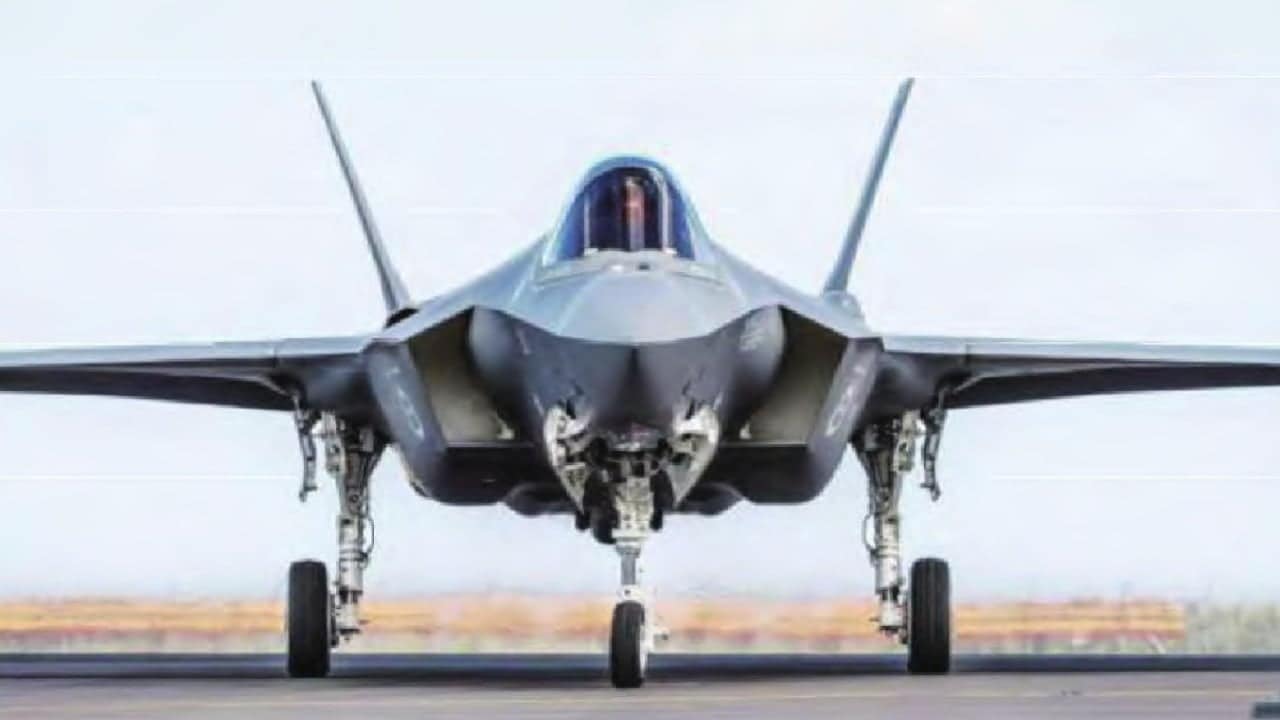
Chinese researchers have developed a computer simulation suggesting that a missile equipped with a new single-photon light detection and ranging (lidar) system could detect and track a US F-35 stealth fighter from a distance of up to 61.5 kilometers (38 miles) at night. The research, led by the China Airborne Missile Academy and published in the peer-reviewed journal Aero Weaponry on September 18, could potentially impact assumptions about the detectability of stealth aircraft in air-combat scenarios.
The simulated lidar system operates at a wavelength of 1,064 nanometers and is designed to register extremely small numbers of returning photons. The study modeled its performance against an F-35C under various atmospheric and lighting conditions, using low-power laser pulses and a compact optical lens to reflect the limitations of missile-borne equipment. The mathematical model also incorporated factors such as detector dead time, atmospheric transmission, sky background noise, and atmospheric backscatter.
According to the simulation, the system would require a signal-to-noise ratio of 8.8 decibels, equivalent to at least 9.4 detected echo photons, to overcome atmospheric noise and achieve a target lock. Under these modeled conditions, the maximum detection range was calculated to be 27.7 km during the day and 61.5 km at night. At 27.7 km, the system could reportedly provide depth accuracy of about 20 cm and transverse resolution of about 50 cm.
The 1,064-nanometer wavelength was chosen partly because stealth aircraft have fewer countermeasures against active laser detection compared to conventional radar and infrared sensing. A detection range of around 60 km would offer a missile a longer tracking window for a stealth target, though this distance is still within the engagement range of the F-35's longer-range air-to-air missiles, which can reportedly strike targets beyond 160 km.
However, the study has drawn skepticism from a military analyst who questioned the system's practicality as an early-warning search mechanism due to the narrowness of the laser beam. The analyst suggested that in the early stages, such a beam might function primarily as a rangefinder rather than a wide-area search tool. The study does not demonstrate that the system has been built, tested in flight, or incorporated into an operational missile.