Key facts
- Chevron and Eni have signed agreements with Venezuela to expand oil projects.
- Chevron plans to invest over $7 billion in Venezuela over the next five years.
- The investment aims to more than double Chevron's oil production in Venezuela to approximately 600,000 barrels per day by 2031.
- Agreements include improved fiscal, commercial, and legal terms, plus additional acreage in the Orinoco Belt.
- Chevron's three Venezuelan joint ventures expect total production costs below $20 per barrel.
- Venezuelan opposition leader Maria Corina Machado stated that only a democratic government can provide stability for investors.
Chevron and Italian energy company Eni have signed new agreements with Venezuela to expand their oil projects, aiming to significantly boost the OPEC nation's production capacity. Chevron plans to invest over $7 billion in Venezuela over the next five years, with the goal of more than doubling its current output to approximately 600,000 barrels per day by 2031. These investments are facilitated by improved fiscal, commercial, and legal terms, along with additional acreage in the Orinoco Belt, including the Carabobo-1 and Carabobo-2-South-A areas.
Chevron's three Venezuelan joint ventures are expected to maintain total production costs below $20 per barrel. The company currently produces about 290,000 bpd, all of which is exported to the United States. Venezuela's overall oil production is estimated to be between 1.1 million and 1.2 million bpd, a fraction of its peak output in the late 1990s. Other companies, including GE Vernova, Primavera, and Aspect, also signed agreements as part of Venezuela's oil reform efforts.
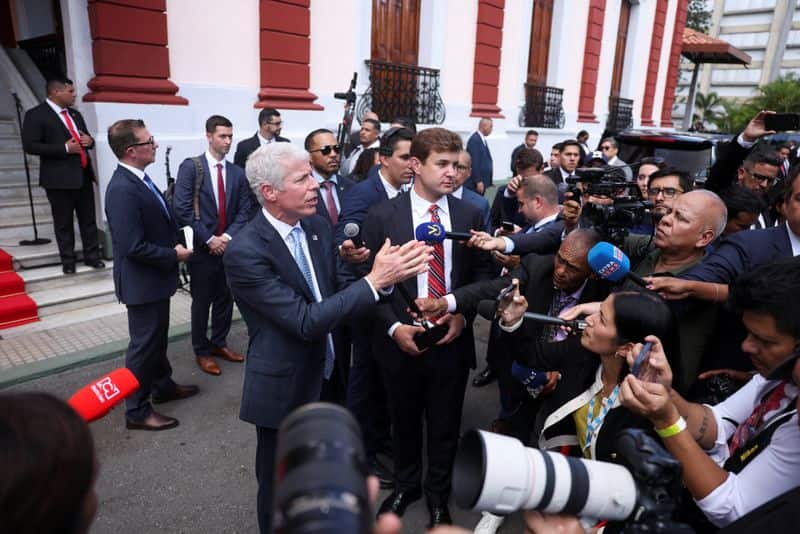
Venezuelan opposition leader Maria Corina Machado stated that only a "serious, democratic government" can provide the stability needed by investors in the country's oil sector. International energy firms committed to expanding projects in Venezuela on Wednesday in a signing ceremony overseen by interim President Delcy Rodriguez and U.S. Energy Secretary Chris Wright. Machado emphasized the need to attract capital and sustained, long-term investment under conditions that provide profitability, certainty, and security, while delivering a real reduction in Venezuela's country risk. U.S. officials, including Secretary of State Marco Rubio, have defended Washington's oil deal as part of a process to align Venezuela's energy industry with the U.S. while helping rebuild the nation.