Key facts
- President Trump announced a deal giving U.S. majority control over 17 Venezuelan oil fields and over 65 billion barrels of reserves.
- Conflicting reports emerged regarding the U.S. government's stake, with one official citing a 55% interest and another a 35% passive stake.
- The Pentagon denied taking equity stakes in private companies involved in the deal.
- The company at the center of the deal, NABEP, has a complex ownership history involving Venezuelan oil trader Alejandro Betancourt.
- Major oil companies are reluctant to invest due to Venezuela's significant outstanding debts from past nationalizations.
- Venezuela's projected revenue from the deal is questioned, as it relies on sustained high oil prices and yields less than previous production periods.
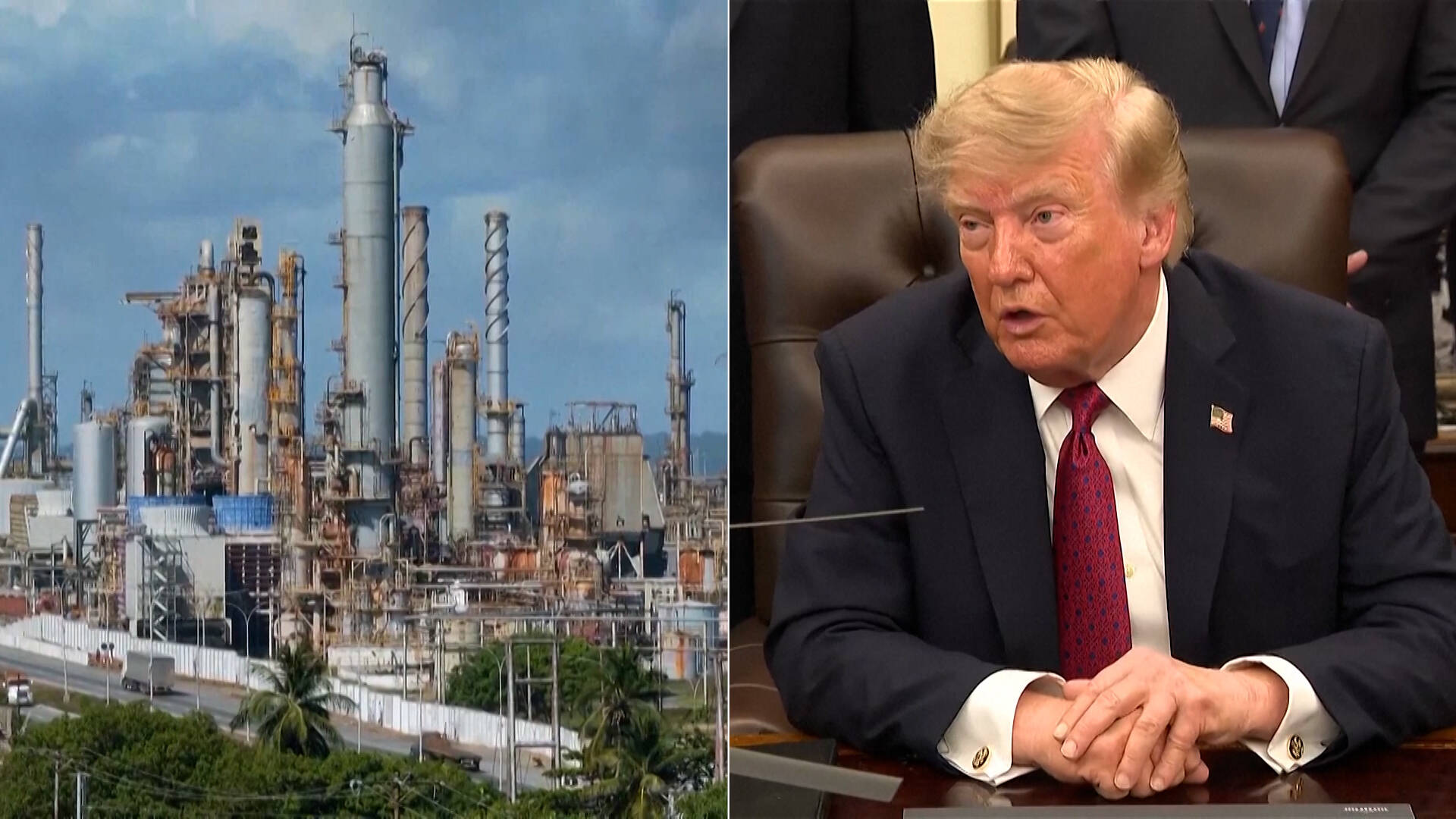
President Donald Trump announced a significant energy deal with Venezuela, which he described as the "Biggest Oil Deal in World History." The agreement, purportedly negotiated by Secretary of State Marco Rubio and Defense Secretary Pete Hegseth, aims to give the U.S. majority control over 17 Venezuelan oil fields with over 65 billion barrels of reserves. Venezuela's interim President Delcy Rodriguez called the 25-year agreement "historic," targeting 1.5 million barrels a day in production.
However, the deal's details and implications are met with skepticism and conflicting information. A U.S. official told PBS that Washington would have a 55% effective interest in a newly formed private company to run the fields. Conversely, The Wall Street Journal reported a 35% passive stake in North American Blue Energy Partners (NABEP), a firm already operating in Venezuela, financed through Pentagon "penny warrants." The Pentagon itself denied taking equity stakes in private companies.
The company at the center of the confusion, NABEP, is run by Alejandro Betancourt, a Venezuelan oil trader with political ties. Weeks before the deal's announcement, a buyer linked to Betancourt acquired a minority stake in NABEP from Florida oil trader Harry Sargeant III, who has been accused by U.S. allies of supporting the former Maduro government. Days after this sale, the Treasury Department froze Sargeant's offshore holding company.
Major oil companies like Exxon and ConocoPhillips are reportedly staying away from Venezuela due to significant outstanding debts, with ConocoPhillips alone owed between $10 billion and $12 billion. These legacy liabilities, along with the technical challenges of extracting Venezuela's heavy crude, make the country appear uninvestable to some.
Furthermore, Venezuela's projected revenue of $209 billion over 25 years is based on oil prices holding at $65 a barrel, a price not seen this year, with Brent crude currently above $90. Economist Francisco Rodriguez highlighted that the deal's annual revenue of approximately $8.4 billion is less than Venezuela earned in 2025 while producing fewer barrels. Adjusted for inflation, the $19 per barrel Venezuela would collect is worth significantly less by the end of the deal's term.