Key facts
- High energy prices make it harder for the Bank of England to maintain current interest rates.
- Bank of England Governor Andrew Bailey indicated that rate hikes are becoming more probable.
- Deputy Governor Clare Lombardelli stated that monetary policy tightening is increasingly likely if elevated energy prices persist.
- The Bank of England predicted inflation will rise to around 3.7% in the fourth quarter of this year.
- The Bank of England predicted inflation will rise to 4.2% in the first quarter of 2027.
- The Bank of England voted 6-3 to maintain UK interest rates at 3.75% earlier this month.
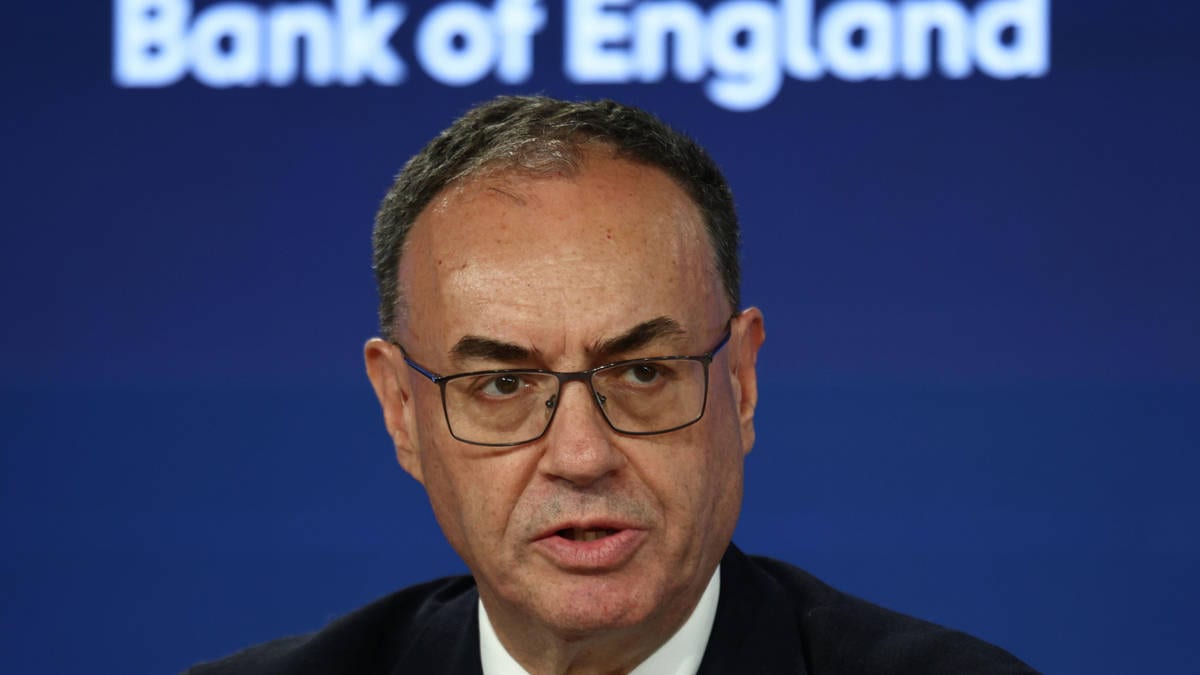
Bank of England Governor Andrew Bailey has warned that sustained high energy prices are making it increasingly challenging to avoid raising interest rates. He noted that while the direct effects of the energy shock are being observed, the pass-through to broader inflation is still in its early stages, but the longer high energy prices persist, the harder it becomes to maintain the current stance.
Bailey's comments follow those of Deputy Governor Clare Lombardelli, who stated that monetary policy tightening is becoming more likely if elevated energy prices continue without clear signs of disinflation or weaker economic activity. She indicated that persistent high energy prices increase the risk of indirect effects, such as adjusted inflation expectations and wage-bargaining behavior.
The Bank of England has predicted that inflation will increase to approximately 3.7% in the fourth quarter of this year and reach 4.2% in the first quarter of 2027. Economists widely anticipate that the central bank may increase interest rates later this year to help bring inflation back to its 2% target. Bailey was part of the six-to-three majority that voted to keep UK interest rates at 3.75% earlier this month.