BoE's Breeden sees 'increasingly appropriate' rate hikes amid inflation risks
IN SHORT
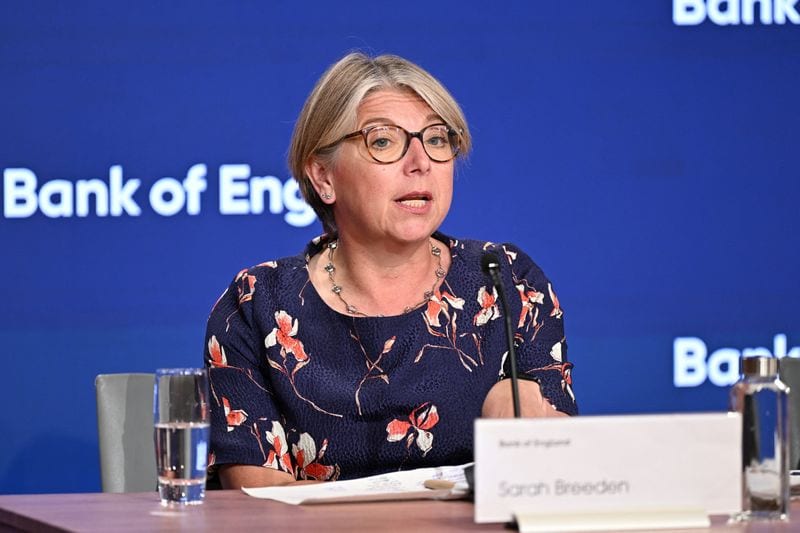
Bank of England Deputy Governor Sarah Breeden indicated on Thursday that raising interest rates is becoming more appropriate due to rising inflation risks. She cautioned against delaying a response to potential second-round effects from high energy prices.
Key Numbers
3.75%Bank Rate maintained at
6-3MPC vote to maintain Bank Rate
3MPC members voted to increase Bank Rate
0.25percentage point increase voted for
4%potential Bank Rate if increased
3.1%UK CPI inflation in August 2026
Who's Involved
Sarah Breeden
Bank of England Deputy Governor, said it's increasingly appropriate to raise interest rates
Monetary Policy Committee
voted to maintain Bank Rate at 3.75% in September 2026
↳ Why This Matters
The comments from a senior Bank of England official signal a growing hawkish bias within the central bank, suggesting that interest rates may rise further to combat persistent inflation, impacting borrowing costs for consumers and businesses.