Key facts
- The Monetary Policy Committee announced the quarter-percentage-point increase on Thursday, November 5.
- Bailey said further rises could follow unless the conflict in the Middle East is resolved.
- Chancellor John Healey said 20 million households will get a £100 energy payment.
- UK Finance calculated the increase would add £31 a month to a typical tracker mortgage.
- About 510,000 tracker mortgage borrowers face higher repayments, GB News reported.
- The average two-year fixed residential mortgage rate was 5.96% on November 4, per Moneyfacts.
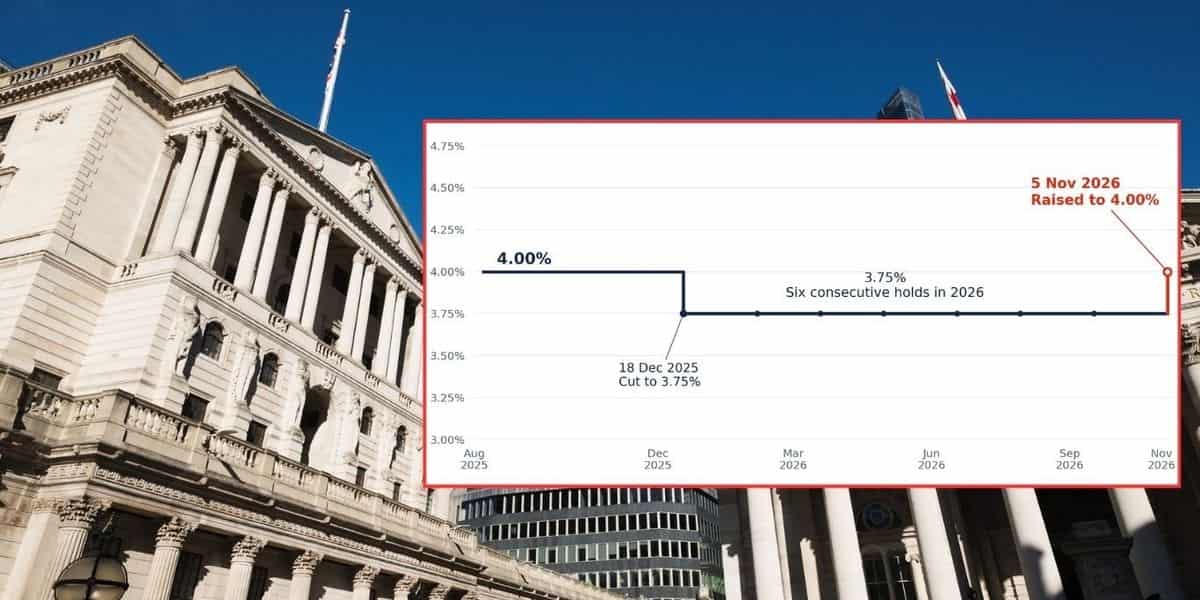
The Bank of England raised its base rate by a quarter-percentage-point to 4% on Thursday, November 5, its first increase since August 2023. The Monetary Policy Committee announced the decision as rising energy prices add to inflationary pressures.
Governor Andrew Bailey said: "There is now enough inflationary pressure in the pipeline caused by the rise in energy prices, that an increase in Bank rate is warranted." He added that the increase should not be seen as the first in an inevitable long sequence of hikes, but that unless the conflict in the Middle East is resolved, neither did it seem likely to be the last increase. The decision had been widely expected by economists and financial markets.
Chancellor John Healey said the Iran conflict is reaching deep into the pockets of families and businesses at home. He said his Budget included a £100 energy payment for 20 million households, an extension of the tax cut on electricity bills and a freeze on fuel duty.
About 510,000 tracker mortgage borrowers face higher repayments because their rates follow the base rate. UK Finance calculated the quarter-point increase would add £31 a month to a typical tracker mortgage. Another 470,000 borrowers on variable deals will wait for their lender to decide whether to raise rates; a matching rise would typically add £14 a month. Borrowers on fixed-rate deals see no change during their existing term.
As of November 4, the average two-year fixed residential mortgage rate was 5.96% and the average five-year rate 5.99%, according to Moneyfacts. Broker L&C said some borrowers refinancing a £200,000 mortgage over 25 years could pay almost £5,000 more a year than those who secured a deal in 2021, based on rates from the 10 biggest lenders.