
Key facts
- Georgieva said the AI investment boom lifts growth in some countries, offsetting an oil-supply shock from the Middle East war.
- She said the boom also adds to inflationary pressures and financial stability concerns.
- Georgieva said markets were moving up and down and that this was likely to continue.
- The IMF's downside scenario, flagged last month, put the global GDP hit at 1.1% by 2028.
- Georgieva did not repeat that downside forecast on November 6.
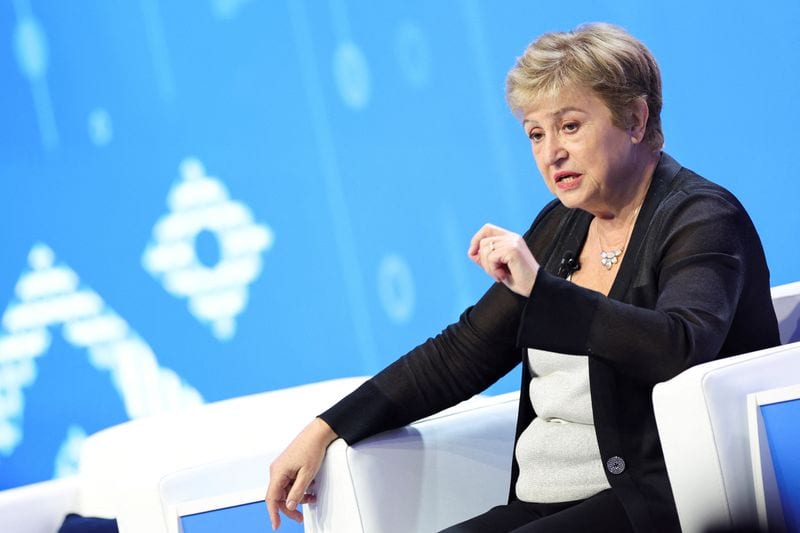
International Monetary Fund Managing Director Kristalina Georgieva said on November 6 that central banks would need to consider any slowdown in AI-driven growth as they assess steps in the fight against inflation. She spoke at IMF headquarters in Washington.
Georgieva said concern about dependence on the AI investment boom and high valuations was affecting markets around the world. "Things are going up and down, and this is likely to continue," she said, adding that the volatility would complicate central banks' job at a time when risks to price stability had been growing.
A steep fall in technology stocks on Thursday, November 5, carried through markets on concern that the Democrats' midterm election victory would increase regulatory scrutiny of AI and slow data center construction, sending investors to bonds. Georgieva said the AI investment boom was lifting growth in some countries, helping offset a negative oil-supply shock from the war in the Middle East, while also adding to inflationary pressures and financial stability concerns.
The IMF said last month that a potential end to the AI investment boom posed growth and financial stability risks, among other factors including a prolonged Middle East war. It warned then that a steep drop in AI investment could lead to a sharp fall in asset prices, cutting global GDP by 1.1% by 2028, including a 1.8% drop in US output. Georgieva did not repeat that forecast on November 6.
Reuters reported on November 6, citing congressional aides and advocates, that Democrats plan legislation targeting AI systems and data center development when they take control of Congress in January.