Key facts
- The U.S. dollar is trading near multi-month lows.
- World shares and oil prices declined amid new U.S. sanctions on Iran.
- Iran's currency hit a record low.
- U.S. Treasury plans to increase buybacks of long-dated bonds.
- President Trump is threatening 50% tariffs on certain Canadian goods.
- Canada has retaliated with tariffs on U.S. imports.
- Fed Chair Kevin Warsh is set to speak at the Jackson Hole symposium.
The U.S. dollar was trading near multi-month lows on Monday, with global shares and oil prices declining as investors digested a series of economic developments and geopolitical tensions. New U.S. sanctions aimed at isolating Iran were prepared, leading to a record low for the Iranian currency. Meanwhile, President Donald Trump threatened significant tariffs on Canadian goods, prompting retaliatory measures from Canada.
U.S. Treasury Secretary Scott Bessent is facing scrutiny over recent market interventions, including plans to increase buybacks of long-dated bonds, which some analysts believe could be inflationary and undermine the Federal Reserve's efforts to control prices. The Federal Reserve is aiming to bring inflation back to its 2% target, a goal complicated by the Treasury's actions and persistent inflation above target.
Markets are also anticipating Nvidia's earnings report and key speeches at the Jackson Hole symposium, particularly from Fed Chair Kevin Warsh. His remarks are expected to provide insight into the Fed's future policy path regarding interest rates and inflation.
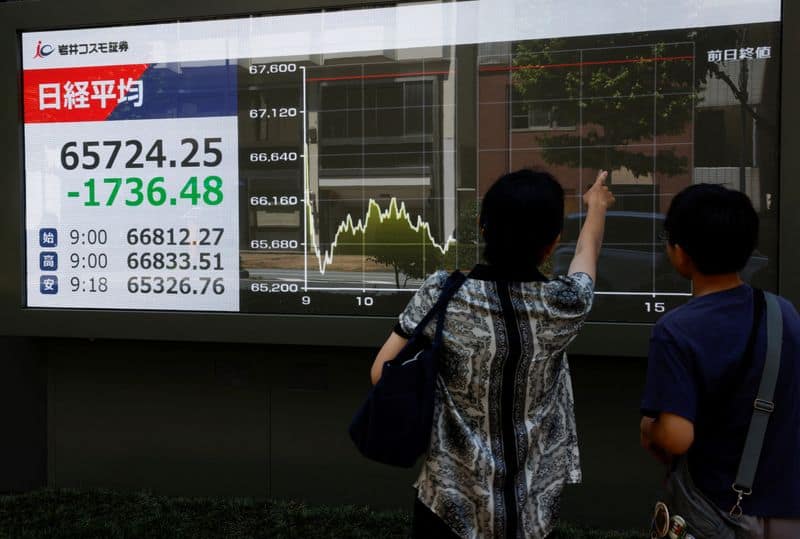
In equity markets, Asian shares were mixed to lower, with the KOSPI down 3% and the Nikkei 225 down 0.7%. European shares were flat to lower, while Wall Street showed a mixed performance with the Dow Jones Industrial Average up slightly and the S&P 500 and Nasdaq Composite declining, led by a drop in tech stocks. Nvidia shares fell approximately 3%, with other semiconductor companies also experiencing significant declines. Conversely, Expedia, Visa, and Walmart saw gains.
The U.S. dollar index gained 0.2%, its best day in two weeks, while the Canadian dollar was the biggest G10 loser due to the new tariffs. Bitcoin extended its rally, nearing $80,000. In commodities, oil prices fell 2.5%, and gold prices rose 1% to their highest level since mid-May.
U.S. bond yields declined, particularly at the long end, contributing to a flattening of the yield curve. The Treasury's potential use of cash from the Treasury General Account to fund longer-dated bond purchases was seen by some as a positive signal for the bond market.