All NewsEducationTV
Equities & FundsCrypto & Digital AssetsAI & TechnologyBusiness & CorporateUS Politics & PolicyGeopolitics & Global RiskMacro, Rates & FXCommodities & EnergyEuropean Politics & MarketsAsia-PacificReal Estate & Property
All NewsHome
← Back to Macro, Rates & FX

Asian shares fall weekly as yields, oil prices remain elevated

Created at 21 Aug · 7:16 AM2 sources↑ Market-relevant2 events
IN SHORT

Asian shares are set for weekly declines amid persistent global bond market stress and elevated oil prices. U.S. Treasury yields resumed their upward march, while Brent crude hit a one-month high due to Gulf diplomatic deadlock.

Key Numbers

5.25%30-year U.S. bond yield
4.71%10-year U.S. bond yield
4.0%Nikkei weekly losses
0.1%Chinese blue chip dip
0.6%MSCI Asia ex-Japan index gain
5%Brent crude weekly gain
$86.18U.S. crude price per barrel
3.1%Gold weekly gain
$1.2 trillionU.S. interest charges this year
6%U.S. budget deficit as percentage of GDP

Who's Involved

Scott Bessent
U.S. Treasury Secretary suggesting fiscal consolidation
Steven Zeng
Strategist at Deutsche Bank
Jonas Goltermann
Chief markets economist at Capital Economics
Donald Trump
President who pledged economic warfare against Iran
Asian shares fall weekly as yields, oil prices remain elevated

↳ Why This Matters

Persistent stress in global bond markets and elevated oil prices, driven by geopolitical tensions, are weighing on investor sentiment and impacting equity valuations worldwide. Concerns over U.S. debt levels and fiscal policy add to market uncertainty.

Key facts

  • Asian share indices are on track for weekly declines.
  • Global bond market stress and high oil prices are impacting markets.
  • U.S. Treasury Secretary Scott Bessent's suggestions of fiscal consolidation were met with skepticism.
  • U.S. 30-year Treasury yields reached 5.25% and 10-year yields hit 4.71%.
  • Brent crude prices are up over 5% for the week.
  • The U.S. dollar has weakened over the week, while gold has risen.

Most Asian share indices are poised for weekly declines as persistent stress in global bond markets and elevated oil prices, driven by Gulf diplomatic deadlock, continue to impact investor sentiment. U.S. Treasury Secretary Scott Bessent's suggestions of fiscal consolidation have been met with skepticism by analysts who believe record debt levels and deficits could make such interventions too costly. Yields on U.S. Treasuries resumed their climb after a brief respite following intervention. Analysts are doubtful that sufficient spending cuts can be found to significantly curb a budget deficit exceeding 6% of GDP, with interest charges alone projected to reach $1.2 trillion this year. Steven Zeng, a strategist at Deutsche Bank, cautioned that markets may resist interventions if they perceive fundamentals like record debt levels to be on their side, potentially eroding Treasury's credibility.

Investors' skepticism is reflected in bond yields, with 30-year yields nudging back up to 5.25% and 10-year yields reaching 4.71%. These higher yields increase global debt costs, impacting companies, particularly tech giants funding AI capital expenditures, and challenging stock valuations.

The strain is evident in markets like the Nikkei, which slipped 0.8%, contributing to a 4.0% weekly loss. While South Korea and Taiwan saw slight gains, they remain down for the week. Chinese blue chips dipped 0.1%, whereas MSCI's broadest index of Asia-Pacific shares outside Japan added 0.6%.

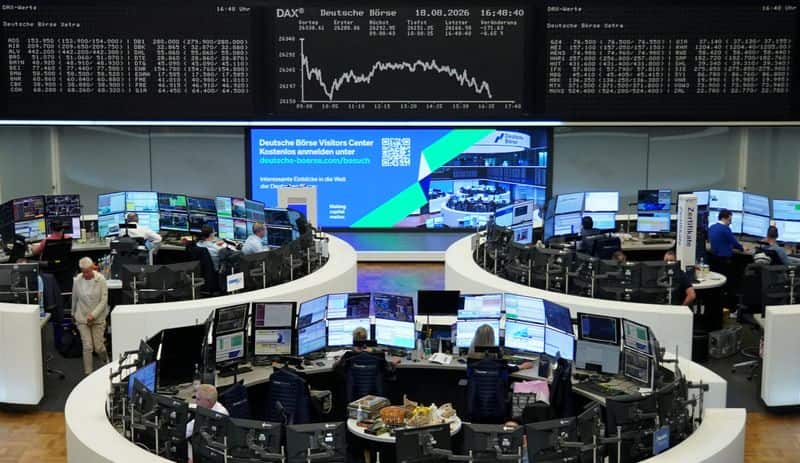
In Europe, futures for the EUROSTOXX 50 and DAX were slightly lower, and FTSE futures dipped 0.1%. On Wall Street, strong corporate earnings have offered some support, with S&P 500 futures up 0.1% and Nasdaq futures gaining 0.2%. The outlook for Nvidia's upcoming earnings report is seen as crucial for the AI trade.

Bessent also elaborated on President Donald Trump's economic stance against Iran, indicating the U.S. would impose stringent sanctions. This further diminished hopes for a deal to fully open the Strait of Hormuz, pushing Brent crude to a one-month high of $94.71 before profit-taking occurred. Brent futures were last down 0.7% at $93.12 a barrel, but still up over 5% for the week, while U.S. crude eased 0.7% to $86.18 a barrel.

In currency markets, the dollar has weakened broadly for the week, influenced by concerns that escalating U.S. debt and policy uncertainties could diminish its purchasing power. This has driven investors towards assets like gold, which remained steady at $4,513 an ounce, up 3.1% for the week. Jonas Goltermann, chief markets economist at Capital Economics, noted renewed pressure on the dollar due to a resurging 'debasement' narrative.

Frequently asked questions

Asian share indices are heading for weekly falls due to persistent stress in global bond markets and elevated oil prices.

U.S. Treasury Secretary Scott Bessent has suggested fiscal consolidation, but analysts are skeptical about its feasibility given record debt levels.

Yields on U.S. Treasuries have resumed their climb, with 30-year yields reaching 5.25% and 10-year yields hitting 4.71%.

Diplomatic deadlock in the Gulf has lifted oil prices, with Brent futures up more than 5% for the week.

What Happens Next

01Nvidia is set to report earnings next week, impacting the AI trade.
02Further U.S. fiscal policy developments will be closely watched.
CME Headlines
  • Euro futures test May highs ahead of Jackson Hole symposium.
    20 Aug · 9:36 PM
  • Euro futures test May highs ahead of Jackson Hole symposium.
    20 Aug · 9:36 PM
  • Treasury futures await Jackson Hole as 10-Year yields rebound.
    20 Aug · 9:35 PM

How It Developed

Asian shares are set for weekly declines amid persistent global bond market stress and elevated oil prices.
European shares were little changed and headed for a weekly decline.
U.S. Treasury yields resumed their upward march after Wednesday's intervention provided only fleeting support.
U.S. Treasury Secretary Scott Bessent expanded on President Donald Trump's pledge of economic warfare against Iran, saying the U.S. would impose 'the toughest sanctions in history' on the country.
The threats further reduced optimism over a deal to fully reopen the Strait of Hormuz, lifting Brent crude to a one-month top of $94.71.

Sources

T1
European stocks steady, set for weekly loss as oil prices, yields stay elevatedReuters
T1
Asia shares downbeat for week as bond yields, oil stay highPiQSuite
T2
GLOBAL MARKETS: Asia Shares Downbeat for Week as Bond Yields, Oil Stay Highenglish.kontan.co.id

Related Stories

Bond yields climb, stocks fall as Treasury rescue efforts questioned
20 Aug · 2:27 PM
Dollar Weakens as Treasury Buyback Efforts Fail to Reassure Investors
21 Aug · 1:39 AM
Treasury Secretary Bessent's Debt Plan Fails to Cap Yields
21 Aug · 4:34 AM
US bond yields rise, stocks fall as Fed rate hike odds increase
20 Aug · 9:04 PM
US Treasury buyback limits bond market pain, but relief may be brief
20 Aug · 2:27 PM