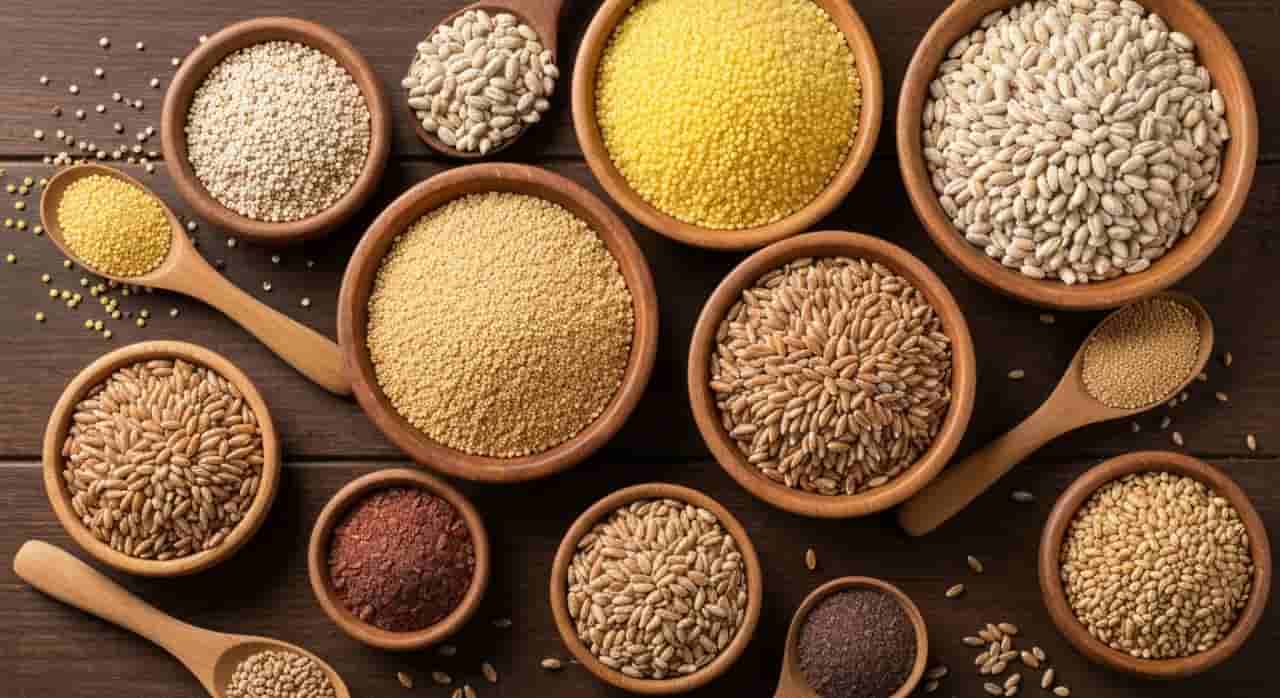
Key facts
- Ancient grains are defined as cereal and pseudocereal species that have remained largely unchanged by modern breeding practices.
- Key criteria for ancient grains include minimal modern breeding intervention, a long cultivation history, and genetic closeness to wild ancestors.
- True cereals like spelt, einkorn, emmer, millet, sorghum, teff, and barley belong to the grass family Poaceae.
- Pseudocereals such as quinoa, amaranth, and buckwheat are not grasses but are used like grains and are naturally gluten-free.
- Einkorn is the oldest known cultivated wheat, domesticated around 10,000 years ago.
- Spelt, emmer, and einkorn are "covered" wheats, requiring processing to remove hulls, unlike modern "free-threshing" wheat.
Ancient grains, such as einkorn, emmer, spelt, quinoa, and amaranth, are experiencing renewed interest for their rich history, nutritional benefits, and potential role in sustainable farming. Once staples of early agriculture, these grains offer diverse flavors, higher nutrient density, and genetic traits that could strengthen modern wheat and farming systems.