Modi urges diplomacy in call with Iran’s Pezeshkian | PiQ Markets
4 storiesGeopolitics & Global RiskMiddle East conflict (Israel-Gaza, Lebanon, Iran)Russia-Ukraine war (frontline, weapons, peace talks)
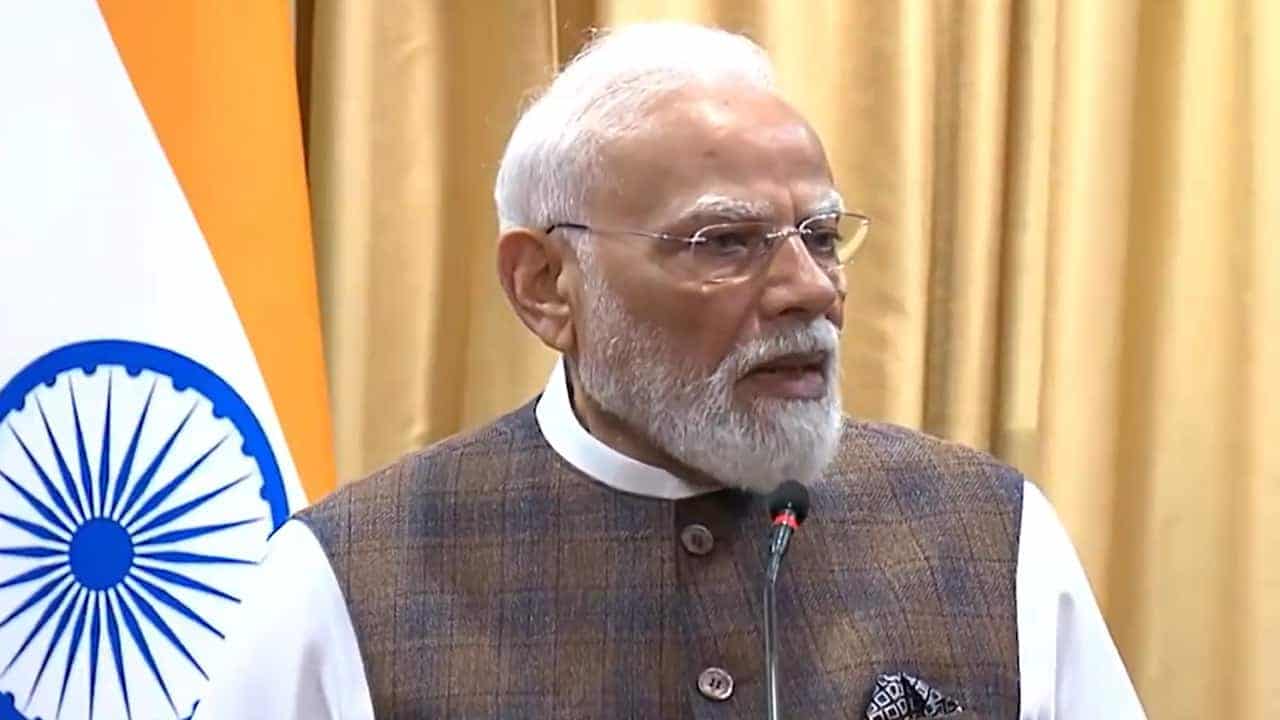
Modi urges diplomacy in call with Iran’s Pezeshkian
window 24h
IN SHORT
Indian Prime Minister Narendra Modi urged regional de-escalation and freedom of navigation in the Strait of Hormuz during a call with Iranian President Masoud Pezeshkian. Pezeshkian reportedly asked India to mediate an end to the Gulf war using its BRICS chairmanship. Meanwhile, Iran's chief negotiator stated the nation prioritizes diplomacy but is prepared for war if talks fail, emphasizing conditions for agreement implementation. Iran and Oman are also planning joint fees for passage through the Strait of Hormuz, a move opposed by the US and contradicting a prior US-Iran agreement. China's Foreign Minister Wang Yi called on the US and Iran to maintain negotiation momentum, preferring dialogue over conflict.
✉Newsletter
PiQ Daily
Pick your topics. Get only what matters, on your cadence.
Who's Involved
Narendra Modi
Indian Prime Minister
Masoud Pezeshkian
Iranian President
Mohammad Bagher Ghalibaf
Iran's chief negotiator
United States
nation engaged in talks with Iran
Iran
nation prioritizing diplomacy and prepared for war
Oman
nation planning joint fees with Iran
France
nation proposing demining mission
China
nation urging US and Iran to maintain talks
1 / 4
Key facts
Indian Prime Minister Narendra Modi spoke with Iranian President Masoud Pezeshkian.
Modi and Pezeshkian discussed regional de-escalation.
They also discussed the importance of freedom of navigation in the Strait of Hormuz.
Pezeshkian reportedly asked India to use its BRICS chairmanship to mediate an end to the Gulf war.
Iran's chief negotiator, Mohammad Bagher Ghalibaf, stated diplomacy with the US is a priority.
Iran is prepared for war if negotiations fail.
Iran will not proceed to further agreement stages until key provisions are implemented.
Key provisions include those related to Lebanon, oil exports, and the Strait of Hormuz.
Iran and Oman plan to jointly impose a service fee for passage through the Strait of Hormuz.
This plan contradicts a prior US-Iran agreement for free passage.
The US has objected to the joint fee plan.
Iran rejected a French proposal for a demining mission in the Strait of Hormuz.
Indian Prime Minister Narendra Modi engaged in a diplomatic discussion with Iranian President Masoud Pezeshkian, focusing on the critical issues of regional de-escalation and the imperative of maintaining freedom of navigation through the Strait of Hormuz. During their conversation, Pezeshkian reportedly requested India's assistance, urging the nation to leverage its current BRICS chairmanship to facilitate mediation aimed at resolving the ongoing Gulf war.
Concurrently, Iran's chief negotiator, Mohammad Bagher Ghalibaf, articulated the nation's strategic stance, asserting that while diplomacy with the United States remains the primary objective, Iran is also prepared for military conflict should negotiations falter. Ghalibaf stressed that Iran will not advance to further stages of any agreement without the complete fulfillment of specific key provisions, which include stipulations concerning Lebanon, the resumption of oil exports, and the unimpeded passage through the Strait of Hormuz.
Adding another layer to the complex regional dynamics, Iran and Oman are reportedly collaborating on plans to jointly implement a service fee for vessels transiting the Strait of Hormuz. This proposed joint fee structure stands in direct opposition to a previous agreement between the US and Iran that stipulated free passage. The United States has voiced objections to this new development. Furthermore, Iran has rejected a proposal put forth by France for a demining mission within this vital maritime waterway.
In parallel, China's Foreign Minister Wang Yi has actively encouraged both the United States and Iran to sustain the momentum of their ongoing talks. Wang Yi underscored the preference for dialogue over armed conflict. This diplomatic push by China comes as Wang Yi also reaffirmed Beijing's commitment to supporting Middle Eastern peace talks during a separate meeting with a senior Saudi diplomat.
↳ Why This Matters
Indian Prime Minister Narendra Modi engaged in a diplomatic discussion with Iranian President Masoud Pezeshkian, focusing on the critical issues of regional de-escalation and the imperative of maintaining freedom of navigation through the Strait of Hormuz. During their conversation, Pezeshkian reportedly requested India's assistance, urging the nation to leverage its current BRICS chairmanship to facilitate mediation aimed at resolving the ongoing Gulf war.
Frequently asked questions
The call focused on developments in West Asia, de-escalation efforts, and the importance of freedom of navigation in the Strait of Hormuz.
One report suggests President Pezeshkian urged India to use its BRICS leadership to mediate an end to the Gulf war.
India imports over a million barrels of oil daily and has millions of citizens in the Gulf, making the strait crucial for its energy security and economic interests.
What Happens Next
01Modi is expected to attend the funeral of Ayatollah Ali Khamenei.
02India may engage in further discussions regarding a BRICS-led mediation effort.
Get the newsletter.
Pick the topics you actually care about. We'll email when there's news worth your time, on the cadence you choose. Cancel any time from your account.