Supreme Court Upholds State Bans on Transgender Athletes in Women's Sports | PiQ Markets
updating
4 storiesUS Politics & PolicyUS Congress: House of Representatives & SenateDonald Trump policies & legal proceedings
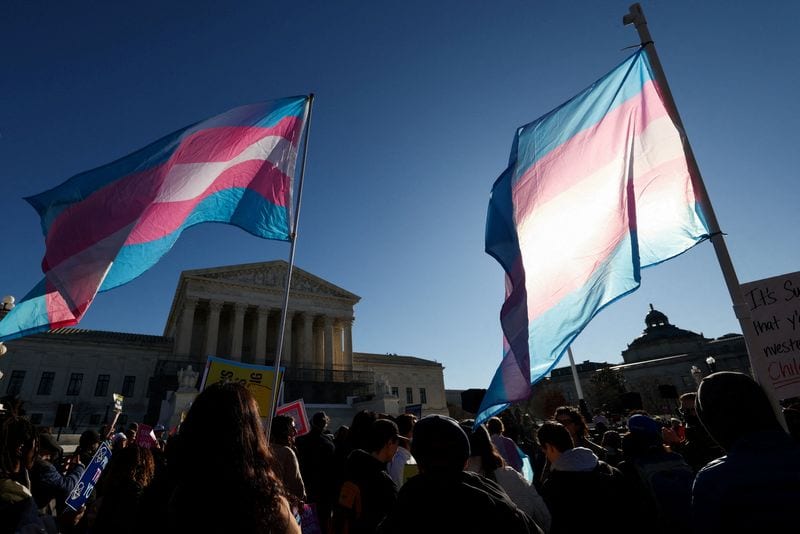
Supreme Court Upholds State Bans on Transgender Athletes in Women's Sports
window 24h
IN SHORT
The U.S. Supreme Court is set to review state bans on assault-style rifles, including AR-15s, potentially expanding gun rights. The justices will hear appeals challenging bans in Connecticut and the Chicago area, with the case expected to be heard in the next term starting October. Meanwhile, the Trump administration is finalizing new rules linking federal student loan access to graduate earnings, with programs failing to meet thresholds risking funding eligibility. Additionally, the administration is prioritizing religious freedom in health policies, impacting reproductive health, LGBTQ+ care, and vaccine decisions through a reorganized HHS civil rights office.
✉Newsletter
PiQ Daily
Pick your topics. Get only what matters, on your cadence.
Who's Involved
U.S. Supreme Court
court reviewing state bans on assault-style rifles
Donald Trump
leader of administration implementing new education and health policies
U.S. Education Department
agency finalizing rules on federal student loan access
Department of Health and Human Services (HHS)
agency prioritizing religious freedom in health policies
Connecticut
state with an assault weapons ban under review
Chicago area
region with an assault weapons ban under review
1 / 2
Key facts
The U.S. Supreme Court will review state bans on assault-style rifles.
The case could expand gun rights.
The justices will hear appeals challenging bans in Connecticut and the Chicago area.
The case is expected to be heard in the next term, beginning in October.
The U.S. Education Department is finalizing rules linking federal student loan access to graduate earnings.
Programs failing to meet earnings thresholds could lose federal funding eligibility.
The Trump administration is prioritizing religious freedom in health policies.
This impacts reproductive health, LGBTQ+ care, and vaccine decisions.
The HHS has reorganized its civil rights office to focus on conscience and religious freedom.
The U.S. Supreme Court has agreed to review state bans on semi-automatic rifles, commonly referred to as assault weapons, in a case that could significantly impact gun rights. The justices will consider whether these bans violate the Second Amendment. The appeals challenge bans implemented in Connecticut and the Chicago area. This case is anticipated to be heard during the Supreme Court's next term, which commences in October.
In parallel developments, the Trump administration is implementing new policies affecting education and healthcare. The U.S. Education Department is in the final stages of establishing rules that will tie a school's eligibility for federal student loan access to the earning potential of its graduates. Educational programs that do not meet specific earnings thresholds may face the loss of federal funding.
Furthermore, the Trump administration is placing a heightened emphasis on religious freedom within its health policies. This directive influences decisions related to reproductive health services, care for LGBTQ+ individuals, and mandatory vaccinations. The Department of Health and Human Services (HHS) has undertaken a reorganization of its civil rights office, specifically to concentrate on issues of conscience and religious freedom, indicating a notable shift in the department's enforcement priorities.
↳ Why This Matters
The U.S. Supreme Court has agreed to review state bans on semi-automatic rifles, commonly referred to as assault weapons, in a case that could significantly impact gun rights. The justices will consider whether these bans violate the Second Amendment. The appeals challenge bans implemented in Connecticut and the Chicago area. This case is anticipated to be heard during the Supreme Court's next term, which commences in October.
Frequently asked questions
The Supreme Court upheld state laws in West Virginia and Idaho that prohibit transgender girls from participating in women's sports.
The ruling supports laws in 25 states that restrict trans youth participation in sports.
No, transgender youth athletes have vowed to continue playing sports and fighting for equal access.
The Supreme Court rejected Donald Trump's attempt to restrict birthright citizenship.
What Happens Next
01LGBTQ+ advocates will continue to fight for equal access to sports for transgender youth.
02Transgender youth athletes will continue to pursue athletics in states with inclusive policies and challenge exclusionary laws.
Get the newsletter.
Pick the topics you actually care about. We'll email when there's news worth your time, on the cadence you choose. Cancel any time from your account.