HomeEverything
Equities & FundsCrypto & Digital AssetsAI & TechnologyBusiness & CorporateUS Politics & PolicyGeopolitics & Global RiskMacro, Rates & FXCommodities & EnergyEuropean Politics & MarketsAsia-PacificReal Estate & Property
← All Stories

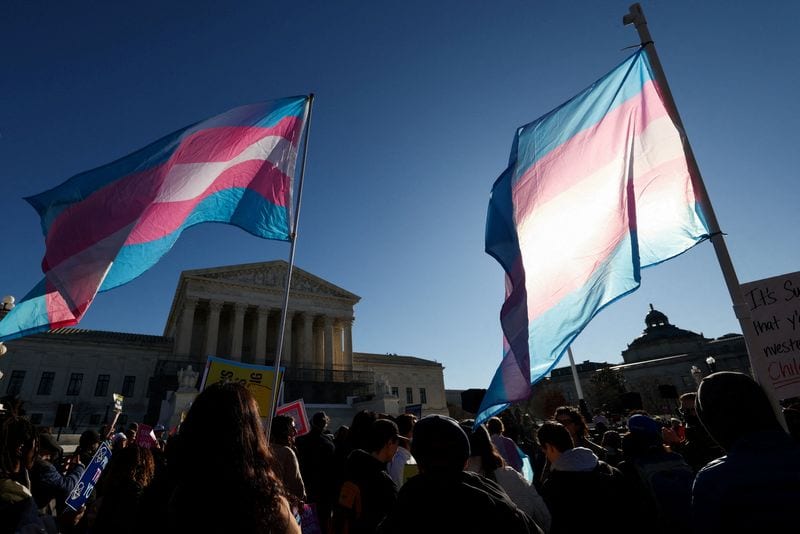
US Supreme Court to rule on state transgender sports bans

Created at 30 Jun · 10:13 AM1 source↑ Market-relevant
IN SHORT

The U.S. Supreme Court is set to decide the legality of state laws in West Virginia and Idaho that ban transgender student athletes from participating in female sports teams at public schools. The ruling is expected on Tuesday, the final day of the court's current term.

✉Newsletter

PiQ Daily

Pick your topics. Get only what matters, on your cadence.

Key Numbers

25other states with similar laws
6-3conservative majority on the Supreme Court

Who's Involved

Supreme Court
set to decide legality of state transgender sports bans
West Virginia
state with a law banning transgender athletes from female sports
Idaho
state with a law banning transgender athletes from female sports
Becky Pepper-Jackson
transgender student challenging West Virginia's ban
Heather Jackson
mother of Becky Pepper-Jackson
Lindsay Hecox
transgender student challenging Idaho's ban
Donald Trump
President who backed states in litigation and has taken a hard line on transgender rights
US Supreme Court to rule on state transgender sports bans

↳ Why This Matters

The Supreme Court's decision will have significant implications for transgender student athletes across the United States, potentially setting a precedent for how such laws are viewed under federal anti-discrimination statutes and constitutional equal protection guarantees.

Key facts

  • The U.S. Supreme Court will issue a decision on Tuesday regarding state laws that ban transgender athletes from female sports.
  • The laws in question are from West Virginia and Idaho, designating sports teams based on 'biological sex'.
  • Transgender students have challenged these bans, arguing they violate the Constitution's Equal Protection Clause and Title IX.
  • Lower courts had previously ruled in favor of the transgender students.
  • The Supreme Court's conservative majority has previously supported restrictions on transgender rights.

The U.S. Supreme Court is scheduled to rule on Tuesday on the legality of state laws in West Virginia and Idaho that prohibit transgender student athletes from participating in female sports teams at public schools and universities. This contentious issue is a focal point in the nation's culture wars.

Lower courts had previously sided with transgender students who argued that these bans violate the U.S. Constitution's 14th Amendment guarantee of equal protection and the federal anti-discrimination statute Title IX. The laws in question specify that sports teams are designated by 'biological sex' and bar 'students of the male sex' from competing on female teams, with approximately 25 other states having similar legislation.

During the current term, which began in October, Tuesday marks the final day for the court to issue rulings. The Trump administration had supported the states in this litigation, asserting that the laws are necessary to preserve fair and safe competition for women and girls. Critics, however, view these measures as part of a broader effort to curtail the rights of transgender Americans.

In a related decision last year, the Supreme Court allowed states to ban medical treatments for minors experiencing gender dysphoria, such as puberty blockers and hormones. The court, which has a 6-3 conservative majority, has previously upheld other restrictions affecting transgender individuals, including a ban on transgender people serving in the military and limitations on passport applications reflecting gender identity. However, in 2020, the court issued a landmark ruling protecting transgender people from workplace discrimination under Title VII of the Civil Rights Act of 1964, which contains similar language to Title IX.

The issue of transgender athletes in women's sports has become a significant part of the U.S. culture wars. President Donald Trump has adopted a firm stance on transgender rights, characterizing gender identity as a falsehood and issuing executive orders to limit their rights, including those related to sports participation. The challenge to West Virginia's law was brought by high school athlete Becky Pepper-Jackson and her mother, Heather Jackson. The Idaho case was initiated by Lindsay Hecox, a transgender student who previously competed in sports at Boise State University. Hecox later sought to dismiss the case, citing fear of harassment and growing intolerance, arguing that her situation had rendered the challenge moot. Arguments were heard in January, with conservative justices expressing concerns about imposing a national standard given the ongoing debate over whether puberty blockers or gender-affirming hormones eliminate male physiological advantages in sports.

Frequently asked questions

The Supreme Court is deciding the legality of state laws that ban transgender student athletes from participating in female sports teams at public schools and universities.

The laws from West Virginia and Idaho are being reviewed by the Supreme Court.

Critics argue the bans discriminate based on sex or transgender status, violating the Constitution's 14th Amendment and Title IX.

Supporters of the laws contend they preserve fair and safe competition for women and girls.

What Happens Next

01The Supreme Court will issue its ruling on the legality of state transgender sports bans.

Get the newsletter.

Pick the topics you actually care about. We'll email when there's news worth your time, on the cadence you choose. Cancel any time from your account.

Cadence

How It Developed

The U.S. Supreme Court will decide the legality of state laws banning transgender athletes from female sports.
West Virginia and Idaho laws designate sports teams by 'biological sex,' barring 'students of the male sex' from female teams.
Lower courts had sided with transgender students challenging the bans.
The Supreme Court heard arguments in January.
Tuesday is the final day for rulings in the court's current term.

Sources

T1
US Supreme Court to decide legality of state transgender sports bansReuters

Related Stories

Supreme Court to rule on Trump bid to limit birthright citizenship
29 Jun · 1:44 PM
Supreme Court backs Trump's firing of FTC member
29 Jun · 2:19 PM
Trump administration ties federal loan access to graduate earnings
30 Jun · 3:17 AM
Supreme Court won't revive Alan Dershowitz's CNN defamation case
29 Jun · 1:49 PM
Supreme Court Upholds Law Allowing Mail-In Ballots Arriving After Election Day
29 Jun · 2:15 PM