Key facts
- Russia has transferred jet-powered drone technology to North Korea, according to President Volodymyr Zelensky.
- Zelensky described the transfer as part of an intensifying defense partnership between Russia and North Korea.
- Pyongyang has previously supplied artillery and missiles to Russia for use in the war against Ukraine.
- Russia's new jet-powered Geran-4 and Geran-5 drones can reach speeds of up to 600 kilometers per hour.
- Jet-powered drones accounted for about two-thirds of drones launched in some recent attacks on Kyiv.
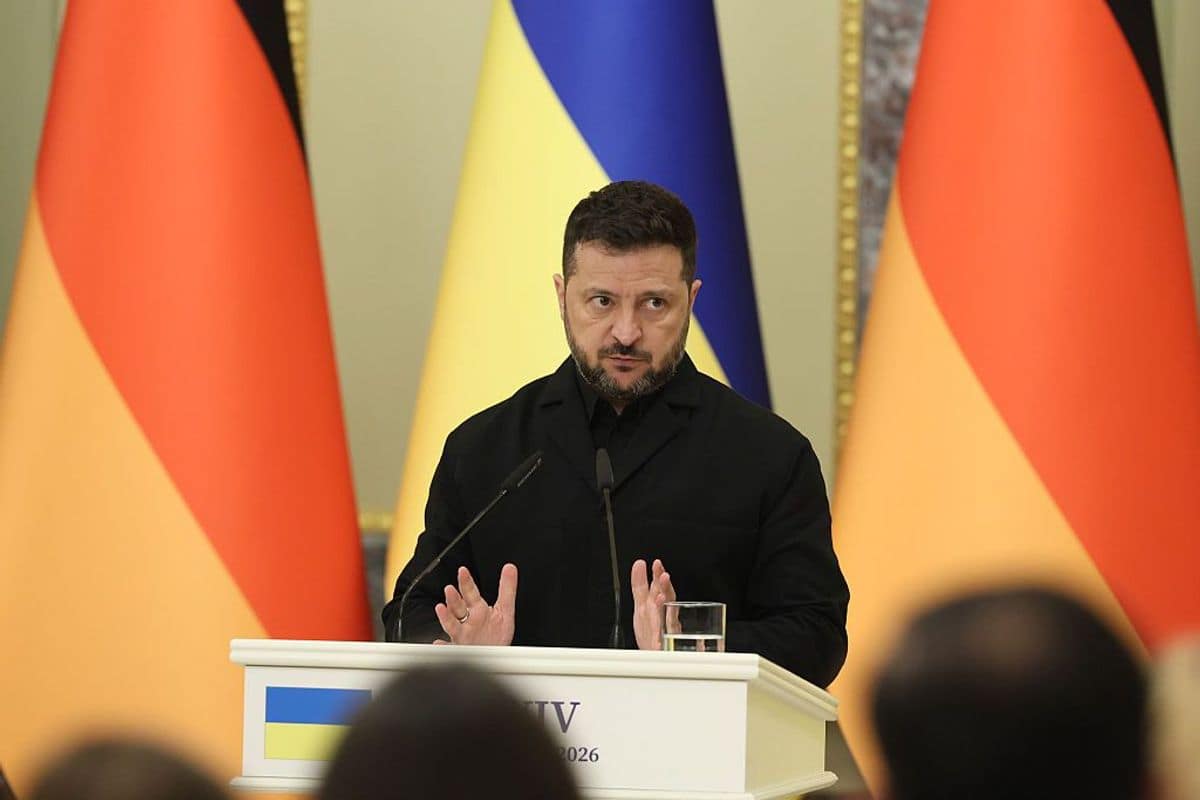
Ukrainian President Volodymyr Zelensky said on Sunday, October 4, 2026, that Russia has transferred jet-powered drone technology to North Korea as part of an intensifying defense partnership. Zelensky's remarks followed his warning on September 26, 2026, that Moscow was preparing to recruit an additional 10,000 North Korean military personnel.
When asked by journalists if Russia had shared its new jet drone technology with Pyongyang, Zelensky responded unequivocally, "Yes, of course." He highlighted the history of weapons cooperation between Russia and North Korea throughout the ongoing conflict, including Pyongyang's provision of artillery and missiles used in attacks on Ukraine. "They're sharing with North Korea all the technologies," Zelensky stated, adding that while he was not certain if ballistic missile supplies were also being shared, he believed it was likely. "I think yes, because North Korea helped them with missiles. It's a very dangerous moment."
Zelensky drew a parallel to Russia's cooperation with Iran early in the war, when Tehran provided Moscow with the means to produce its own Shahed attack drones. He noted that years later, Russia aided Iran with drone supplies when Tehran came under attack from the U.S. and Israel. Russia has since upgraded its Shahed-type attack drones with high-speed, jet-powered versions, identified as Geran-4 and Geran-5 kamikaze drones, which can reach speeds of up to 500 and 600 kilometers per hour, respectively. These faster drones are significantly more difficult for FPV drones and mobile fire teams to intercept. The increased deployment of these weapons has further strained Ukraine's air defenses, which are already challenged by frequent Russian ballistic missile strikes. In some recent attacks targeting Kyiv, jet-powered drones constituted approximately two-thirds of all drones launched.
On September 26, 2026, Zelensky announced that Russia intends to allocate $12 billion next year for the production of jet-powered drones and loitering munitions.