Key facts
- US District Judge Timothy Kelly is weighing whether to restore White House access for CNN, MS NOW, and Politico.
A US district judge is considering whether to restore White House access for CNN, MS NOW, and Politico after President Donald Trump banned them. The news outlets argue the ban violates their First Amendment and due process rights, while the Justice Department contends White House access is a privilege the president can revoke.
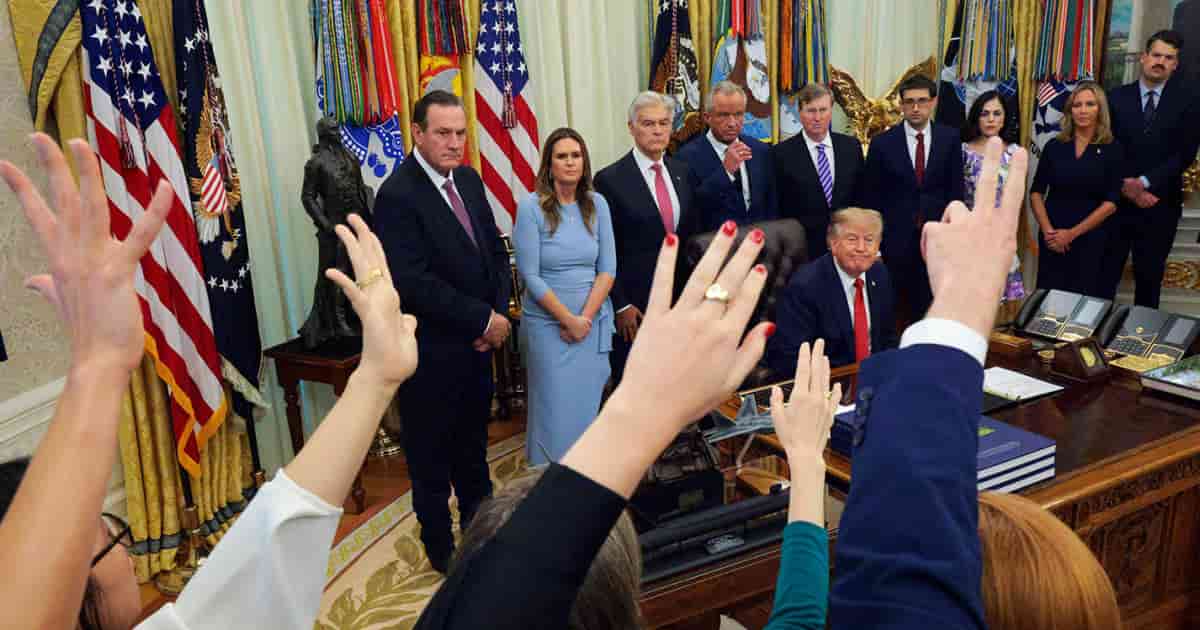
The case centers on the balance between presidential authority to control access to the White House and the First Amendment's protection of press freedom, potentially impacting how news organizations can cover the executive branch.
US District Judge Timothy Kelly began a hearing Wednesday to consider whether to restore White House access for CNN, MS NOW, and Politico, which were banned by President Donald Trump. The news organizations argue the ban infringes upon their First Amendment rights to press freedom and due process.
The Justice Department, in a court filing Tuesday, defended the ban, asserting that access to the White House is a "privilege" and not a right, and that the president possesses the authority to revoke it. The DOJ cited national security concerns and alleged that the three outlets failed to maintain "standards of professionalism and decorum," including publishing sensitive information and spreading falsehoods. Specific reporting incidents mentioned by the White House included stories on construction details of the East Wing bunker, funding for the White House ballroom, munitions stockpiles related to the Iran war, and sanctions against Russia.
President Trump announced the ban on Friday via a Truth Social post, stating it was a "result of their constant 'reporting' FAKE NEWS!" He indicated that other "Fake News Media Outlets" might follow. Journalists from the affected outlets, including MS NOW reporter Akayla Gardner, CNN’s Betsy Klein, and Politico’s Cheyenne Haslett, had their access passes deactivated and press credentials confiscated. First Amendment experts and the White House Correspondents’ Association have criticized the ban as unconstitutional.
The DOJ letters sent to the outlets on Tuesday outlined a "non-exhaustive list of reporting incidents" that the White House claimed "threatened national security and spread falsehoods." The letters provided a deadline of 5 p.m. on Friday for the news organizations to contest the decision, after which it would become final. Judge Kelly, who was appointed by Trump in 2017, previously ruled against the White House in a similar case in 2018 concerning reporter Jim Acosta's credentials.
Pick the topics you care about. Get only what matters, on your cadence.