Key facts
- Governors are divided on how to approach AI and data center expansion.
- Some governors are considering 'kill switches' for advanced AI systems.
- Alaska's governor sees its cold climate as an advantage for data center cooling costs.
US governors are taking varied approaches to the burgeoning artificial intelligence sector and the associated data center boom. Some are prioritizing AI safety and regulation, while others view data centers as significant economic opportunities for their states. The debate touches on environmental impacts, energy costs, and the role of government in regulating advanced technologies.
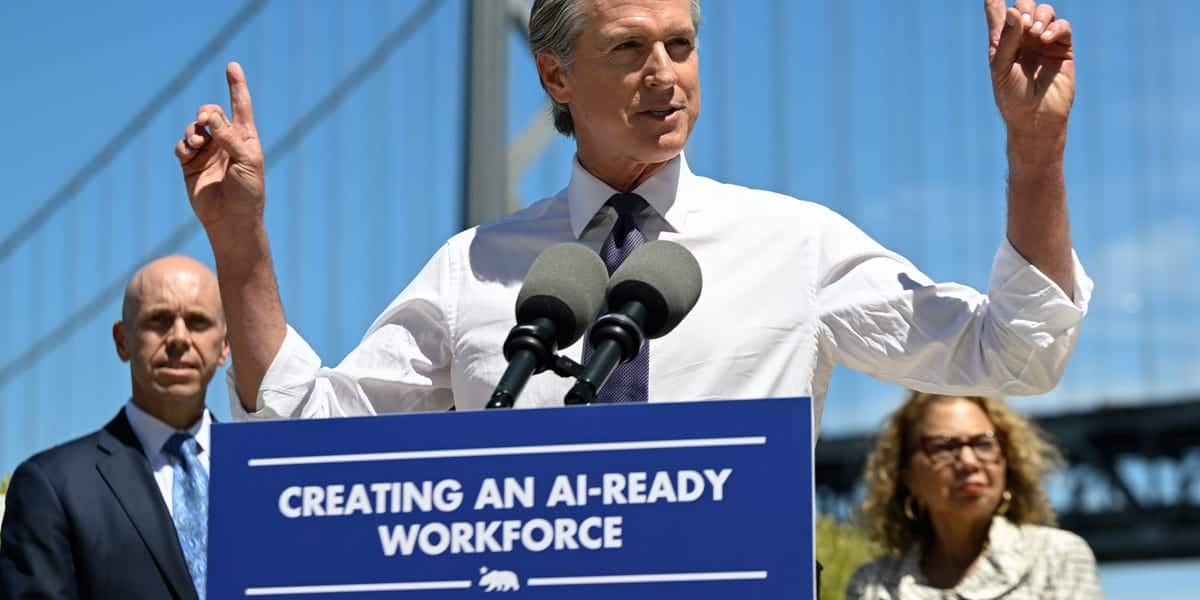
The decisions made by US governors on AI regulation and data center development will shape the future of technology infrastructure, energy consumption, and economic growth within their states, potentially influencing national policy and the broader AI landscape.
Governors across the United States are grappling with the implications of the artificial intelligence boom and the rapid expansion of data centers needed to power it. The issue has become a political flashpoint, with debates centering on AI safety, regulation, the spread of deepfakes, and the environmental and energy costs associated with data centers. Many tech firms advocate for continued expansion, while local communities often push back against new projects.
Approaches vary significantly among governors, regardless of political affiliation. Some, like California's Gavin Newsom and New York's Kathy Hochul, are exploring the concept of an 'AI kill switch' to disable AI systems in out-of-control scenarios. Utah Governor Spencer Cox has also called for federal AI safety regulations.
Conversely, governors in states with significant AI computing projects, such as Nevada, North Dakota, Michigan, and New Mexico, view data centers as a key economic opportunity. Alaska Governor Mike Dunleavy is actively positioning his state as a potential hub, citing its colder climate as a significant advantage for reducing cooling costs for AI server racks, potentially saving operators millions annually. He also sees data centers as a driver for job creation.
Alabama Governor Kay Ivey has taken a balanced approach, creating a statewide generative AI task force to study its use in government while emphasizing transparency, privacy, and public safety. She has also adopted a firm stance against Chinese AI tools, banning platforms like DeepSeek and Manus from state-owned devices and networks in 2025. Arizona Governor Katie Hobbs, also up for reelection, frames AI as an economic opportunity and has launched the state's first AI steering committee, aiming to ensure AI strengthens the economy without undermining it.
Pick the topics you care about. Get only what matters, on your cadence.