All NewsEducationTV
Equities & FundsCrypto & Digital AssetsAI & TechnologyBusiness & CorporateUS Politics & PolicyGeopolitics & Global RiskMacro, Rates & FXCommodities & EnergyEuropean Politics & MarketsAsia-PacificReal Estate & Property
All NewsHome
← Back to Geopolitics & Global Risk

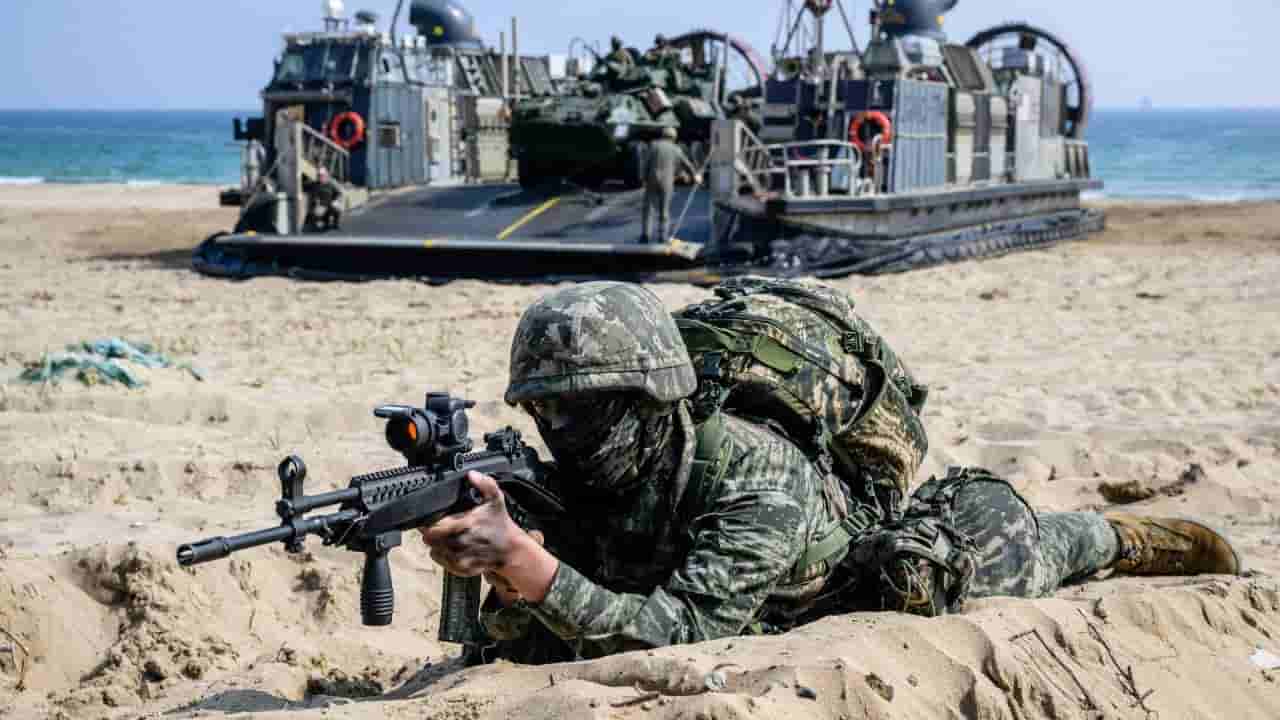
US Cancels Joint Marine Drills With South Korea Due to Iran War Constraints

Created at 24 Aug · 5:55 AM2 sources↑ Market-relevant2 events
IN SHORT

The U.S. has canceled joint marine drills with South Korea, citing force availability constraints stemming from the war in Iran. This decision, linked to President Donald Trump's broader foreign policy approach, has raised concerns among Asian allies about U.S. reliability.

Key Numbers

$14 billionarms sales package to Taipei

Who's Involved

U.S. Marine Corps
informed South Korea of force availability constraints in June
South Korea's Marine Corps
confirmed cancellation and is consulting on resuming drills
Donald Trump
U.S. President, ordered cutbacks on military exercises
Jeremy Chan
senior analyst at Eurasia Group, commented on U.S. security commitments
Itsunori Onodera
Japanese lawmaker and former defense minister, expressed concern over North Korea
Elbridge Colby
Pentagon policy chief, prioritized combat readiness in Asia
Domingo Yang
Taiwan defense ministry think tank, noted distinction between rhetoric and behavior
Pearl Pandya
senior analyst at Armed Conflict Location & Event Data, commented on transactional foreign policy

↳ Why This Matters

The cancellation of joint military drills and President Trump's foreign policy approach are causing allies in Asia to question U.S. security commitments, potentially destabilizing a region that has relied on these alliances for peace.

Key facts

  • The U.S. canceled joint marine drills with South Korea, citing force availability constraints due to the war in Iran.
  • President Donald Trump's decision to reduce military exercises with South Korea has amplified concerns among Asian allies regarding U.S. reliability.
  • Japan is concerned about potential demands for increased defense spending and the impact on upcoming security negotiations.
  • Taiwan is monitoring the upcoming summit between Trump and Chinese President Xi Jinping, anticipating potential adjustments to arms sales.
  • India is re-evaluating its strategic alignment with the U.S. due to trade tariffs and Trump's transactional foreign policy.

The United States has canceled joint marine drills with South Korea, citing force availability constraints stemming from the war in Iran. This decision, linked to President Donald Trump's broader foreign policy approach, has raised concerns among Asian allies about U.S. reliability.

President Trump's decision to scale back military exercises with South Korea has amplified fears that his unpredictability could strain alliances crucial for regional peace. Officials and security experts note that partners from Japan to India are reassessing their reliance on Washington.

Japan is particularly concerned about potential demands for increased defense spending and how this approach might affect ongoing security negotiations. Taiwan is closely observing an upcoming summit between Trump and Chinese President Xi Jinping, anticipating potential adjustments to a significant arms sales package. India is also re-evaluating its strategic alignment with the U.S. due to trade tariffs and Trump's transactional foreign policy.

The diversion of U.S. assets, including the USS George Washington aircraft carrier, to the Middle East conflict has also stirred concerns about the erosion of U.S. deterrence against China. Meanwhile, North Korea's recent ballistic missile tests have added to regional anxieties, despite Trump's overtures toward Kim Jong Un.

Frequently asked questions

The U.S. cited force availability constraints due to the war in Iran as the reason for canceling the joint marine drills with South Korea.

The decision has reinforced fears that President Trump's unpredictability could strain long-standing alliances, leading partners like Japan, Taiwan, and India to reassess their reliance on Washington.

Japan is bracing for the possibility that Trump could demand a sharp hike in its contribution to hosting U.S. forces, which would be politically difficult to accept.

Taiwan anticipates that Washington may break down a $14 billion arms sales package into smaller chunks to avoid upsetting Beijing too much.

What Happens Next

01Trump is preparing for a summit with Chinese President Xi Jinping.
02Upcoming U.S. military exercises with Japan in October are being monitored for potential changes.

How It Developed

The U.S. canceled a joint marine drill with South Korea due to force availability constraints related to the war in Iran.
President Donald Trump's decision to cut back military exercises with South Korea has reinforced fears about unpredictability straining alliances.
Japan worries about its own security negotiations and potential demands for increased defense spending from the U.S.
Taiwan is closely watching an upcoming summit between Trump and Chinese President Xi Jinping regarding arms sales.
India is reassessing its strategic relationship with Washington due to U.S. tariffs and Trump's foreign policy approach.
The USS George Washington aircraft carrier departed Asia for the Middle East, impacting U.S. deterrence against China.
North Korea fired ballistic missiles off its east coast, raising concerns for Japan and South Korea.

Sources

T1
US cancels joint marine drills with South Korea over Iran war-related force constraintsReuters

Related Stories

North Korea preparing further Russia troop deployments, no sign move imminent, Seoul says
24 Aug · 2:30 AM
Iranians Divided on Path Forward Amid Sanctions and War Recovery
23 Aug · 11:51 PM
US Vows 'Economic D-Day' as Iran Threatens Oil Export Halt
24 Aug · 12:36 AM
South Korea establishes guidelines to boost defense exports to NATO nations
24 Aug · 2:16 AM
Iran parliament committee backs charging ships in Strait of Hormuz
23 Aug · 7:55 PM