All NewsEducationTV
Equities & FundsCrypto & Digital AssetsAI & TechnologyBusiness & CorporateUS Politics & PolicyGeopolitics & Global RiskMacro, Rates & FXCommodities & EnergyEuropean Politics & MarketsAsia-PacificReal Estate & Property
All NewsHome
← Back to US Politics & Policy

US appeals court dismisses California, Giffords 'ghost guns' challenge

Created at 21 Aug · 8:31 PM1 source↑ Market-relevant
IN SHORT

A federal appeals court dismissed a lawsuit by California and the Giffords gun control group challenging a Biden-era rule on "ghost guns." The court found they did not demonstrate sufficient harm from the rule's treatment of partially completed receivers.

Key Numbers

3-0vote count on appeals court ruling
2022year of Biden administration rule adoption

Who's Involved

9th U.S. Circuit Court of Appeals
federal appeals court that dismissed the lawsuit
California
plaintiff in the ghost guns challenge
Giffords
gun control advocacy group and plaintiff
Rob Bonta
California Attorney General
Eric Tung
Circuit Judge who wrote the opinion
Holly Thomas
Circuit Judge
Anthony Johnstone
Circuit Judge
Reed O'Connor
U.S. District Judge in Texas
Edward Chen
U.S. District Judge who previously ruled on the case
Joe Biden
former Democratic President during whose administration the rule was adopted
Donald Trump
Republican President who supported more expansive gun rights
Barack Obama
former Democratic President who appointed Judge Chen
Bureau of Alcohol, Tobacco, Firearms and Explosives (ATF)
agency that adopted the ghost gun rule
US appeals court dismisses California, Giffords 'ghost guns' challenge

↳ Why This Matters

The ruling upholds the Biden administration's approach to regulating "ghost guns," which are untraceable firearms that can be assembled from kits. This decision impacts the ongoing legal and political battles over gun control in the United States, potentially making it harder for states and advocacy groups to challenge federal regulations they deem insufficient.

Key facts

  • A federal appeals court dismissed a lawsuit by California and the Giffords gun control advocacy group challenging a Biden administration rule on "ghost guns."
  • The 9th U.S. Circuit Court of Appeals ruled 3-0 that the plaintiffs did not demonstrate sufficient harm from the rule's treatment of partially completed receivers.
  • The rule in question pertains to the Bureau of Alcohol, Tobacco, Firearms and Explosives' (ATF) classification of partially completed receivers for AR-15 type rifles.
  • The court found that claims of harm were speculative and that most alleged harm predated the rule.
  • This decision reverses a lower court ruling that had found the ATF's interpretation arbitrary and capricious.

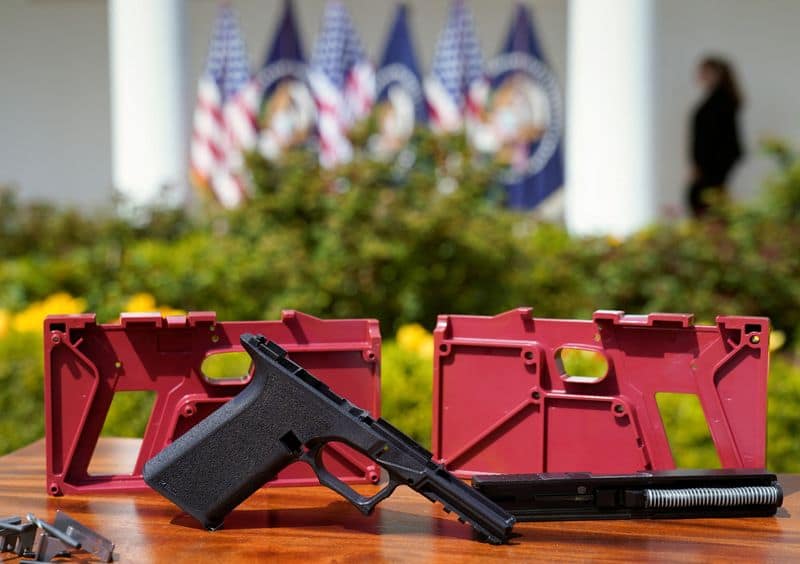
A federal appeals court has dismissed a lawsuit filed by California and the gun control advocacy group Giffords, which challenged a Biden administration rule aimed at curbing "ghost guns." The 9th U.S. Circuit Court of Appeals in San Francisco ruled 3-0 that the plaintiffs failed to demonstrate they suffered harm from the rule's provisions regarding partially completed receivers, which are components for firearms like AR-15 type rifles.

The lawsuit argued that the Bureau of Alcohol, Tobacco, Firearms and Explosives (ATF) rule was not strict enough, particularly in its treatment of these receivers. California and Giffords objected to the ATF classifying partially completed receivers as firearms only when sold with tools or jigs that could make them functional. They contended that this loophole allowed individuals to acquire components and build untraceable firearms.

Circuit Judge Eric Tung, appointed by President Donald Trump, wrote the opinion, stating that California did not prove the rule forced it to spend more on law enforcement training or its own ghost gun legislation. Similarly, Giffords did not show that the rule undermined its core mission or increased its costs in combating the proliferation of these weapons. Tung noted that most alleged harm predated the rule and that the plaintiffs were suing based on speculation that wrongdoers would exploit the alleged loophole.

This decision overturns a previous ruling by U.S. District Judge Edward Chen, who had found the ATF's interpretation to be arbitrary and capricious. The case also follows a separate ruling by U.S. District Judge Reed O'Connor in Texas, which found the 2022 rule violated the Second Amendment. However, the U.S. Supreme Court later reversed O'Connor's decision in March 2025, though on the grounds that the ATF had exceeded its authority in adopting the rule.

Frequently asked questions

Ghost guns are firearms that lack serial numbers and can be acquired without background checks, often by assembling components purchased separately. This allows individuals otherwise ineligible to buy firearms to create finished guns.

The 2022 rule aimed to curtail the production of ghost guns by treating partially completed receivers (frames) as firearms, particularly when sold with tools or jigs that could make them functional.

They argued that the Biden administration's rule was not strict enough and that the ATF's treatment of partially completed receivers created loopholes that allowed for the proliferation of untraceable firearms.

The court found that California and Giffords did not demonstrate sufficient harm caused by the rule, deeming their claims speculative and noting that most alleged harm predated the rule.

What Happens Next

01California and Giffords may seek further review from the Supreme Court.

How It Developed

A federal appeals court dismissed a lawsuit challenging a Biden administration rule on "ghost guns."
The court reversed a lower court ruling, finding California and Giffords did not show harm from the rule's treatment of partially completed receivers.
The Bureau of Alcohol, Tobacco, Firearms and Explosives (ATF) rule treated partially completed receivers as firearms only if sold with tools to make them functional.
Circuit Judge Eric Tung stated California did not show increased spending on law enforcement training or ghost gun legislation, and Giffords did not show its mission was undermined.
The court cited "speculation" that wrongdoers would exploit alleged loopholes.
The U.S. Supreme Court previously reversed a district judge's ruling that struck down the rule, but on different grounds.

Sources

T1
US appeals court throws out California, Giffords 'ghost guns' challengeReuters

Related Stories

Appeals court upholds block on DOJ subpoenas to NY AG James' office
21 Aug · 1:38 PM
Teen drops lawsuit against Meta, Google and Snap ahead of trial
21 Aug · 12:16 AM
Ex-Google engineer's conviction for stealing AI secrets partially overturned
20 Aug · 11:00 PM
Supreme Court temporarily allows White House ballroom construction to continue
21 Aug · 6:16 PM
Fauci's lawyers launch legal defense fund amid multiple probes
21 Aug · 8:42 PM