Key facts
- US allies in Asia are anxious that President Donald Trump may soften Washington's support for Taiwan in return for an economic win with Beijing.
- Trump described US arms sales to Taiwan as a 'negotiating chip' in May.
- China considers Taiwan the 'core of core interests' in its relations with the US.
- Trump has stated Xi assured him China would not attack Taiwan while Trump is in office.
- Taiwan's Foreign Minister Lin Chia-lung expects Xi to raise Taiwan during the summit.
- A $14 billion US arms package for Taiwan awaits Trump's approval.
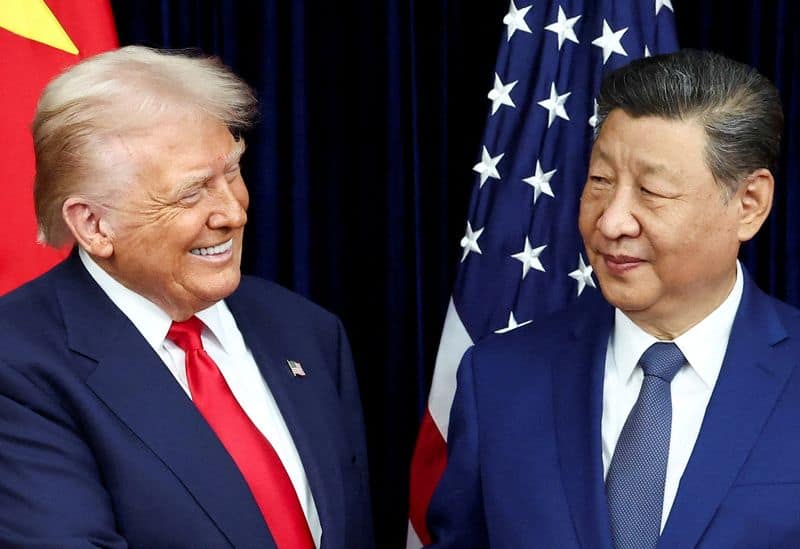
US allies in Asia are increasingly concerned that President Donald Trump might be willing to reduce Washington's commitment to Taiwan in exchange for economic gains from Beijing during his upcoming meeting with Chinese leader Xi Jinping.
These anxieties have been amplified by Trump's past remarks, where he referred to US arms sales to Taiwan as a "negotiating chip." Officials, lawmakers, and analysts in Taipei, Tokyo, and Washington expressed worries that even a slight shift in US rhetoric could embolden Beijing and jeopardize regional peace.
China views Taiwan as central to its relationship with the US and has not ruled out the use of force to achieve unification. Trump has previously stated that Xi Jinping personally assured him that China would not attack Taiwan during his presidency, a claim that contrasts with his predecessor Joe Biden's repeated assertions of US commitment to Taiwan's defense.
Ahead of the summit, Taiwan's government is actively communicating its positions to the US, hoping to avoid any outcomes detrimental to the island. Japan, in particular, is seeking to influence Trump's approach, advocating for adherence to established diplomatic language regarding Taiwan and urging that it not be the primary focus of the meeting. Japan's biggest fear is that Trump might signal a softer stance to secure Chinese commitments for increased purchases of US goods, a move that could boost his approval ratings before midterm elections.
Experts suggest that even minor changes in Trump's wording could embolden Beijing. The US currently adheres to a "one China policy," acknowledging Beijing's claim over Taiwan without explicitly endorsing it. The sensitivity of the issue is compounded by Trump's tendency for off-the-cuff remarks. Malaysia's director general of national security highlighted that Western countries significantly underestimate Taiwan's importance to Beijing, warning that a Chinese invasion would have world-altering economic consequences.