Key facts
- Residents of Oleshky, Ukraine, are risking death on mine-strewn roads to find food and water.
- The town has not received food deliveries since May, leading to extreme desperation.
- A woman was injured by a landmine on a journey to Radensk, and three others were reportedly killed on the same route.
- Ukraine's human rights ombudsman stated Russia forces civilians to choose between starvation and explosive hazards.
- Russia acknowledged supply problems in Oleshky and blamed Ukraine for obstructing aid.
- Around 1,700 residents, including 47 children, remain in Oleshky.
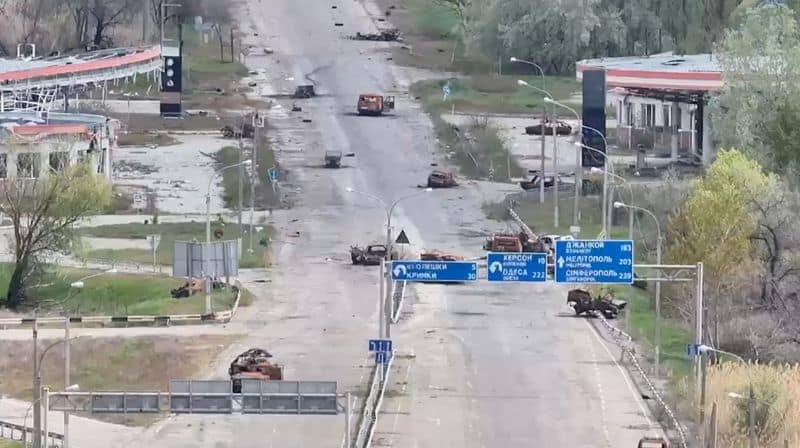
Residents of the Russian-occupied town of Oleshky in southern Ukraine are undertaking perilous journeys on foot and bicycle along mine-strewn roads to secure food and water, facing starvation and the risk of death from explosives. The main route out of the town, located east of the Dnipro River near the front lines, is littered with burned-out vehicles and is patrolled by attack drones.
According to witnesses, relatives, humanitarian groups, and verified video footage, the last food deliveries to a local store in Oleshky occurred in May. A woman who attempted the trip to Radensk, approximately 20 km southeast, was injured by a landmine on her return. She stated that three people had been killed on the same route a few days prior, which locals have dubbed 'the road of death'.
Ukraine's human rights ombudsman, Dmytro Lubinets, described the situation as Russia forcing civilians to choose between starving or risking being blown up by landmines. He also mentioned that Kyiv's proposal for a local ceasefire and evacuation routes was rejected by Russia.
Russia has acknowledged significant problems with food and medical supplies in Oleshky, stating its military is working to resolve them but blaming Ukraine for obstructing aid. The town, which had a pre-war population of around 24,000, is now home to approximately 1,700 residents, including 47 children, according to the UN Human Rights Monitoring Mission in Ukraine.
Drone footage verified by Reuters shows damaged residential and administrative buildings in Oleshky, with no stable power, water, or heating. Tetiana Hasanenko, head of the local military administration, reported in late September that residents felt doomed, facing death from hunger or strikes. Ukrainian troops do not have direct access to the town, and claims by the Ukrainian military of dropping food via drones could not be independently confirmed by Reuters or some residents.
Food supplies in Oleshky became unreliable late last year and significantly worsened after May. Before this, Ukrainian volunteers could deliver food and evacuate people. Now, residents are largely living off the land, which is becoming untenable as winter approaches. One woman who fled Oleshky in 2022 stated her husband remained and was surviving on dwindling rations, including vegetables and homemade flatbread, using old flour stocks and feeding pets with grass and grain. She described the journey to find food as 'Russian roulette'. The brigade's footage shows numerous damaged vehicles along the route, with buildings on either side also heavily damaged. As winter sets in, homegrown staples are running out, and the fear of starvation is growing. The woman injured by the mine noted that boiling water requires open fires due to the lack of gas cylinders, and medicines are out of date.