Key facts
- Ukraine's parliament voted 293 in favor of joining the tribunal's Management Committee on November 25, 2026.
- Ukraine is the 10th participant to complete domestic procedures; at least 16 are required to activate the committee.
- Joining gives Ukraine a say in tribunal policies, budget approval and administrative matters, and requires an annual contribution.
- Foreign Minister Andrii Sybiha said those who should face the tribunal include Russian President Vladimir Putin.
- The tribunal is expected to begin operating in 2027 and will be hosted by the Netherlands in The Hague.
- The European Union has allocated 10 million euros ($10.9 million) for preparatory work.
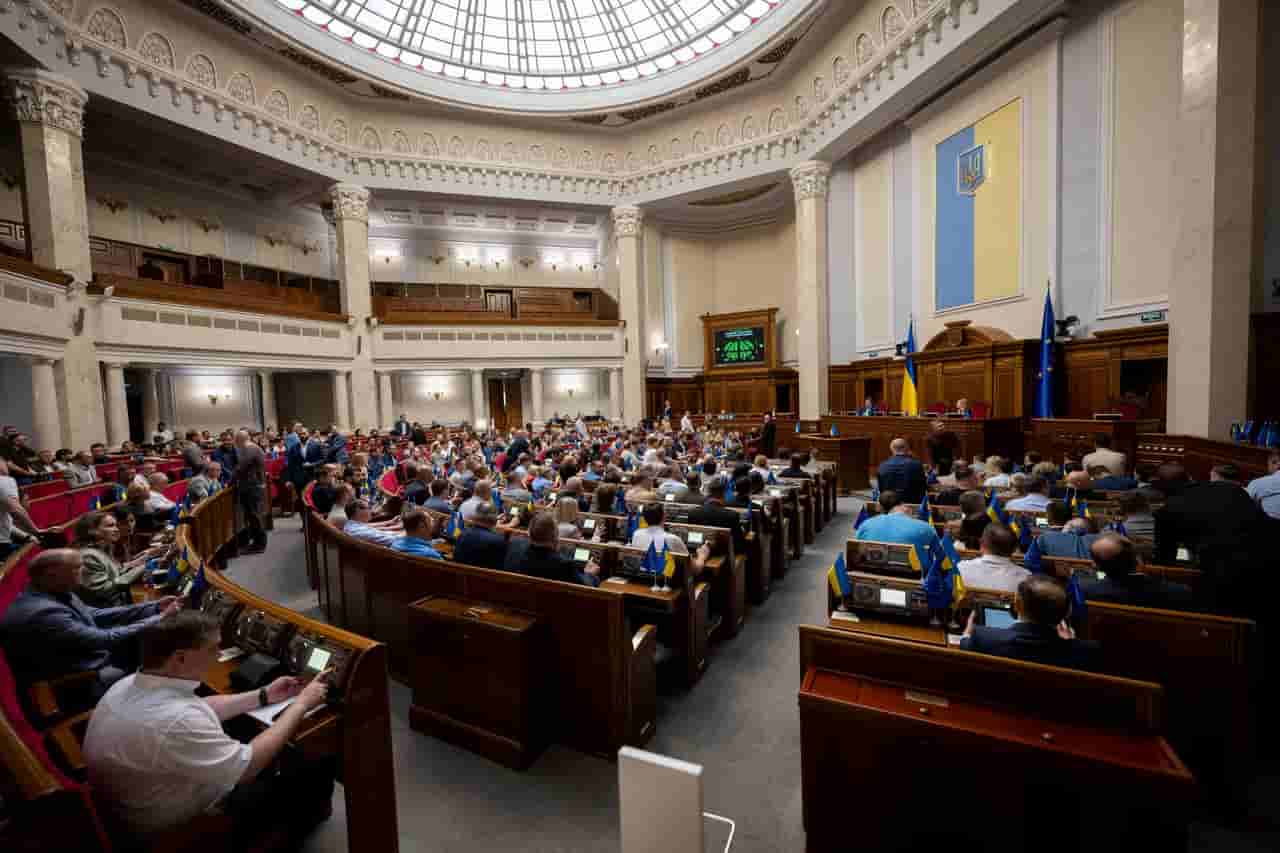
Ukraine's parliament, the Verkhovna Rada, voted on November 25, 2026, to join the Management Committee of the Special Tribunal for the Crime of Aggression against Ukraine, with 293 lawmakers supporting the move. Upon joining, Ukraine will have a say in setting the tribunal's policies, approving its budget and addressing administrative matters, and the accession agreement requires an annual contribution to the body's budget, according to the parliament.
The tribunal was formally established through an agreement signed by Ukraine and the Council of Europe in June 2025, after the idea emerged shortly following Russia's full-scale invasion in 2022. It is expected to begin operating in 2027 and is set to be hosted by the Netherlands in The Hague. The European Union has allocated 10 million euros ($10.9 million) to support preparatory work.
At least 16 participants must complete their domestic procedures to bring the Management Committee into operation. Ukraine became the 10th to do so, following the U.K., Estonia, Iceland, Lithuania, Luxembourg, the Netherlands, Norway, Portugal and Sweden. A total of 39 participants, comprising 37 countries, Ukraine and the European Union, have expressed an intention to join the mechanism.
Foreign Minister Andrii Sybiha said those who should face the tribunal include Russian President Vladimir Putin, Security Council Secretary Sergei Shoigu, Chief of the General Staff Valery Gerasimov, FSB Director Alexander Bortnikov, National Guard chief Viktor Zolotov, Security Council Deputy Chairman Dmitry Medvedev and presidential aide Nikolai Patrushev. Sybiha said the tribunal addresses a gap in international law because the International Criminal Court does not have jurisdiction to prosecute Russia's leadership for the crime of aggression under the circumstances of its invasion of Ukraine. He said: "International justice takes time, but its strength lies in its inevitability."