Key facts
- Parliament passed only the first reading; a second reading and the president's signature are still required.
- Most top SBU officials would have to file asset declarations that are public, according to the bill.
- National Guard, border guard and other non-combat personnel would also have to file, per the bill.
- Some law enforcement declarations could still be withheld for security reasons, according to the bill.
- Zelensky submitted the bill in response to the NABU and SAPO Operation Carthage investigation.
Ukraine's parliament passed the first reading of a bill on November 24, 2026 that would require Security Service officials not engaged in military missions to file asset declarations, with most top SBU officials' declarations made public, according to the bill.
The bill also covers employees of the National Guard, the State Border Guard, the State Security Department and the State Service for Special Communications and Information Protection who are not in combat, and most other top officials including law enforcement staff and judges. Some law enforcement declarations could still be withheld for security reasons.
Russia's full-scale invasion had let Security Service officials either skip asset declarations or keep them from the public on security grounds, which the report says damaged the agency's transparency and accountability. To become law, the bill must pass a second reading and be signed by the president.
President Volodymyr Zelensky submitted the bill in response to Operation Carthage, an investigation by the National Anti-Corruption Bureau and the Specialized Anti-Corruption Prosecutor's Office into scam call centers. The probe led to the ouster of Prosecutor General Ruslan Kravchenko, who left Ukraine in September, and implicated senior officials in his office.
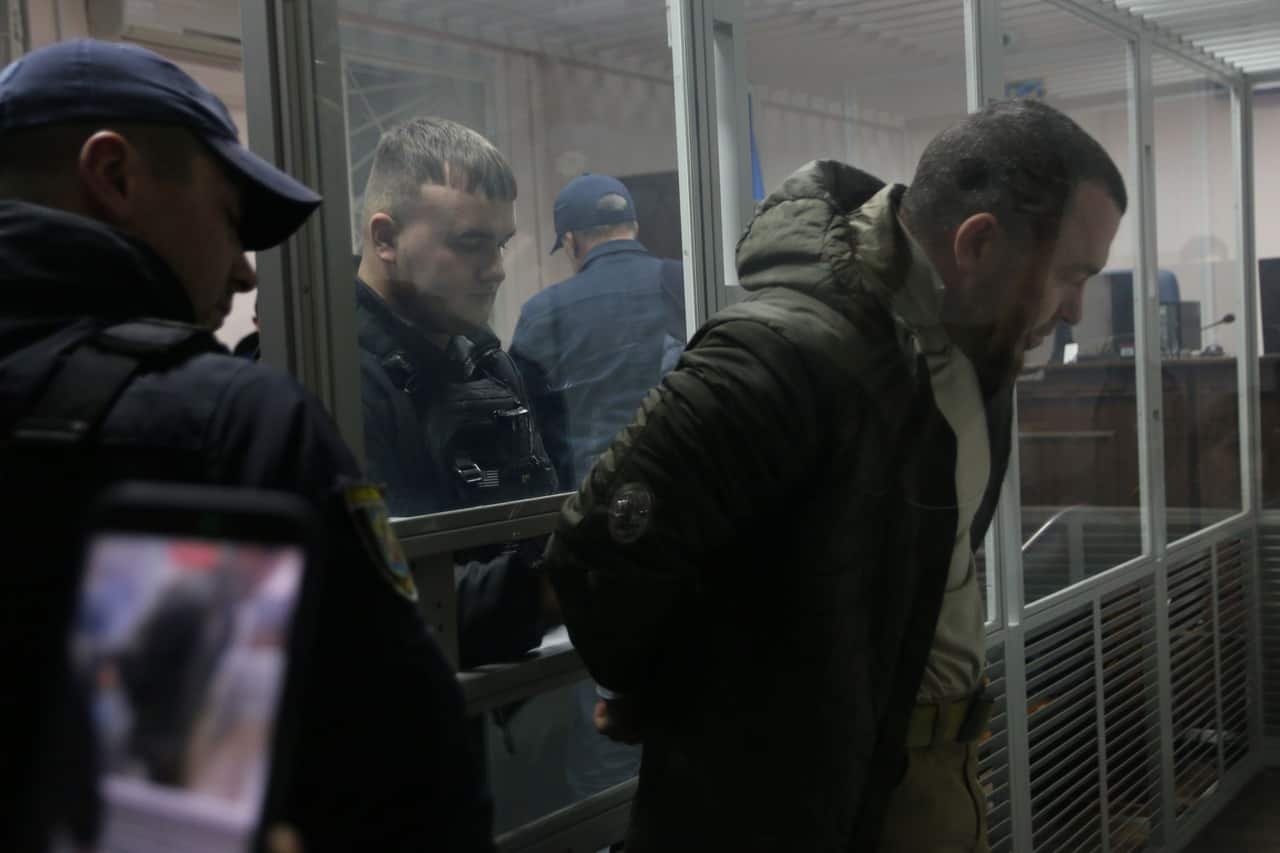
According to Ukraine's anti-corruption agencies, the network also trafficked drugs, produced counterfeit currency and used violence to intimidate critics. Serhii Duka, first deputy head of the SBU Department for the Protection of National Statehood, was charged with complicity in organized crime; investigators say he advised Andrii Osipov, one of the alleged group leaders, on evading detection and arranged contacts with senior officials at other agencies including the Prosecutor General's Office.
NABU says the network was run by Osipov and Russian-born Yehor Burkin, reportedly the founder of the drug trafficking ring known as Khimprom. Recordings released by NABU suggest Burkin kept contact with Russia's Federal Security Service during the war. In 2024 the SBU department where Duka worked surveilled journalists from Bihus.info, and NABU tapes show Burkin and Osipov discussing a possible acid attack on or kidnapping of the outlet's founder, Denys Bihus.