Key facts
- Tomczyk said the planned no-fly zone would extend more than ten kilometers (six miles) from Poland's eastern border.
- Poland wants the regulation for the zone to take effect by late December or early January, Tomczyk said.
- The zone would back a procedure letting Polish pilots engage targets using radar and allied intelligence, not visual identification.
- Tomczyk said NATO was not supportive of intercepting Russian missiles over Ukraine, citing complications, RMF24 reported.
- Bloomberg reported that some allies backed the intercept proposal at the November 23 meeting, but talks were preliminary.
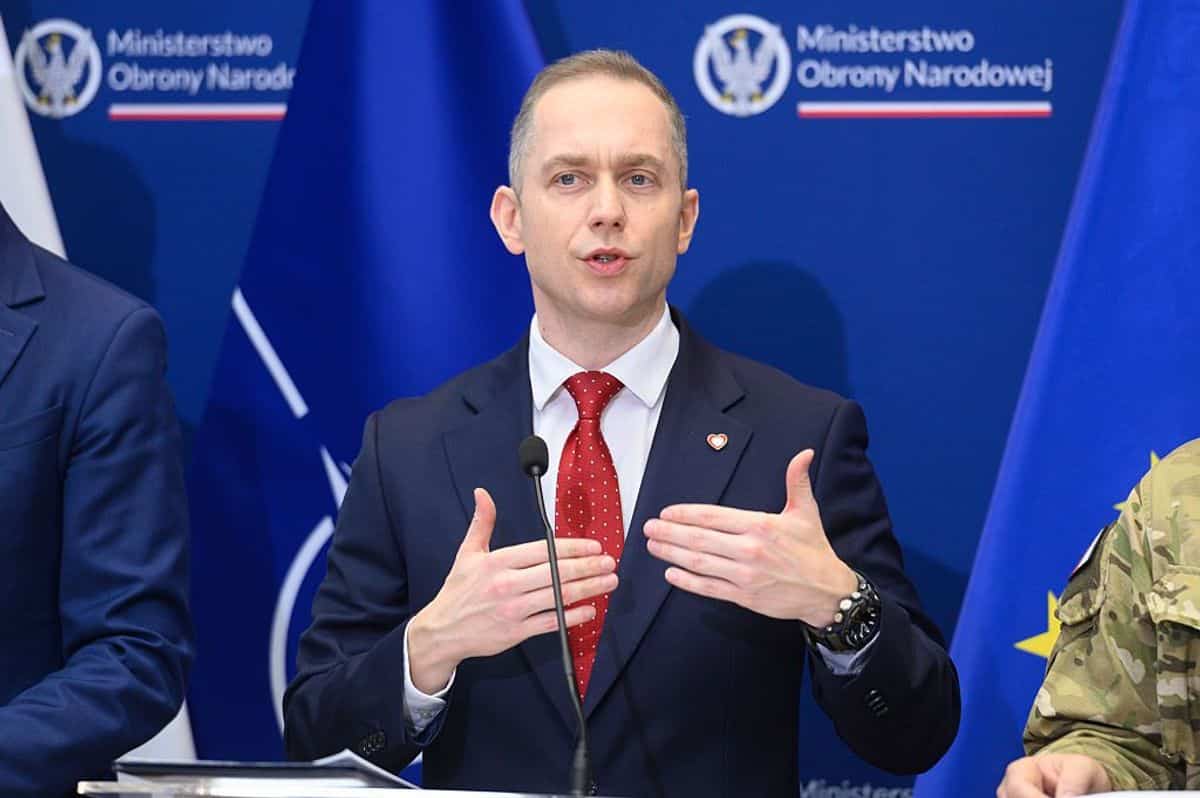
Poland plans to establish a no-fly zone along its eastern border with Ukraine by early 2027, Deputy Defense Minister Cezary Tomczyk said on November 25, 2026. He said the zone would extend more than ten kilometers (six miles) from the border, and the government wants the relevant regulation to take effect by late December or early January, according to Polish media.
The zone would support a recently introduced procedure that allows Polish pilots to identify and potentially engage aerial targets based on radar information, intelligence from allies, altitude and speed, rather than requiring visual identification, Tomczyk said.
The plans follow Russian missiles and drones entering Polish airspace during attacks on Ukraine on November 23 and 24. Poland has already shot down Russian drones that entered its airspace during a large-scale Russian attack on Ukraine on September 10, 2025, the first time a NATO member engaged Russian aerial targets since the start of the full-scale war.
Foreign Minister Radosław Sikorski said on November 25 that shooting down Russian missiles over Ukraine at Kyiv's request could constitute an act of self-defense. Separately, Warsaw raised the possibility of NATO intercepting Russian missiles over Ukraine at a meeting of alliance ambassadors in Brussels on November 23, Bloomberg reported, citing people familiar with the discussions. Some allies supported the proposal, but the discussions remain preliminary and no decision has been made, Bloomberg reported.
Tomczyk said NATO was not supportive of the proposal, citing the complications it would create, and said previous discussions had ruled out such an arrangement, RMF24 reported.