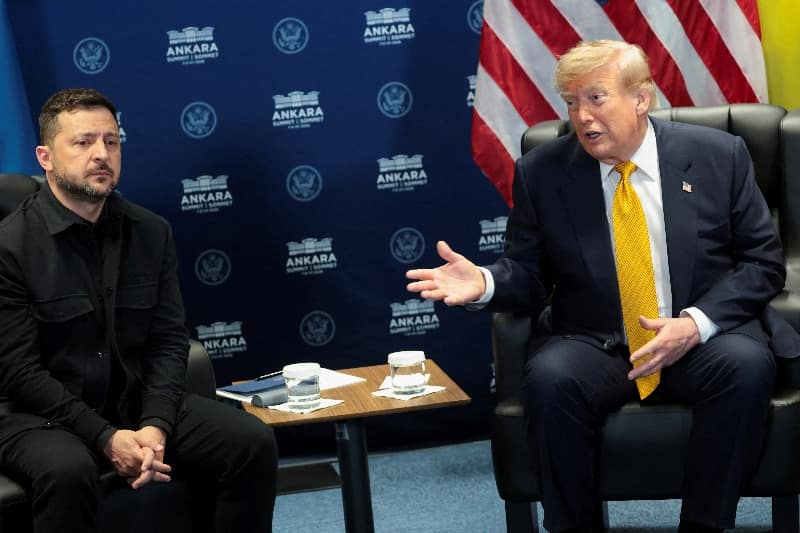
U.S. President Donald Trump urged Ukrainian President Volodymyr Zelensky to halt strikes on Russian oil refineries and other infrastructure used to produce and distribute diesel, stating that these attacks are causing a global shortage.
Trump insisted that the surge in global fuel prices, particularly diesel, was being caused by Ukraine rather than the conflict with Iran. He stated that officials from his administration had asked Zelensky to stop drone and missile attacks on Russian diesel production sites, emphasizing that "Don't hit diesel fuel, because that’s hurting the world."
Ukraine views Russian oil refineries as legitimate military targets, aiming to make Russia's invasion prohibitively costly. However, a senior European official suggested that the Trump administration was seeking scapegoats ahead of the U.S. midterm elections, calling the idea that Russian diesel exports significantly impact U.S. consumption absurd.
Meanwhile, President Zelensky called for stronger U.S. sanctions against Russia and stated that Ukraine must engage in peace talks with Moscow. He urged the U.S. Congress to pass a Russia sanctions bill, though Democratic Representatives Don Beyer, Gregory Meeks, and Richard Neal condemned the legislation, arguing it would not mandate sanctions and would grant Trump additional tariff authority.
Zelensky also indicated that Ukraine would respond appropriately to Russian attacks on civilian infrastructure, stating that if Russia targets Ukraine's energy system, they will receive a similar response.
President Volodymyr Zelensky plans to discuss halting Russian and Ukrainian strikes on energy infrastructure and in the Black Sea during a possible meeting with U.S. President Donald Trump next week in New York. The Kremlin welcomed Trump's call on Ukraine to halt strikes on Russia's diesel-producing facilities, with spokesperson Dmitry Peskov stating that "Any call on the Kyiv regime to stop attacks on civilian economic infrastructure can only be welcomed."